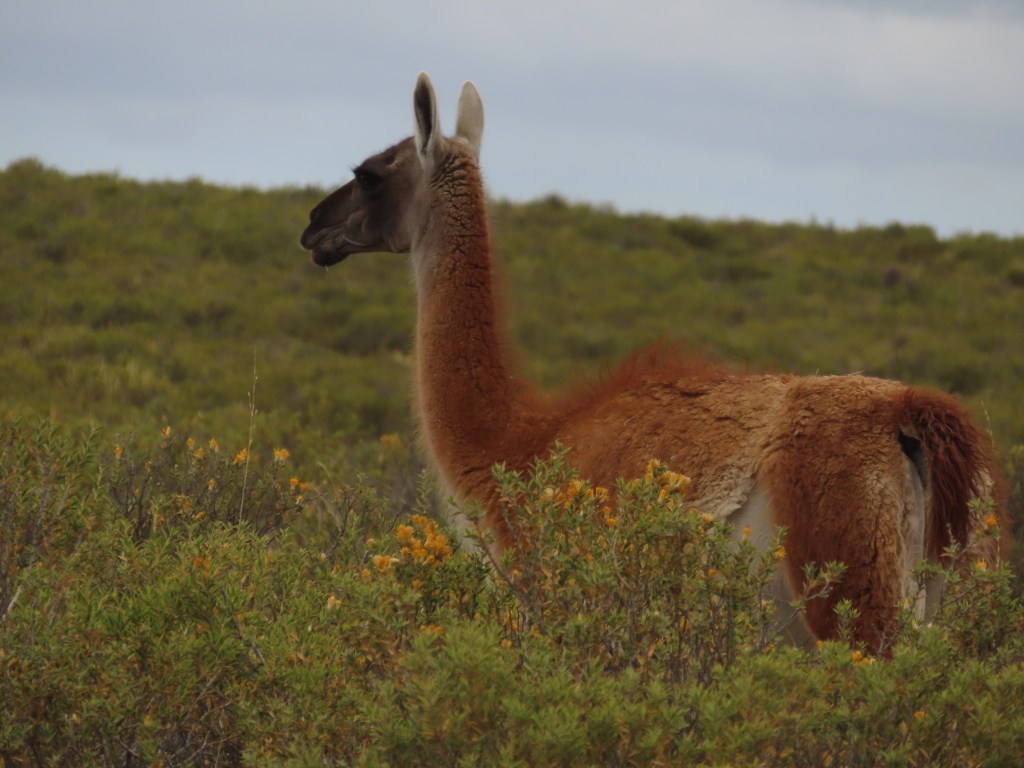
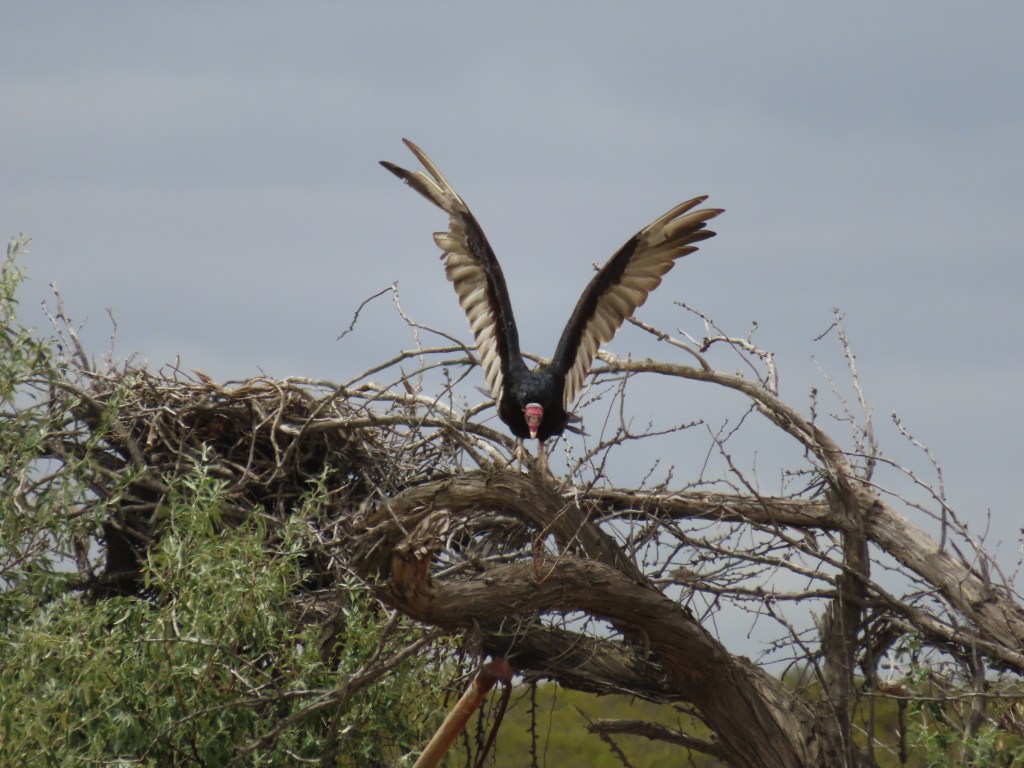
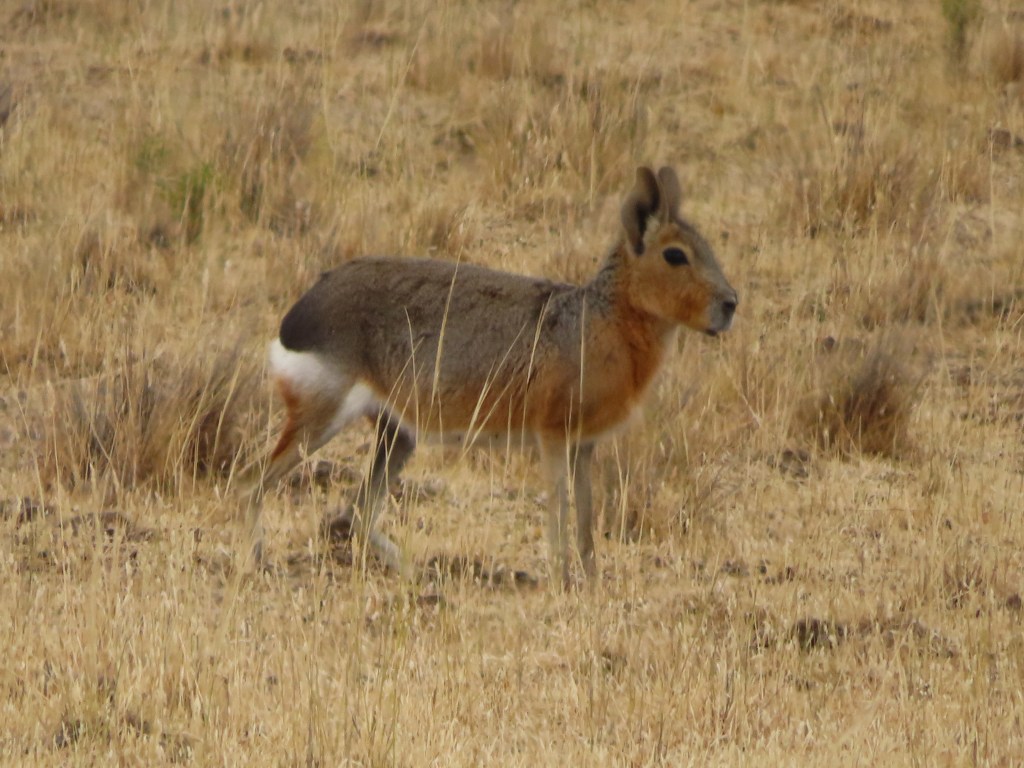
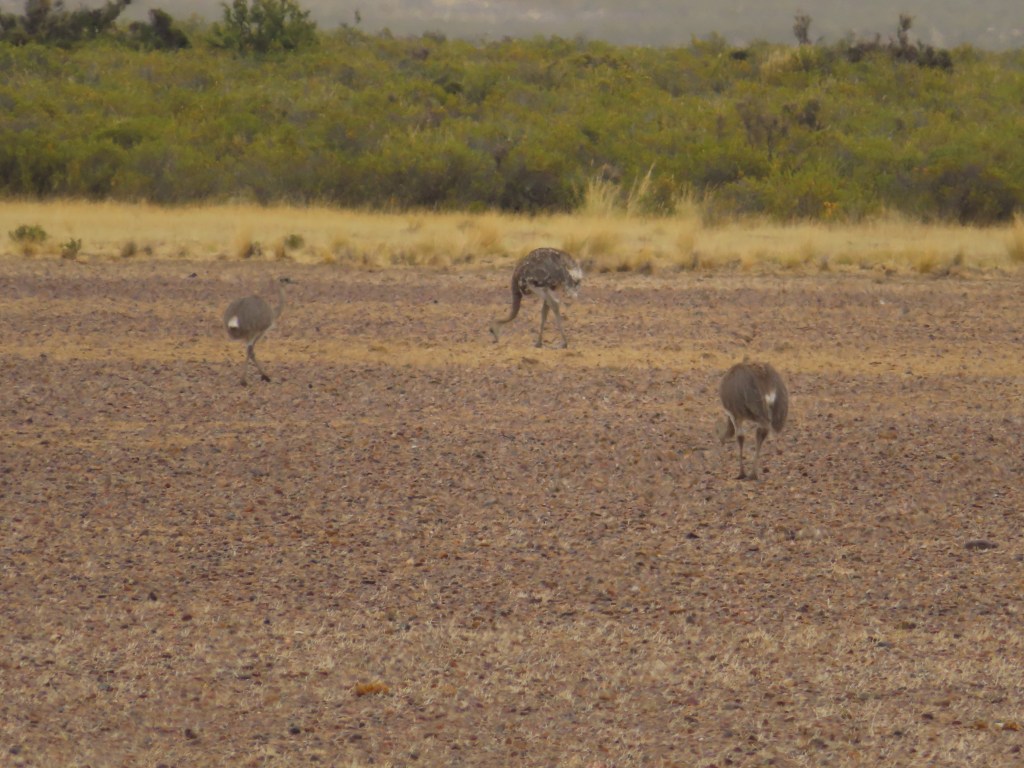
Torres del Paine Day 4


Ask anyone that knows this area and they’ll tell you – hardest part of the circuit is John Gardner Pass, hands down.
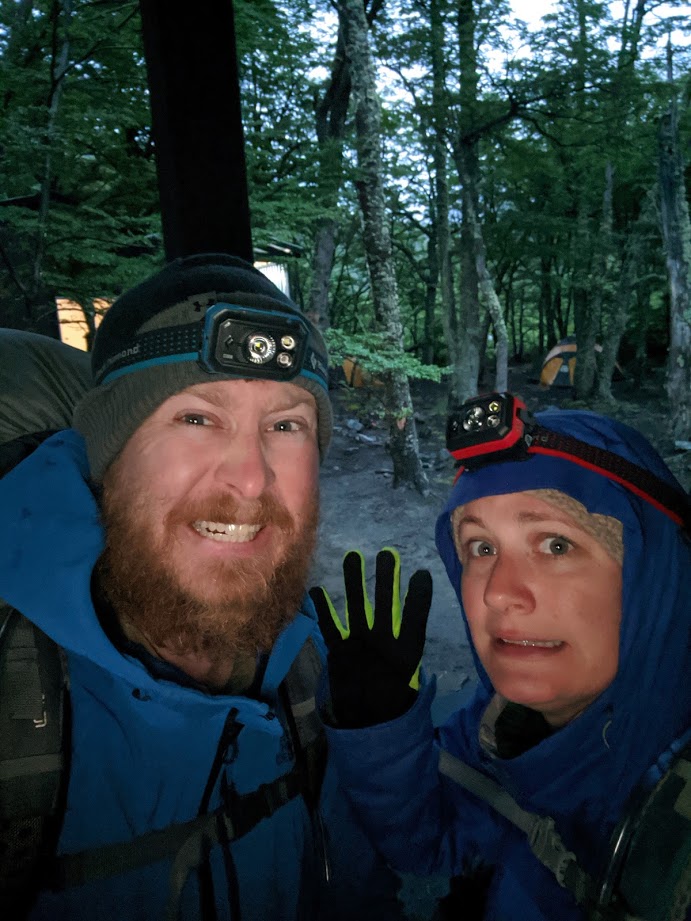
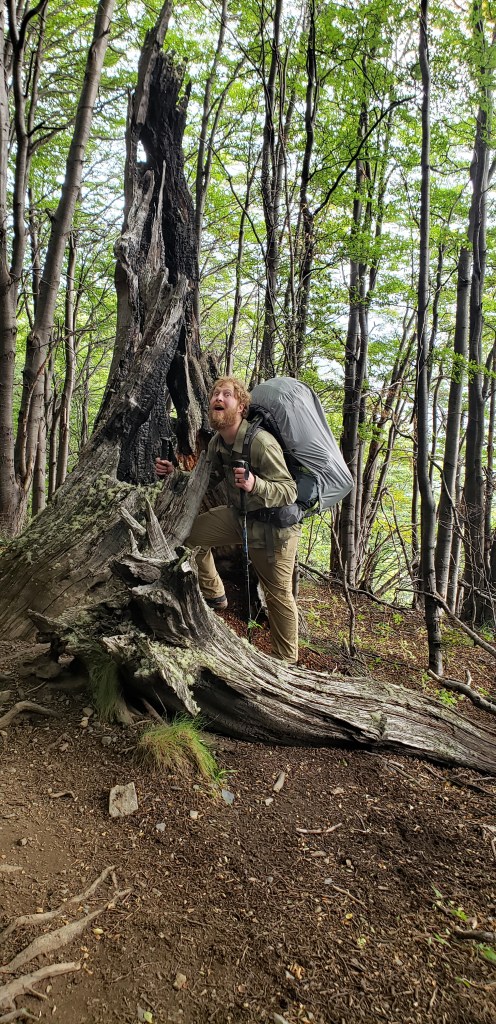
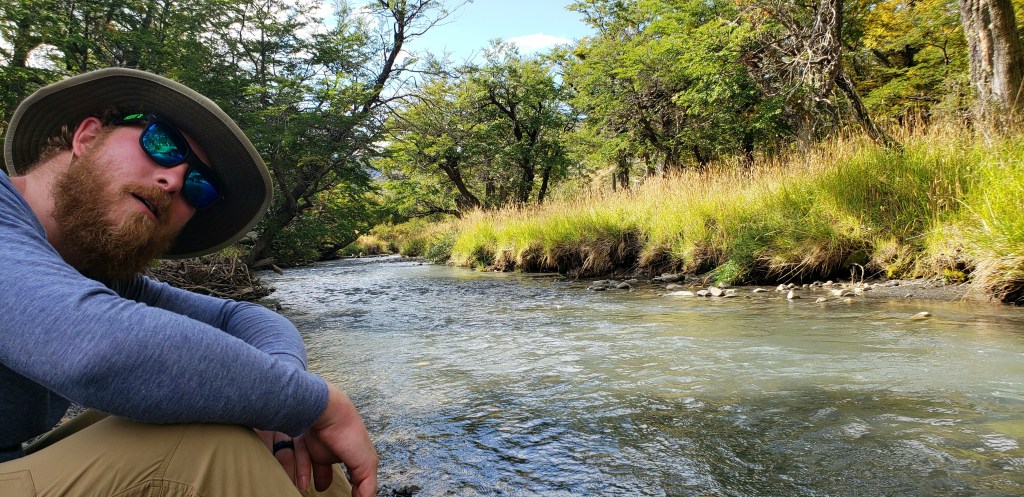
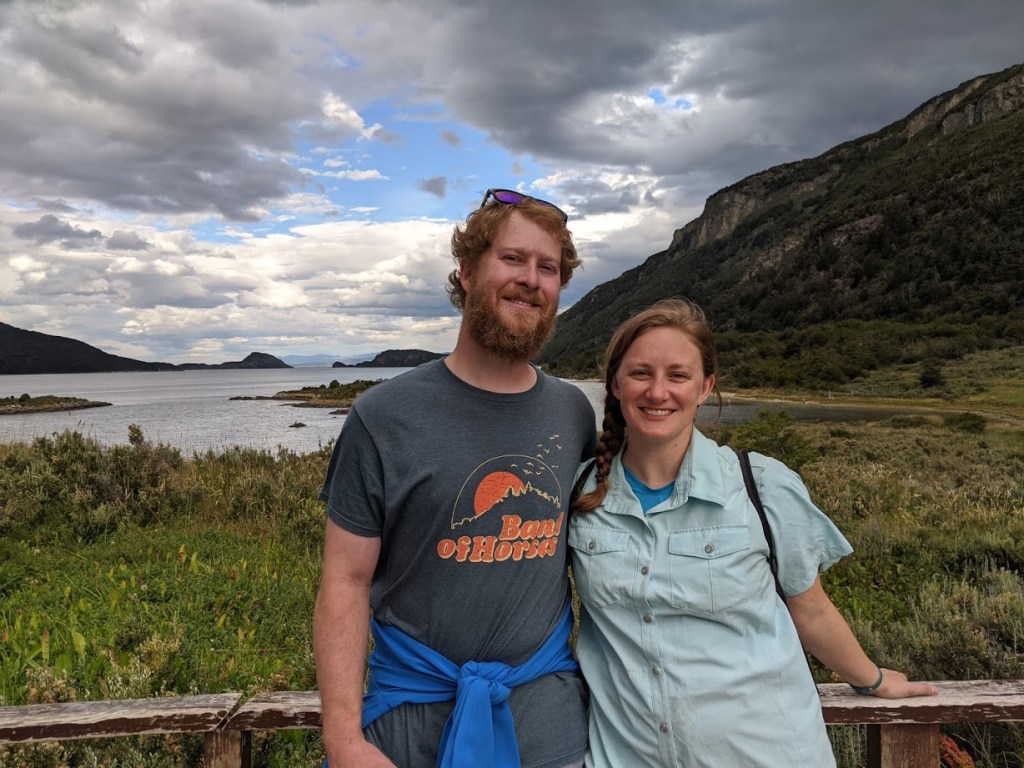
My scared face knowing we have a tough day ahead

We knew ahead of time that today was probably going to be our most difficult. Knowing it beforehand and being there in the moment doing it were totally different universes, though. Fair warning: This may be a slightly longer post than normal as day 4 of our trek was pretty significant. It holds the trophy as both our hardest day and our favorite day in the park.

Alarm went off well before sunrise. Gotta get in a solid breakfast. Plus it was nice to get moving because Los Perros was one of the coldest campsites – very windy, isolated, at elevation near some smaller glaciers, etc. The forests were a welcome refuge against the constant wind.
There were about 40 to 50 people in the Los Perros campsite, and it felt like EVERY ONE of them was in the kitchen at the same time as us. That room was packed arm-to-arm on the benches, everyone boiling water to have something hot before the climb. We heard one guy say he’d slept in the kitchen because his tent was no bueno and he was freezing. Yikes! Luckily, our tent is awesome. Here’s the small porch at the campsite at about 5:30 AM….gear everywhere, backpacks galore.

The crazy part (or at least one of the crazy parts) of John Gardner Pass is that they close it at 8 AM. That means you HAVE to start the hike before then. It’s nuts! Now, I’m not sure if that is every day, or if they base the closure time on the weather and wind – seems likely – but regardless, I’ve never seen an 8 AM trail closure before. Weather foreshadowing, much? HA, we were gonna be in for it.

Our day was essentially split into 2 parts. The ascent and descent of the mountain pass was the first, and then the trek from the Paso ranger station (our unofficial halfway point) to Grey refugio/campsite. The total mileage to complete for the day is 9.3 – not so bad, right?

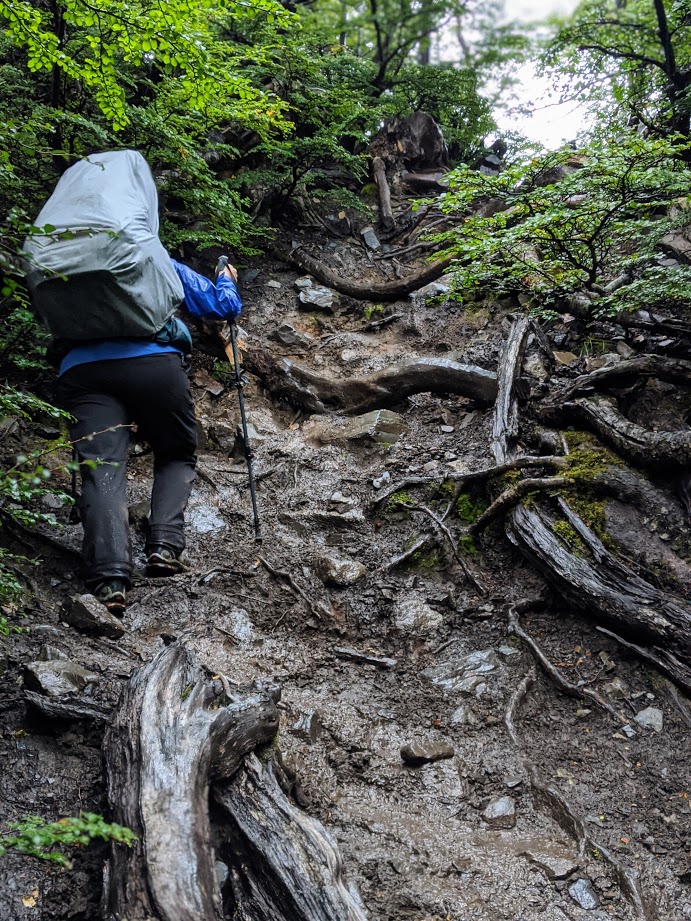
WRONG. Putting this into persective, the second half of our hike past the ranger station was 4.3 miles with a 1,300 ft mostly steady decline. But the first 5 miles? 2,050 feet straight up followed by an immediate descent of 2,460 feet which should be renamed Death to All Knees.

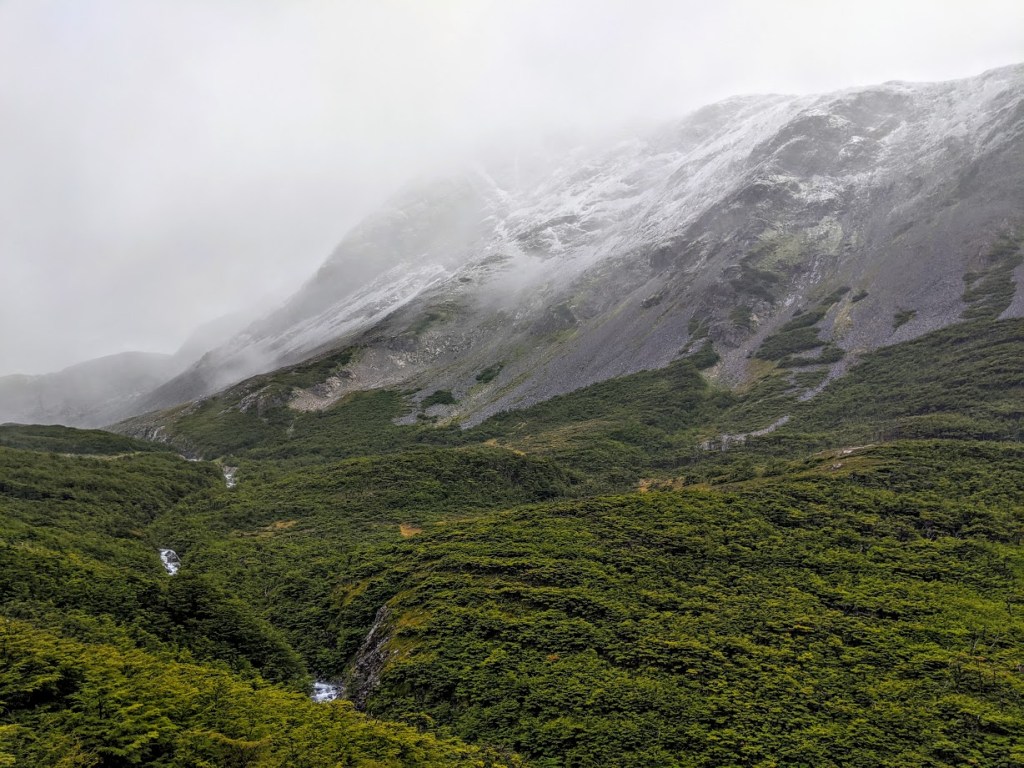
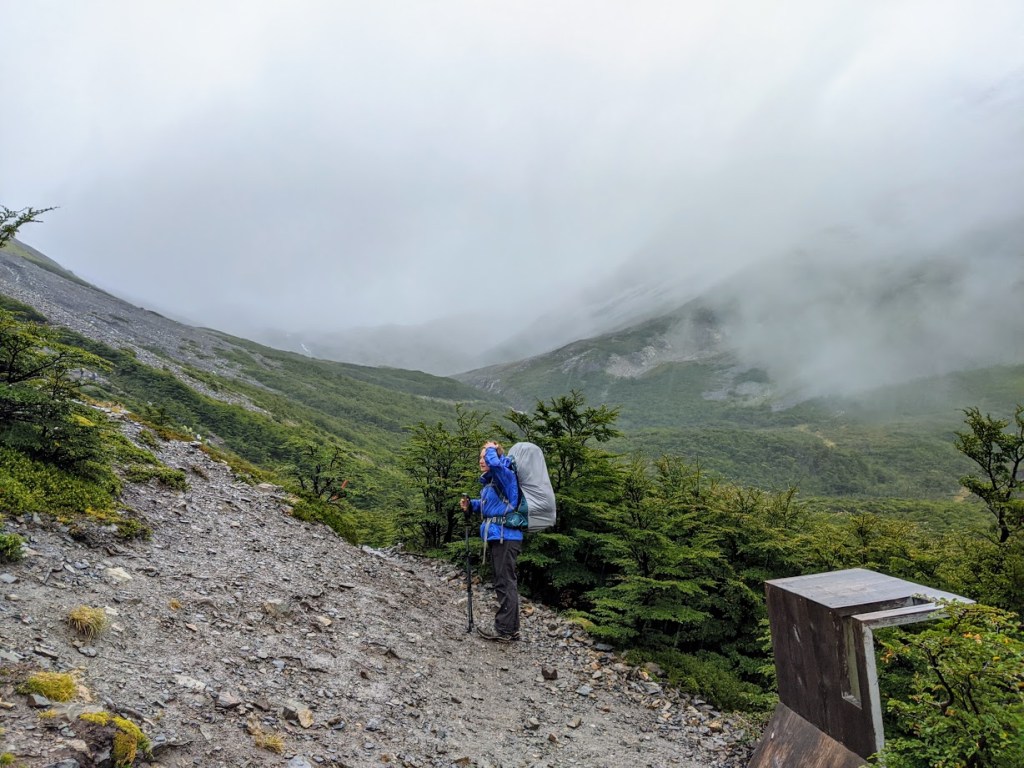
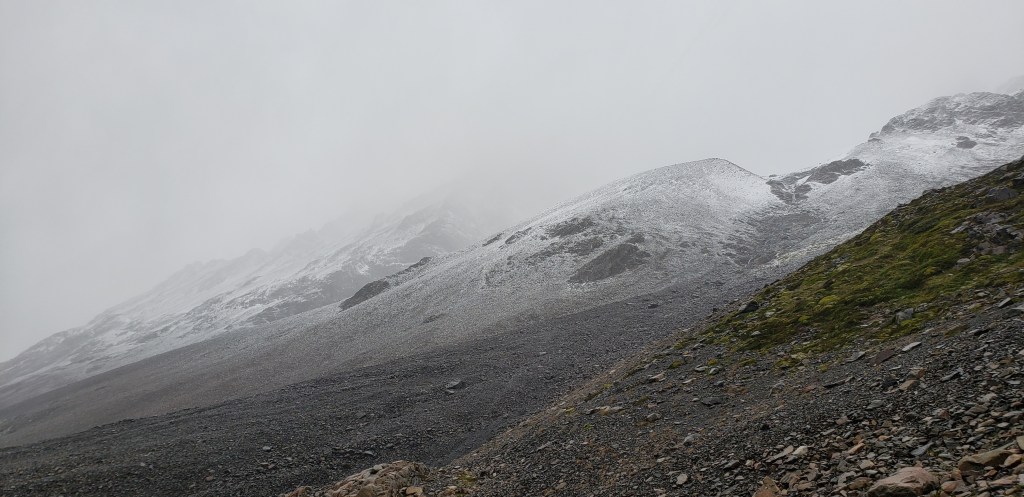
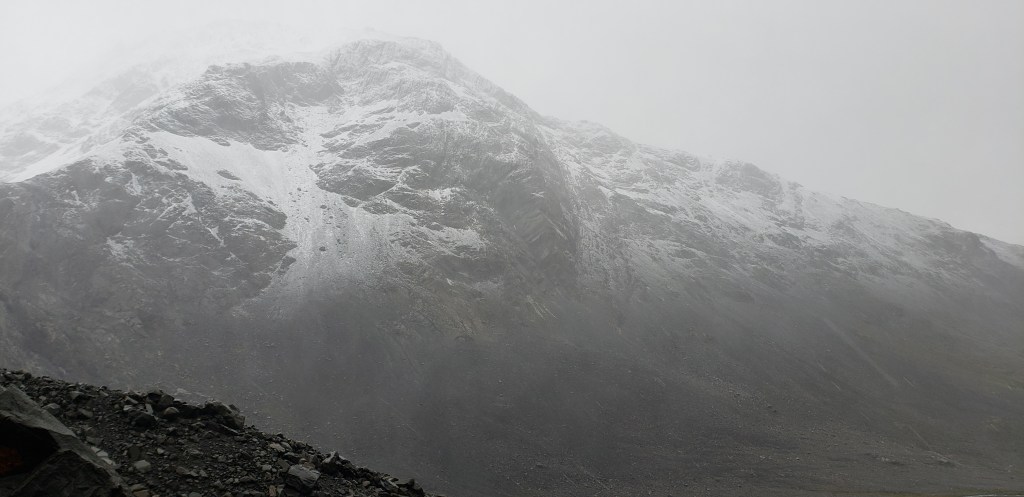
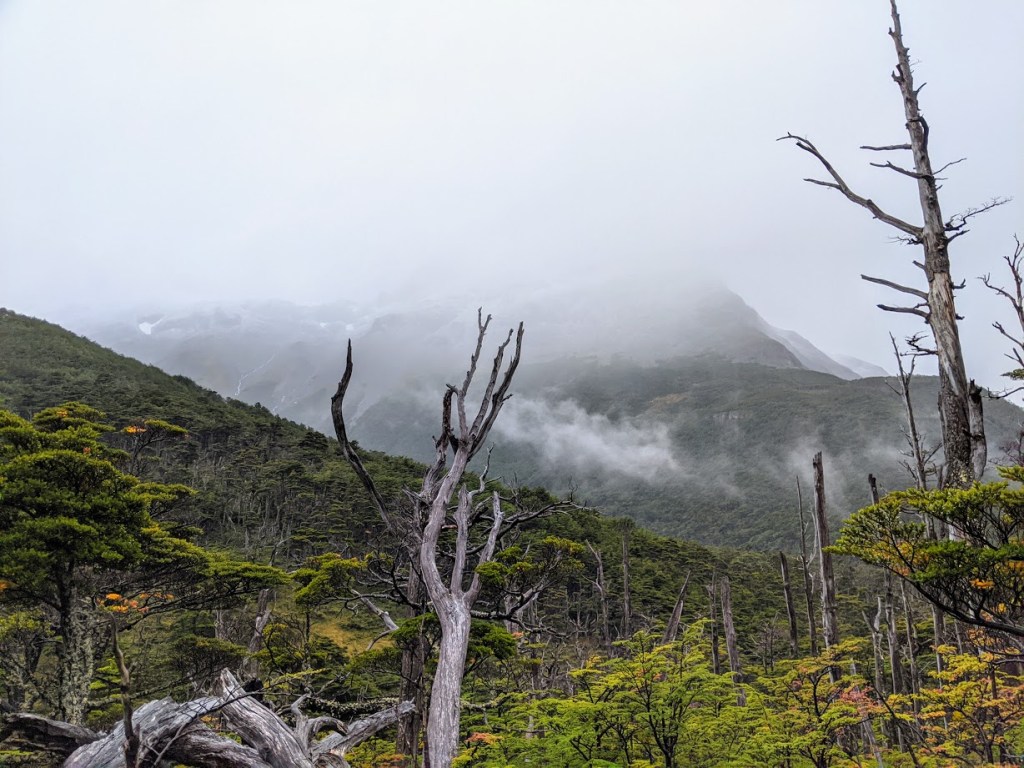
We got the full force of Patagonia on our hardest day. A giant thunderstorm that turned into sleet and then became a snow storm at the higher elevations in which the wind just continued to grow. From a distance, it was hard to see where our trail led because the clouds enshrouded it. The only thing we really knew was the trail seemed to go up, up, and away.
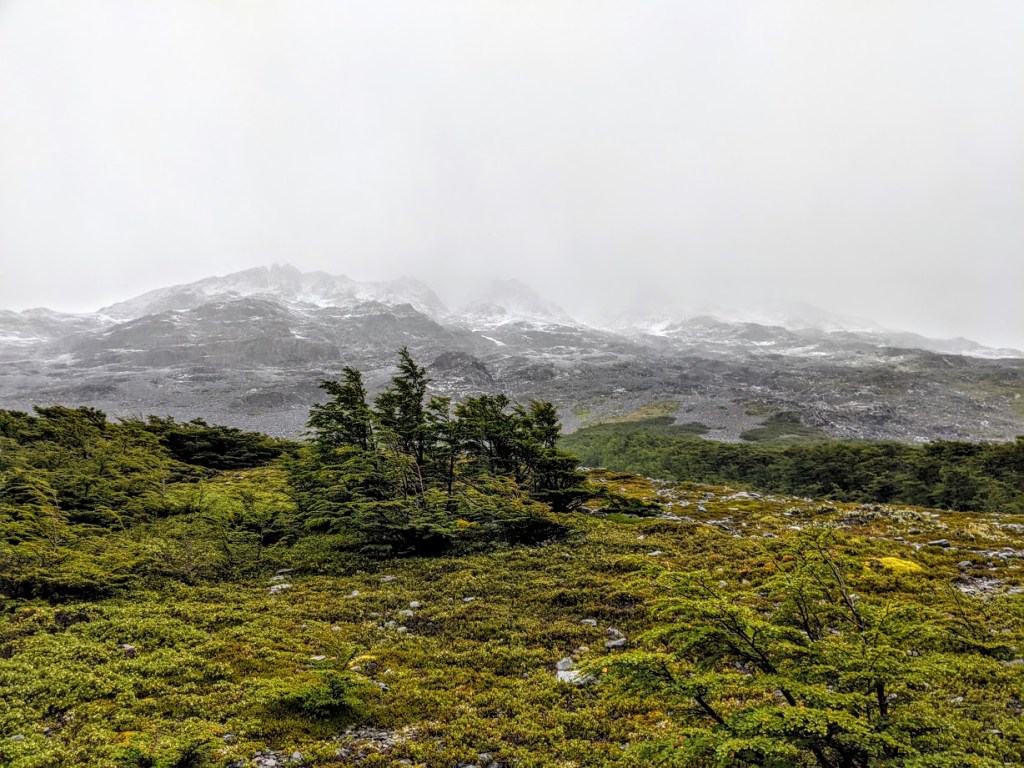
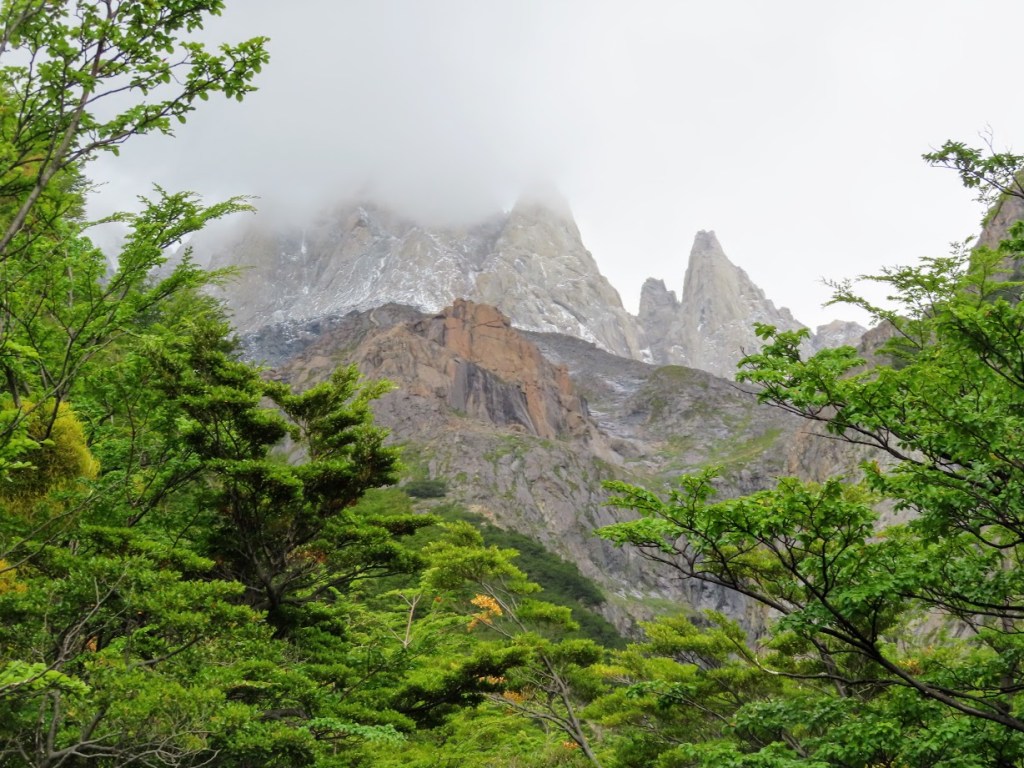
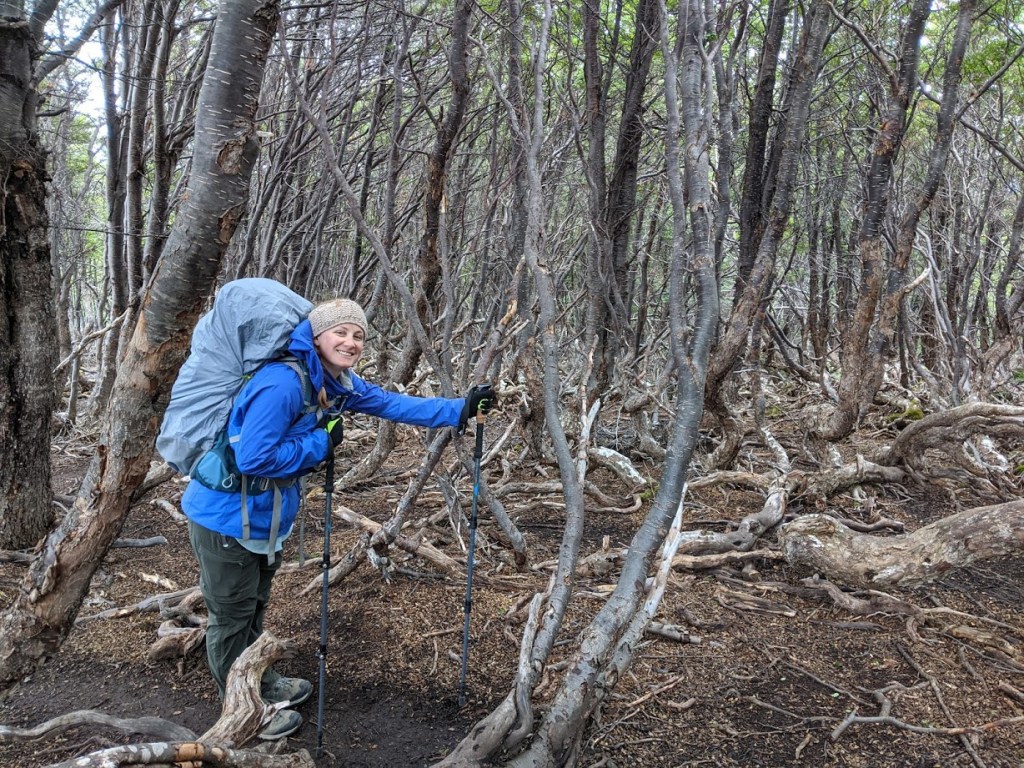
The edge of the tree line came pretty quickly. Once that happened, though, we lost the protection of the Lenga trees from the elements. It was about this time that we decided to put on our insulating layers (aka down coats) underneath our rainjackets. First time yet on the trek that we’d needed allll the layers. And on a steep ascent, if you’re putting on MORE layers rather than removing them…that tells you something. Very thankful we did that early.
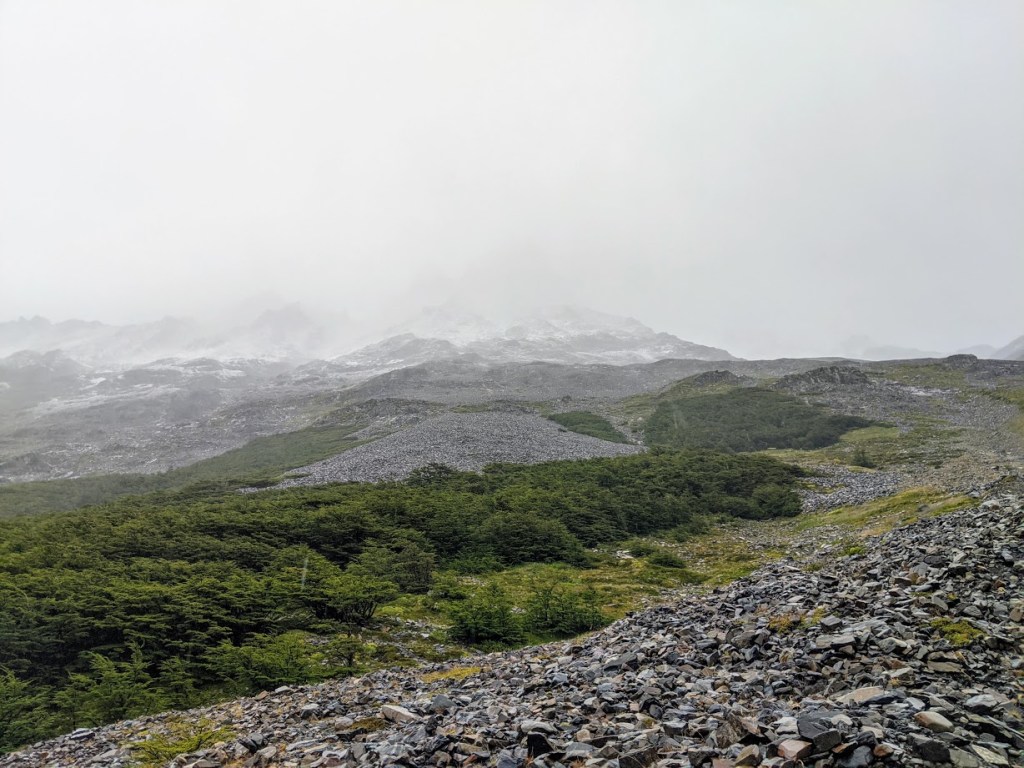
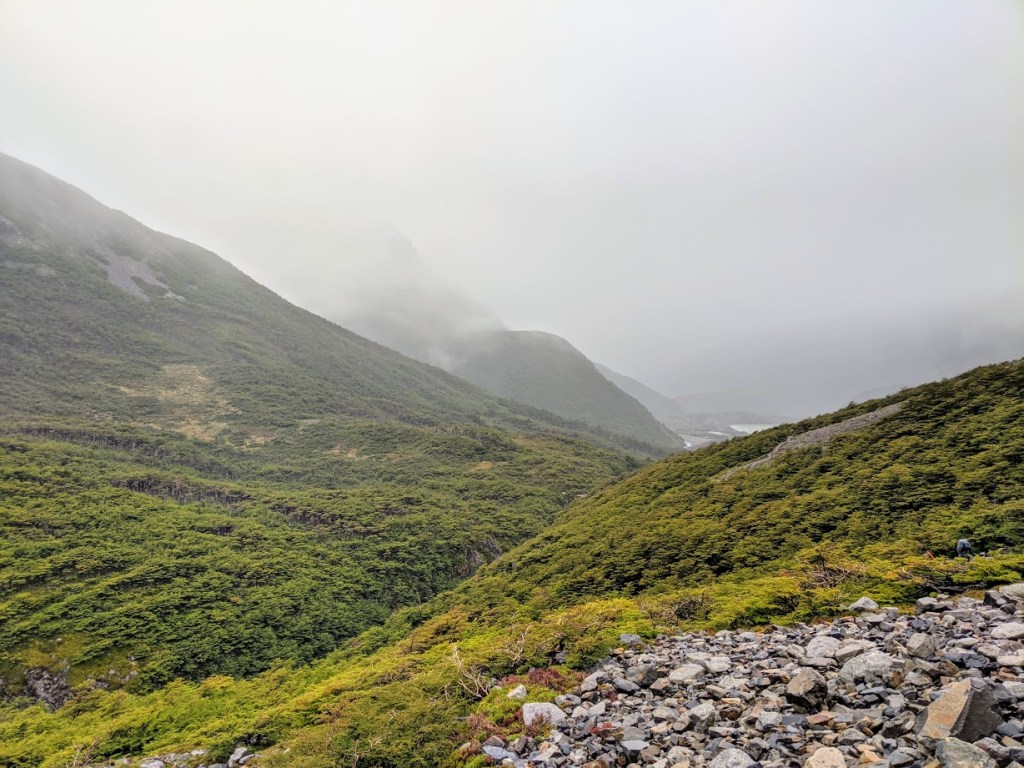
It’s funny, David and I are plenty familiar with snow in a variety of circumstances. We grew up in the midwest, for one, and are also pretty frequent alpine skiers in the Rockies, so we’ve been on many slopes and lift chairs in intense weather conditions. On a lift chair, you just sit there. On the slopes, you go with gravity – downhill. This was more similar to hiking up to Expert Terrain at the top of the mountain, where the storm is most intense. Brave the blizzard and the rewards are well worth it.
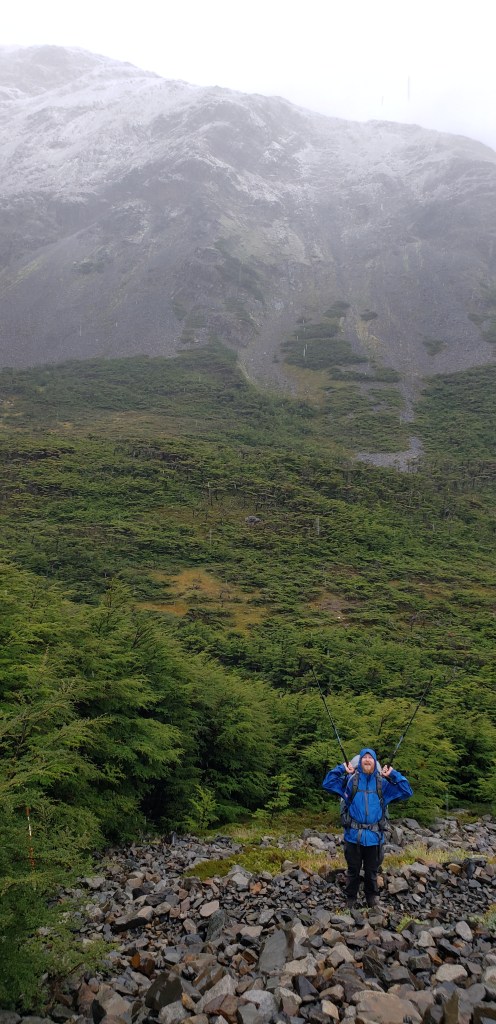
Most of the people from the campsite were in front of us and no longer in sight through the sleet blowing in your face, so you have this sense that it is just YOU and the mountain. It’s paradoxically comforting and terrifying. Terrifying because all you have to depend on is your physical strength and everything you can muster up in your mental state to get you through this storm and this mountain that is just the next level and beyond. But then, that same line of thinking is comforting because you know that you can, unquestioningly, depend on yourself to get you through this because there really is no other choice. Put one foot in front of the other and keep going.
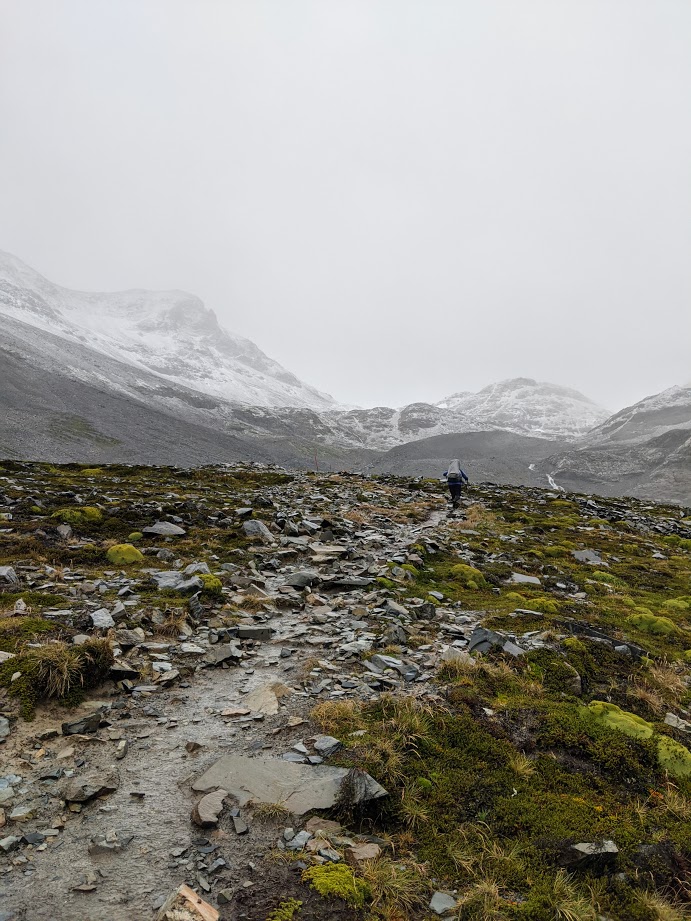
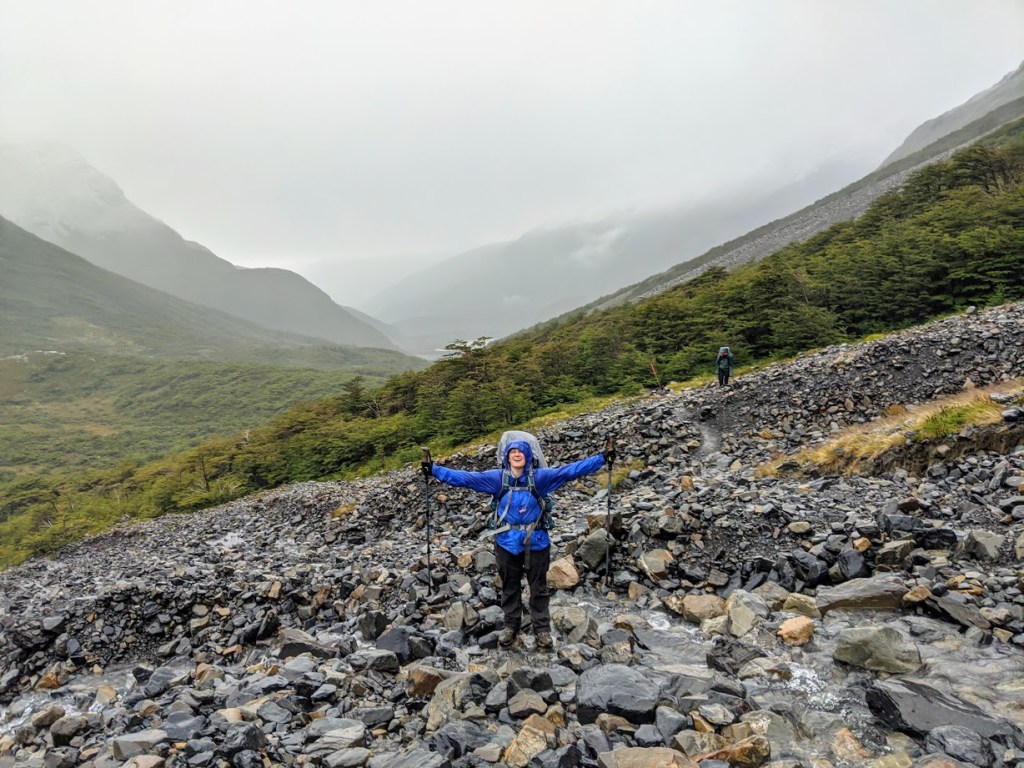
We took breaks by turning our backpacks into the wind so it wasn’t whipping against our faces, and also remember to take in the majesty. It’s not everyday you get to be on your feet within a stormcloud.
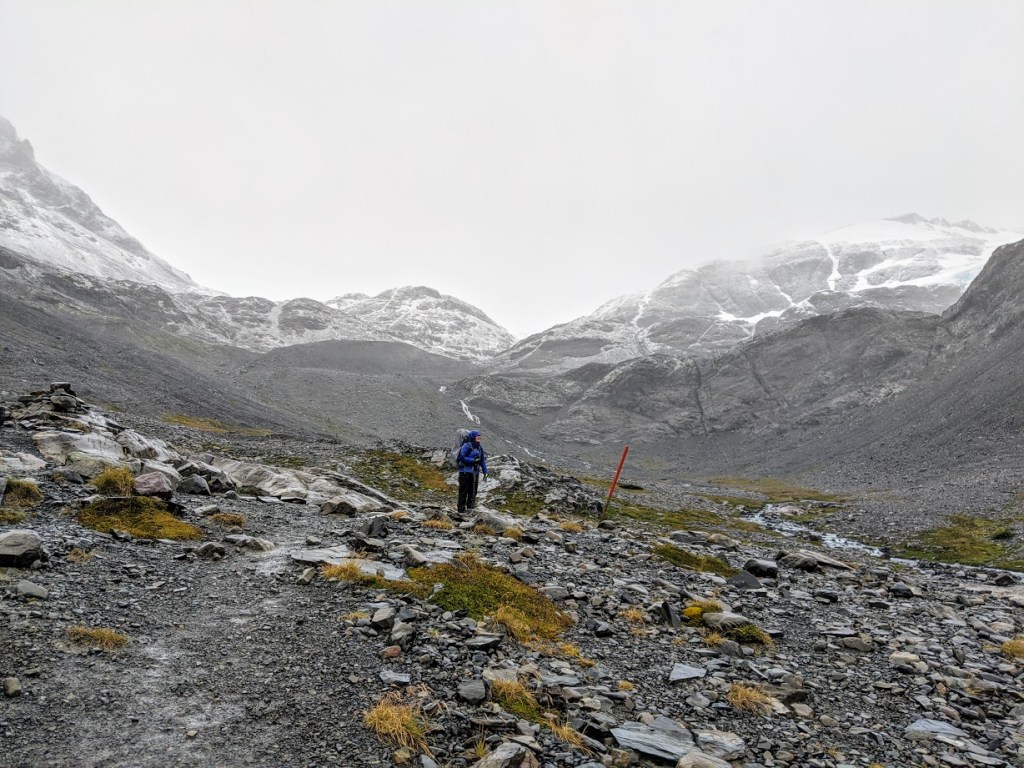
This is definitely a break moment

(Even saw some really beautiful ground dwelling birds that only live in mountain highlands! Grey-breasted Seedsnipes. So cool! We came upon them suddenly and they ran away hooting pretty quickly.)

This was raw. Step by step, pole by pole, all the while getting belted with rain, wind, and sleet as our clothing did the best it could against the elements. Just look for the next thing painted orange and go in that direction! The coldest part of both of us was our hands, as the gloves we brought were windproof but not waterproof (facepalm). I lost feeling in my hands more times than I could count.

At different points, both of us felt fear creep in. One of the natural human survival reactions when the odds appear against you. Too cold, too wet, too tired, too vertical, too hard, too much. I thought I saw the top of the pass and a little shelter in the distance at one point. It was just a big boulder and the trail continued up. A little while later, David thought he saw the top of the pass in the distance and we were relieved. Then we got to that rocky crest to find more inclining mountain path of snow and sleet covered rocks. I remember hearing him say “Oh my God…” right in front of me and I just knew.

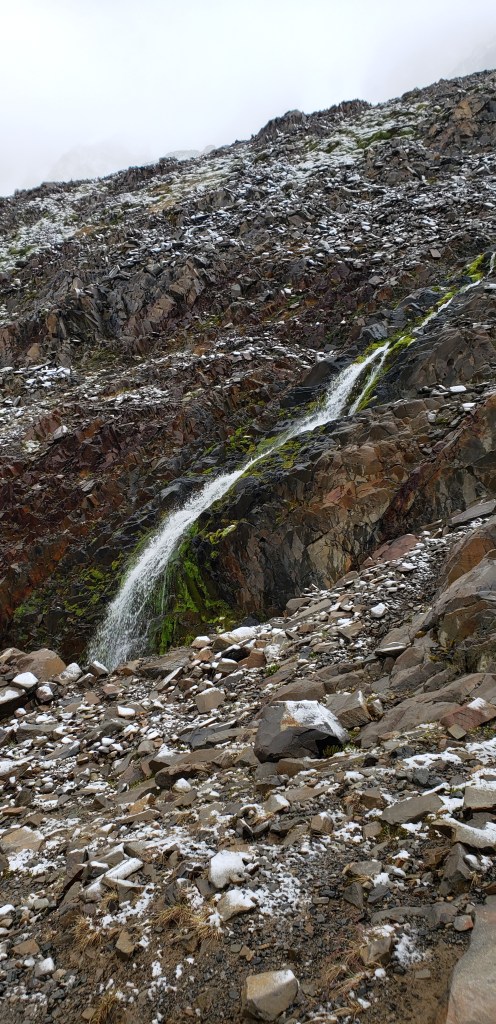
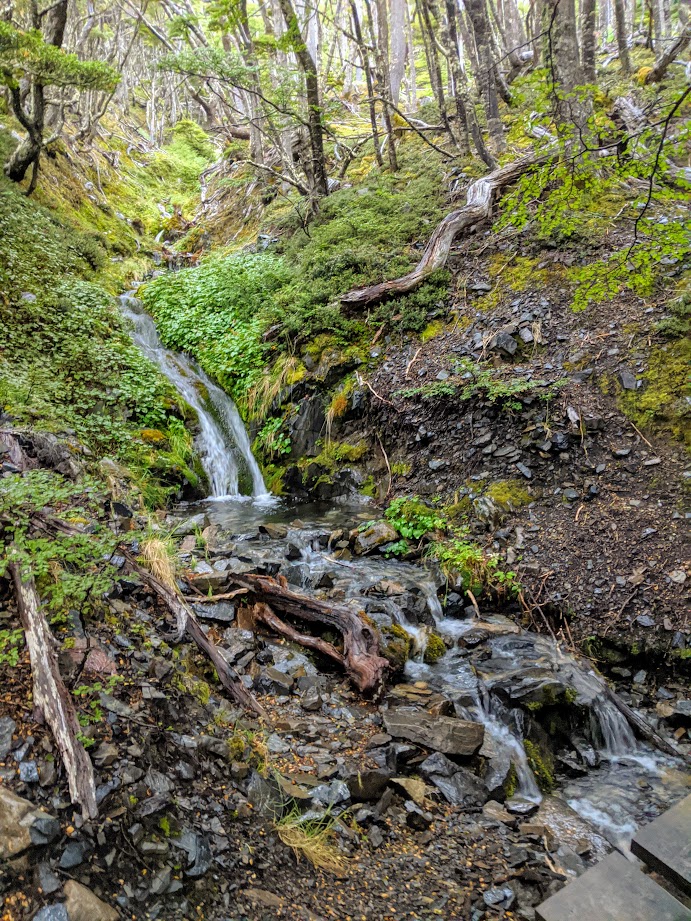
At a particularly weary point after that, we set our bags down on a snowy rock for a break and shared the last couple pieces of a Toblerone. Freezing fingers kneaded themselves and brought feeling back. We chewed and gazed at waterfalls the entire length of a mountainside. Not for the first or last time came the silent acknowledgment that we were here in a place on Earth that few humans get to be. And we drew strength from the mere fact that we would do this together.
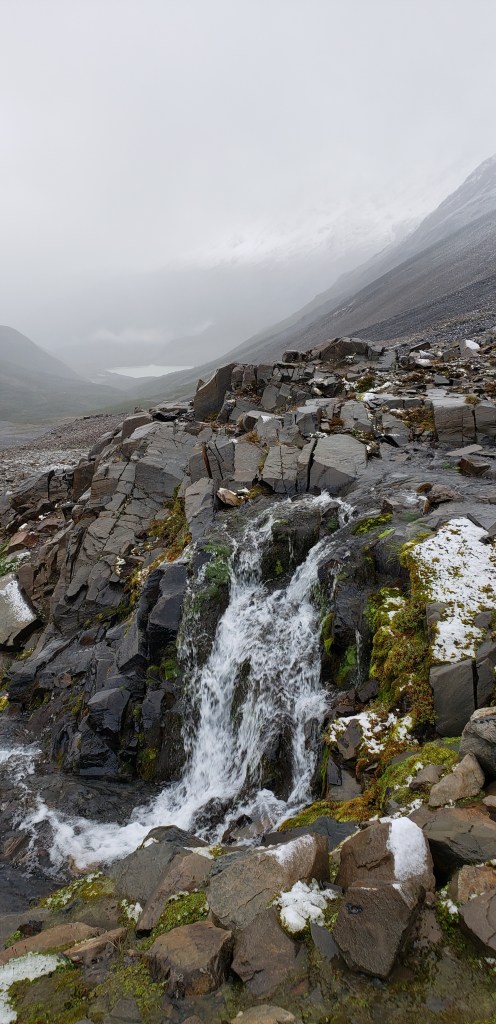
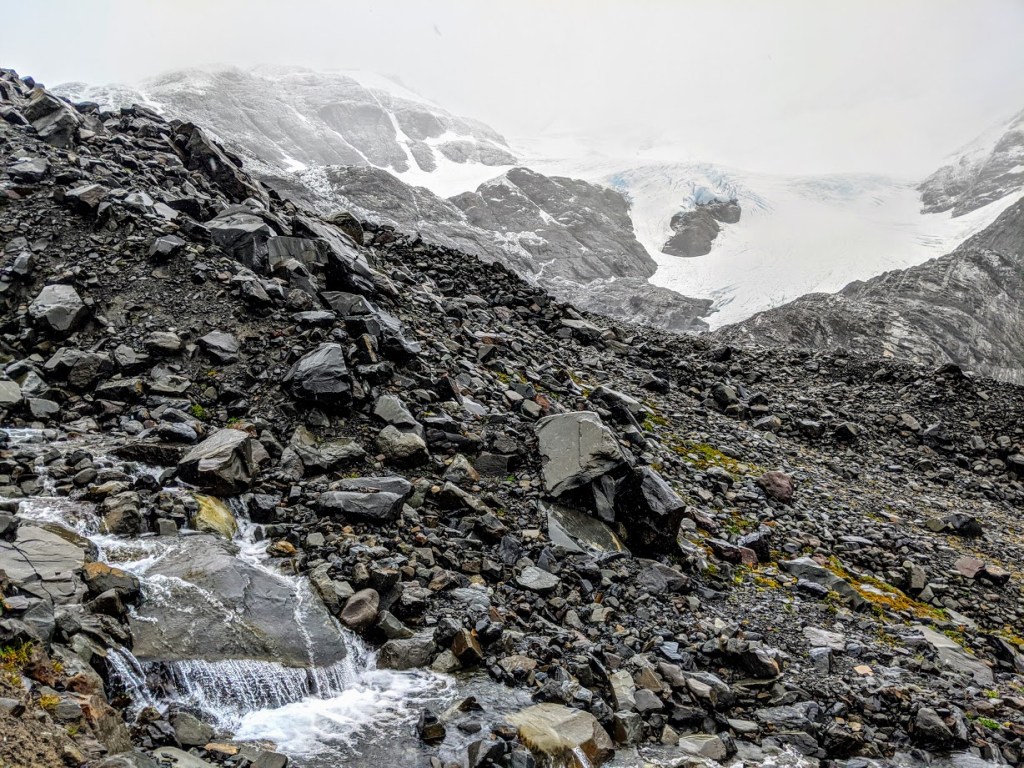
To all professional mountain climbers out there: Respect.

After putting a pin in the dumb thought that I may get frostbite in one of my soaked fingers, I unknowingly tapped into the strength of a human when confronted with the savage of the wilderness. This is very difficult to describe if you haven’t experienced it. I imagine it is kind of (to a much smaller degree) how a state of spiritual enlightenment feels. For one, all fear is gone. It is a place of tranquility where things like doubt, insecurity, and worry do not live. In retrospect now, I think you come to this state of mind because you are weary, pushing yourself to the edge and giving it everything you’ve got, and knowing that you have to draw on strength unseen. You accept, and you do. It’s one of the calmest and most appreciative mental states I’ve ever had…stillness in a wild, crazy-ass mountain storm all around.

Strange, right? Or maybe not so strange.

We knew when we hit the top. The wind actually blew us back a few steps down the mountain. Couldn’t look straight ahead for too long. It was a flat bit of land with only cloud in the distance – a good sign because that would finally indicate descending land.

The trekking poles we had to use to PULL our bodies across the pass against the wind. Absolute insanity. The thrill of having reached the top was pure adrenaline – had to yell at each other at the top of our lungs from like 2 feet away. Came to find out later after looking it up that it had been 60 mph winds up there. WHAT?!

A picture started to form ahead of us. Distant mountains, far off and in the sunlight. We could see the edge of the storm in the direction we were headed. And if that wasn’t reward enough in itself, the most spectacular sight stopped us dead in our tracks.

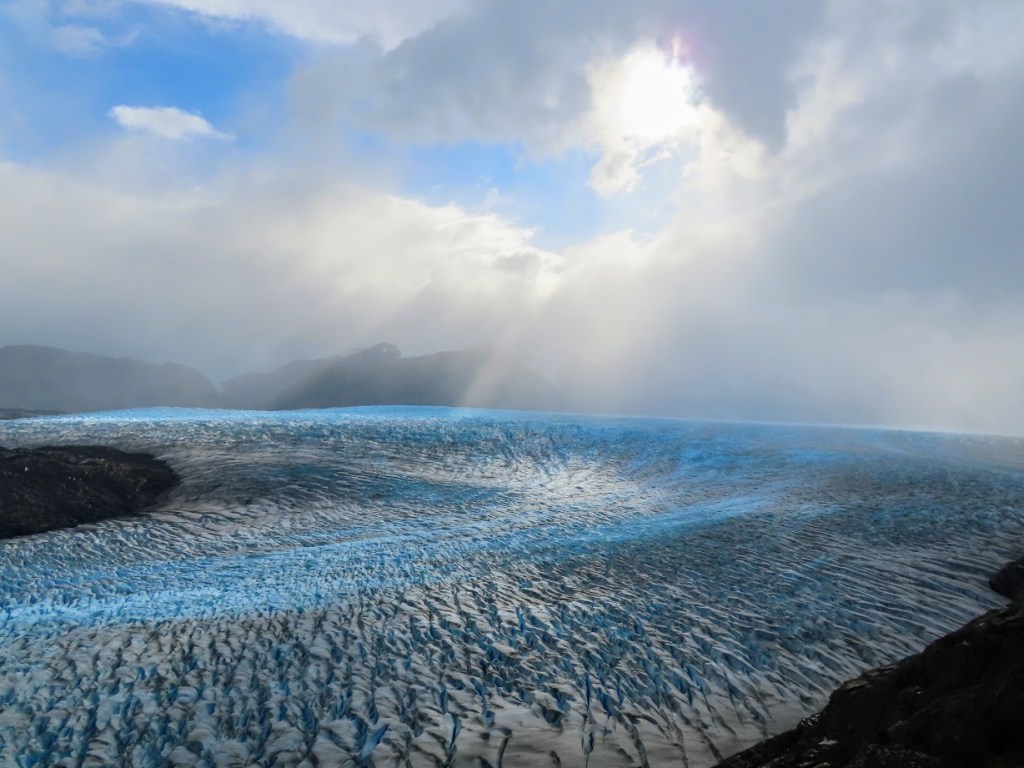
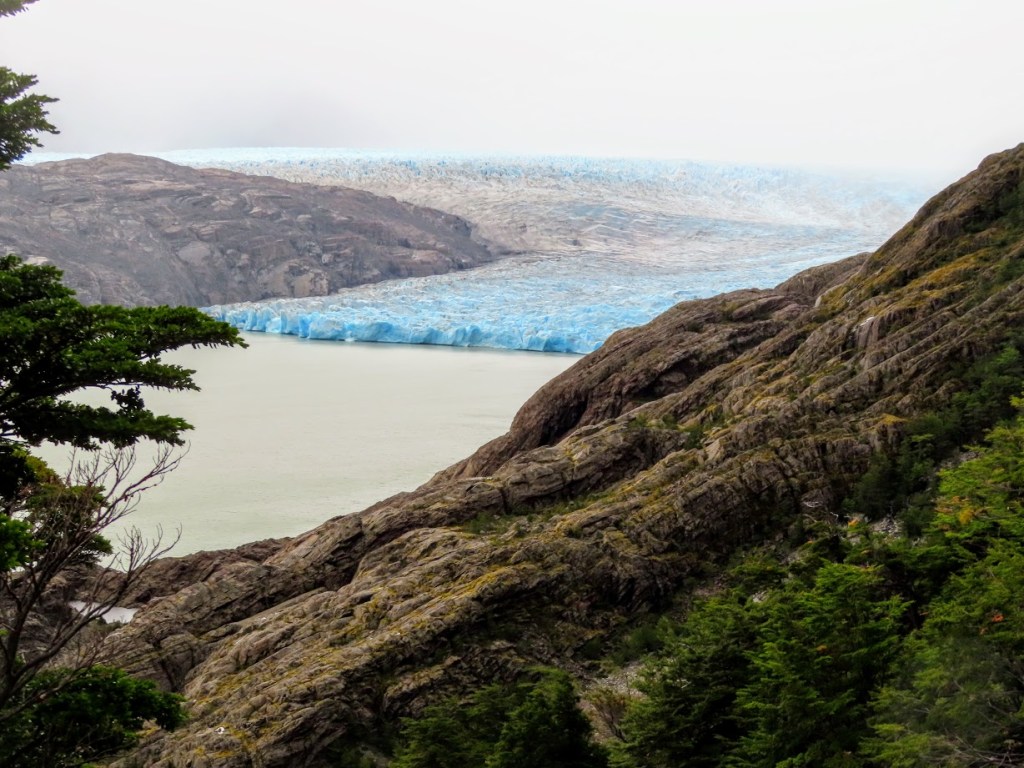
Glacier Grey, filling the valley and your eyesight as far as you can see…bathed in the sunlight with a fully-formed, complete rainbow over it.
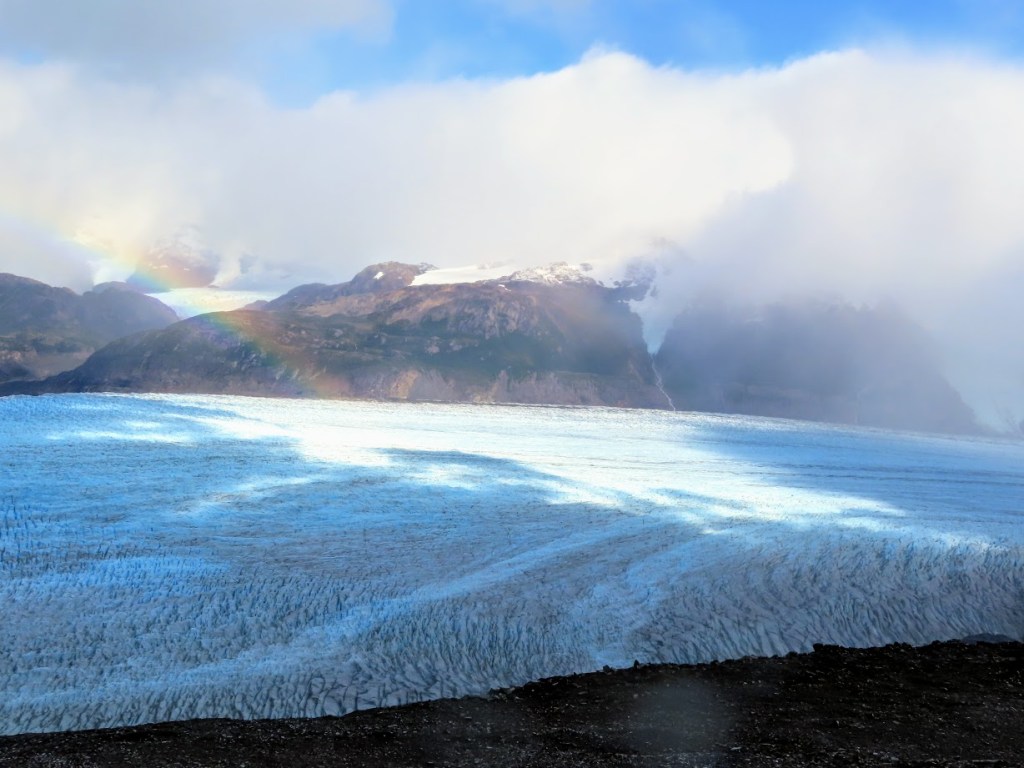
It was our storm’s end.

I just CAN’T EVEN with this place. We were not prepared for how colossal Grey is. As great as these photos are, they still pale in comparison to being there in these moments after what we had just done. Magnificent. Sublime. It could have warmed and thawed the heart of the Night King.
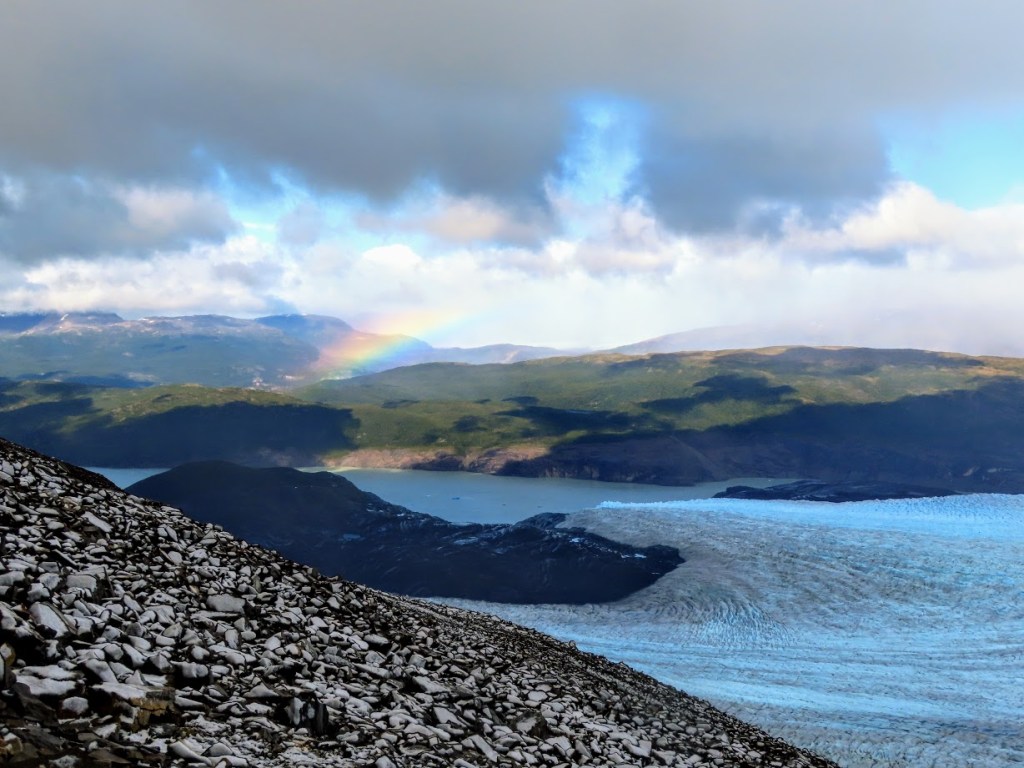
That rainbow stayed there. As we descended, we just kept looking up and loving how steadfast it was. It finally disappeared about an hour later. An HOUR. Patagonia rainbows > All other rainbows. They’re pretty much a daily occurrence down there, and it is MAGICAL.

Soooooo the descent…..it sucks. Again, the distance was around 2 miles, and in that mere blip of a distance you go down ~2,460 feet. Monumentally steep downhill going, tired bodies with heavy packs making it slower going than normal. Oh, and it was muddy and slippery from the rain, too. Borderline undoable? HA, not for us, not today!
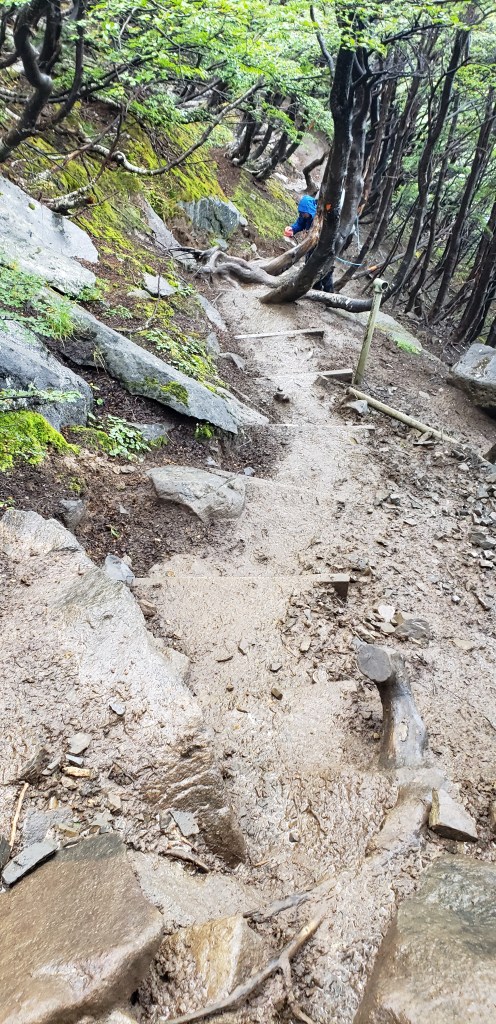
Most of it was giant, steep steps oftentimes longer than the distance from my foot to knee. Cool.

Lots of cursing. Exclamations of wanting to punch whoever this John Gardner was in the face. Making sarcastic comments at the tons of signs that way “Caution: Risk of falling.” We didn’t think going down would be physically harder than going up. We were wrong.
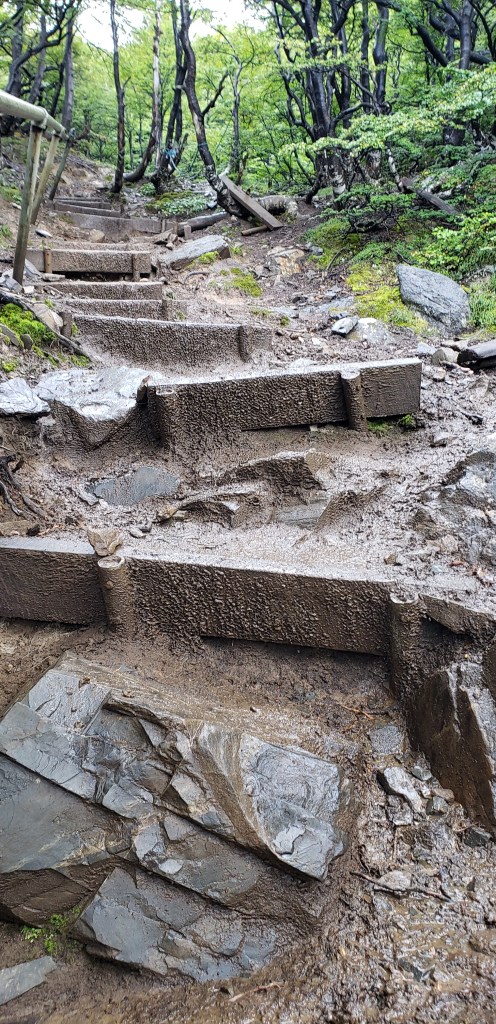
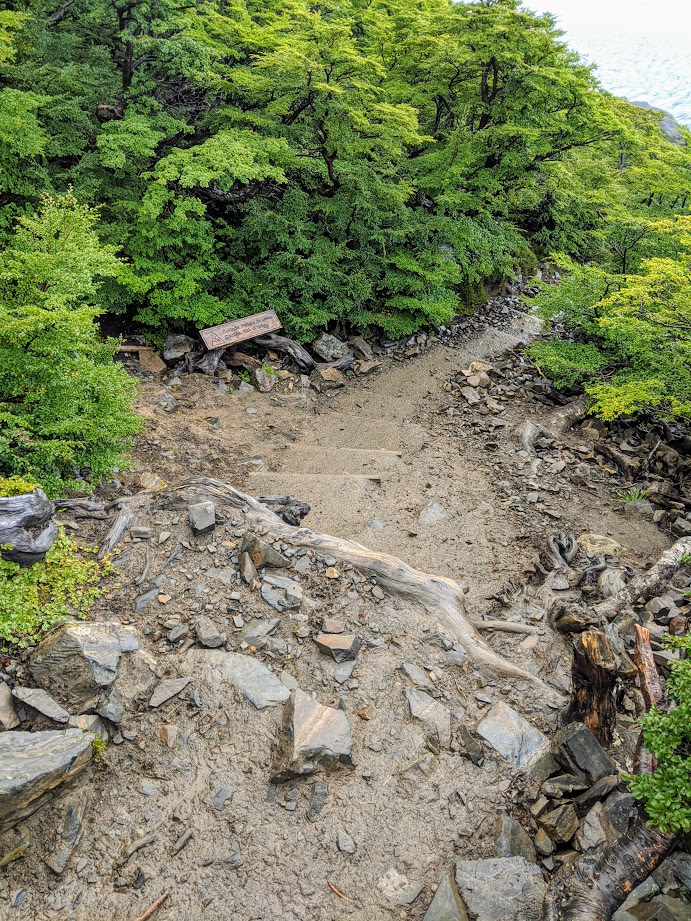
I don’t think our knees, quads, calves, or low backs would’ve survived without the trekking poles as extra feet. They were clutch. And (another bright side) our weather had now become scattered forest sunlight with no wind! Whole new side of the mountain = whole new world.

It became apparent at some point after the pass that we were soaked inwardly head-to-toe. Socks, underwear, bra, you name it. The water had been blown into us steadily and for multiple hours from every angle, so it was really just a matter of time. Finally reaching the Paso ranger station meant a blessed lunch break and change into dry clothes – YES! But oh wait, still have 4+ miles to go…dangit.
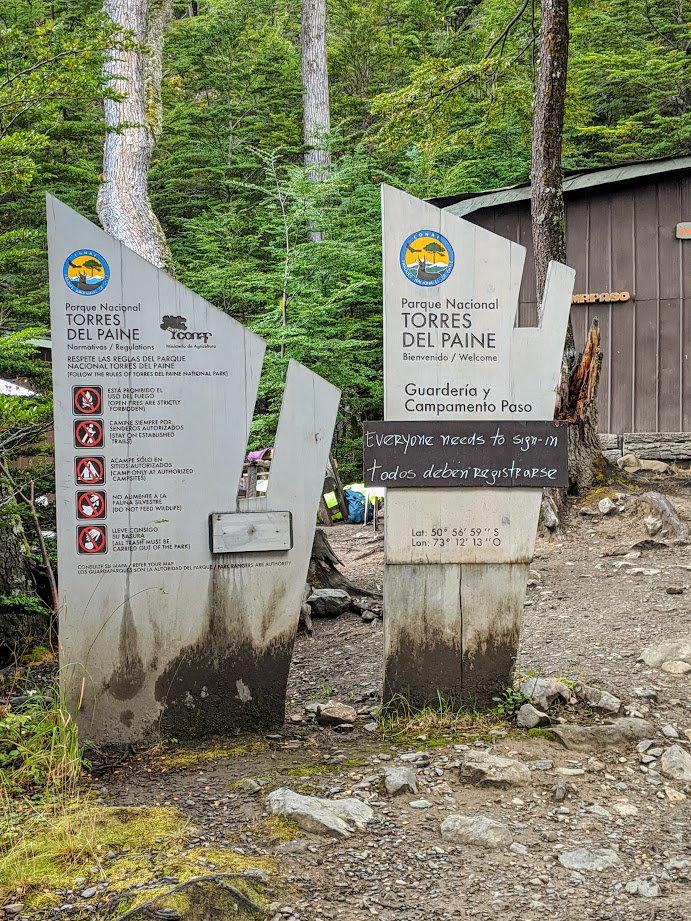
The ranger and some other park staff told us the trek to Grey from that point was “muy tranquillo.” Personally, I think the Chileans have a different idea of what constitutes a tranquil path. Muy tranquillo, in my mind, is a flat trail with some beautiful scenery and some cozy twists and turns. This trail was NOT muy tranquillo! If they were comparing it to what we had just did, than literally ANYTHING could have been muy tranquillo! Crazy Chileans…I have a feeling they’d rate some black diamond ski trails in Colorado as greens (can’t help but kind of love it, though – it’s like they’re natural-born badasses).

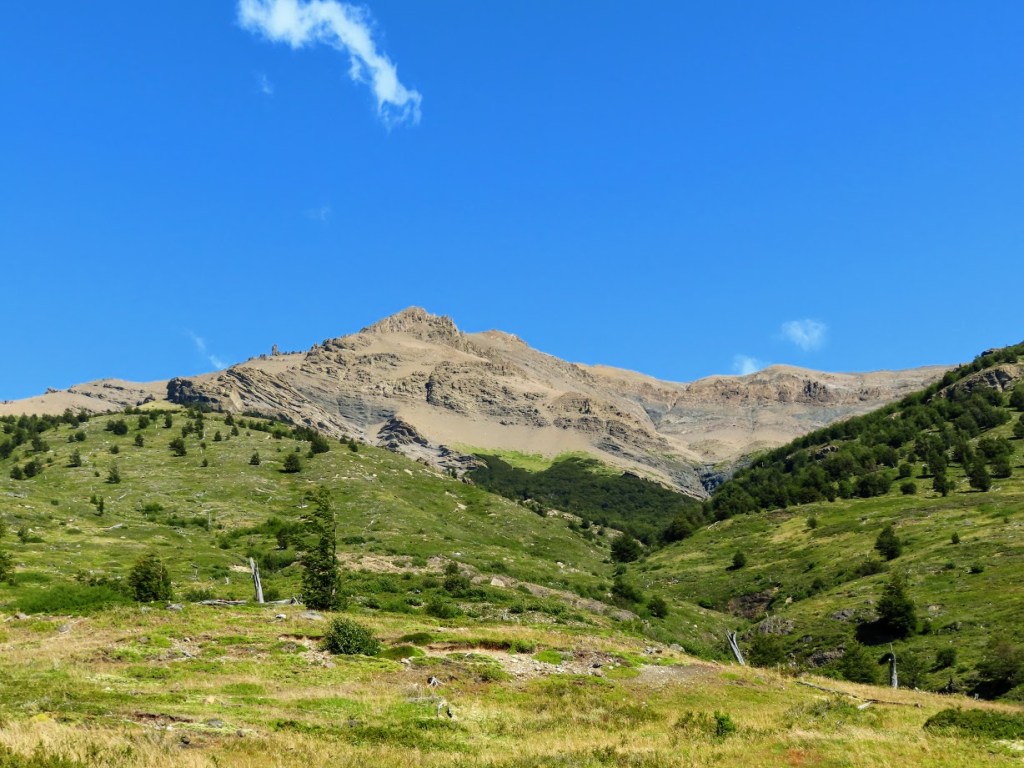
Anyway, we pulled ourselves up by our wet bootstraps (but now with dry socks) and set off to Grey campsite as the sun sank. I just didn’t think too hard about it.
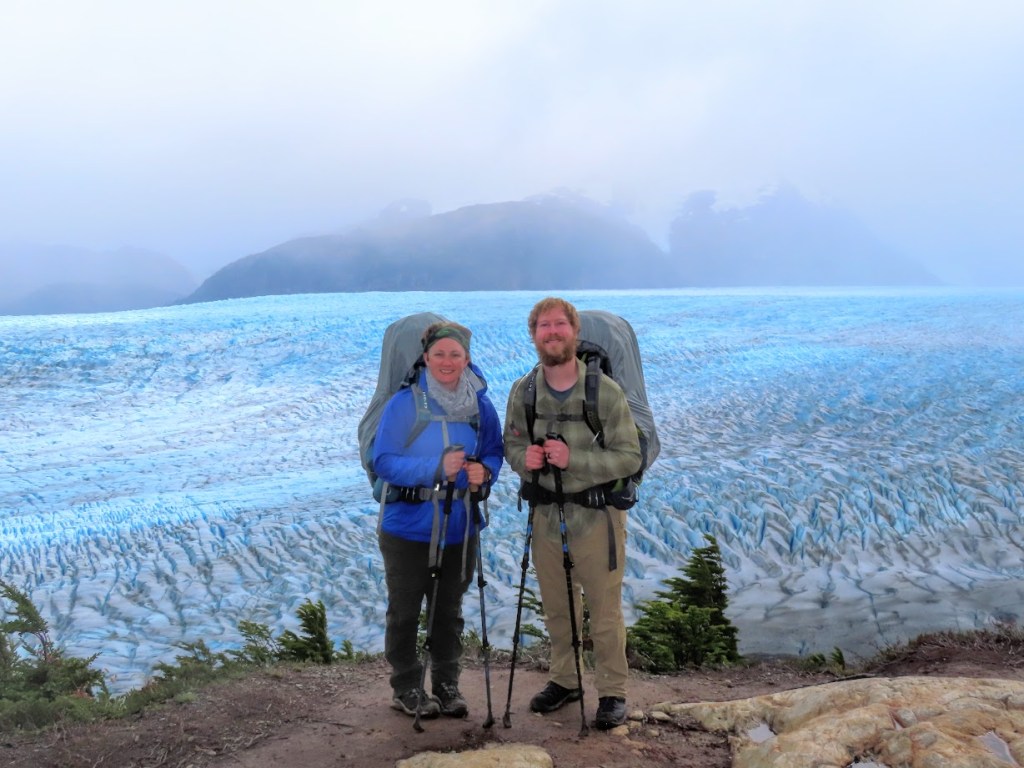
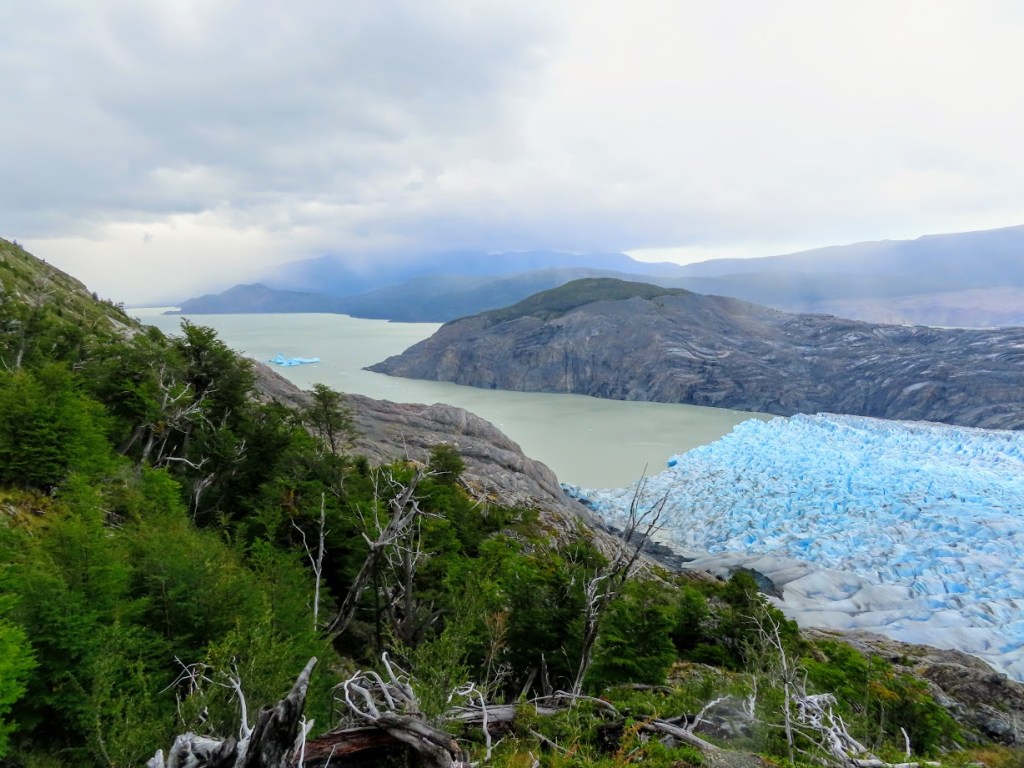
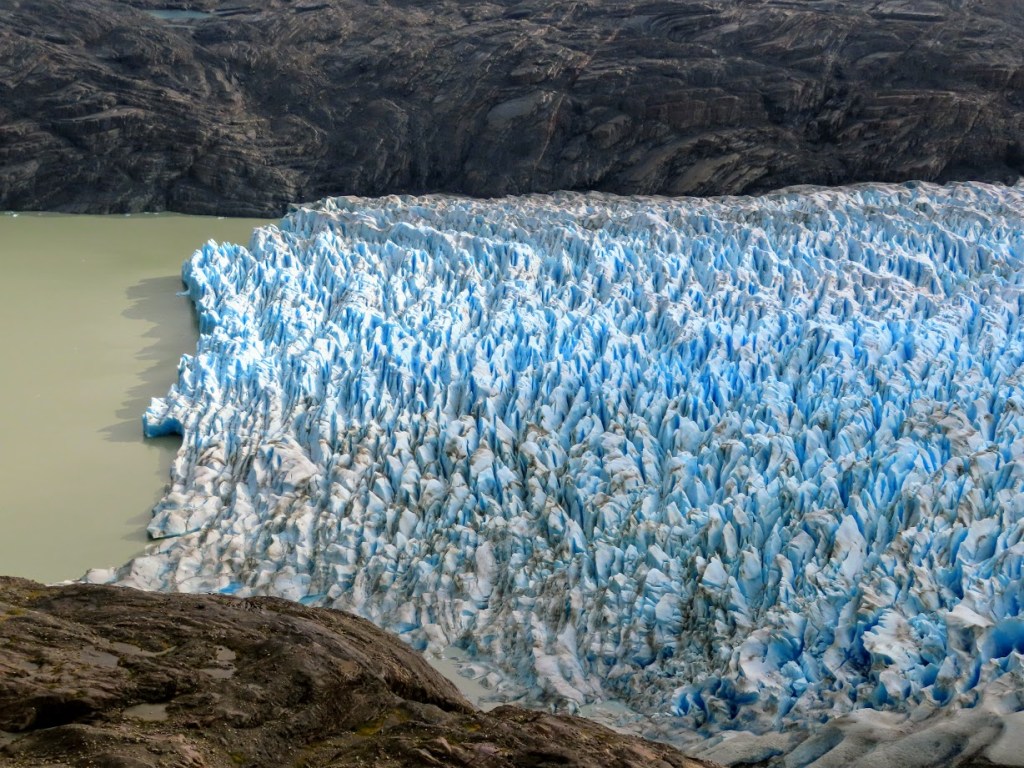
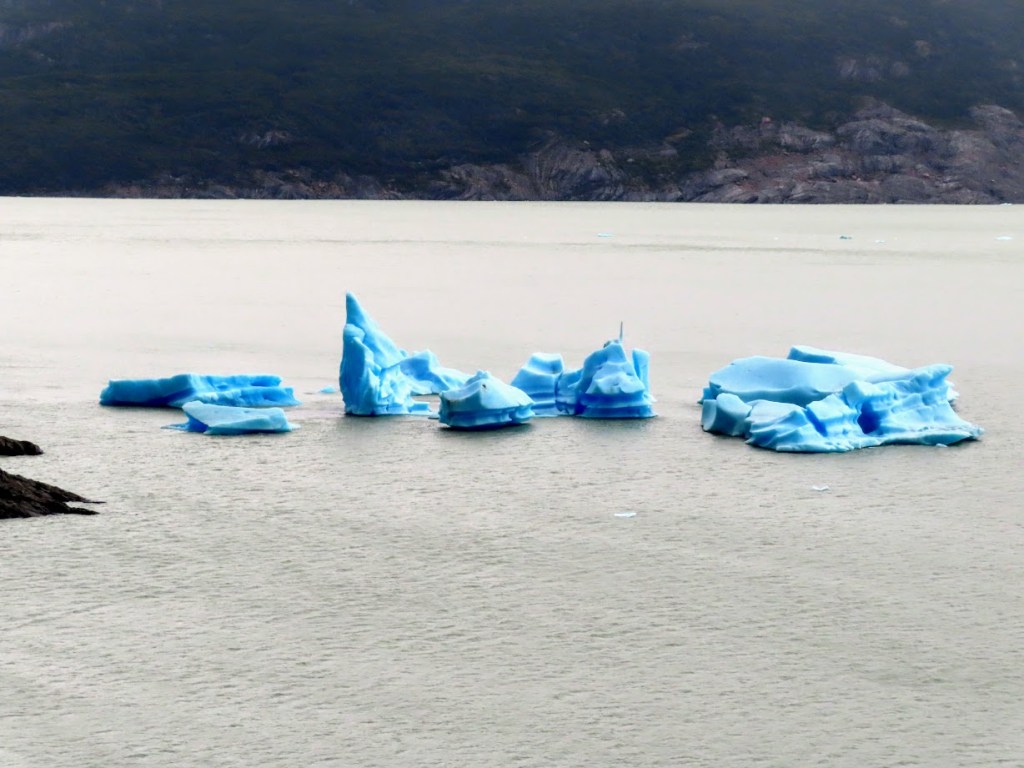
As if I haven’t already been speaking in enough constant dynamic by this point (kind of sorry, but not really) here’s a few more scoops of that ice cream: The sights of hiking alongside Grey Glacier are unbelievable. To your mind, it almost looks fake! You have to stare and take it in because it is just. that. Beautiful. We’d be walking for a while and it’s on the peripheral and your brain just kind of auto-assumes it’s a body of water…and then you catch sight of it and do a double-take after seeing it again and laugh with incredulity.
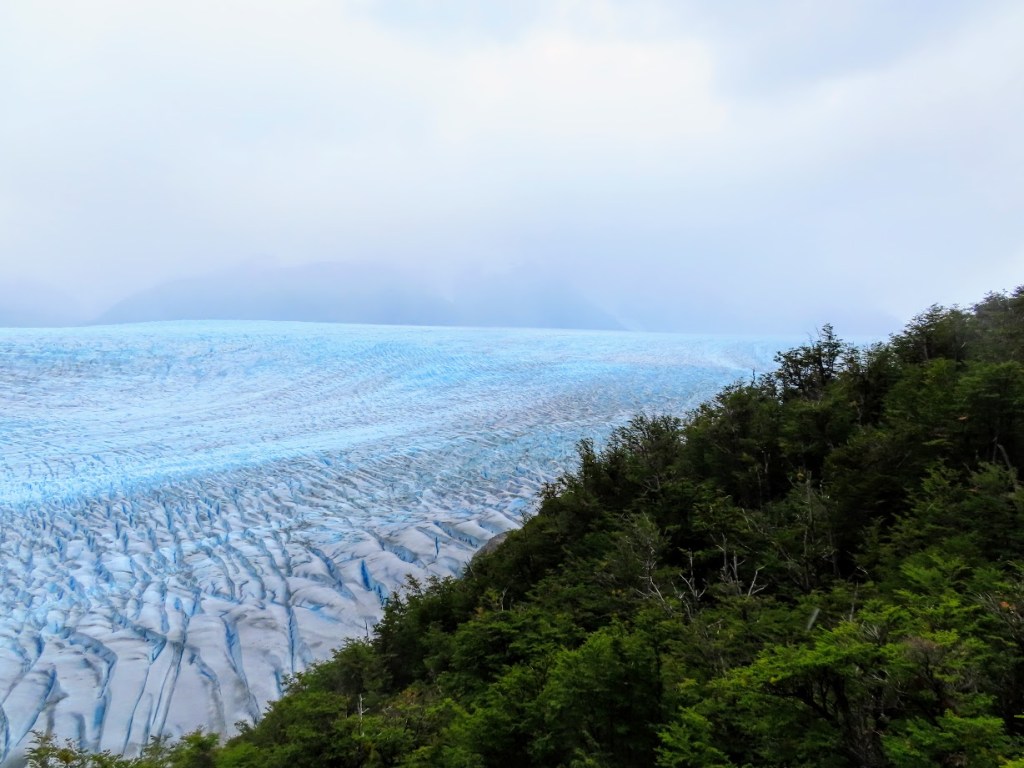
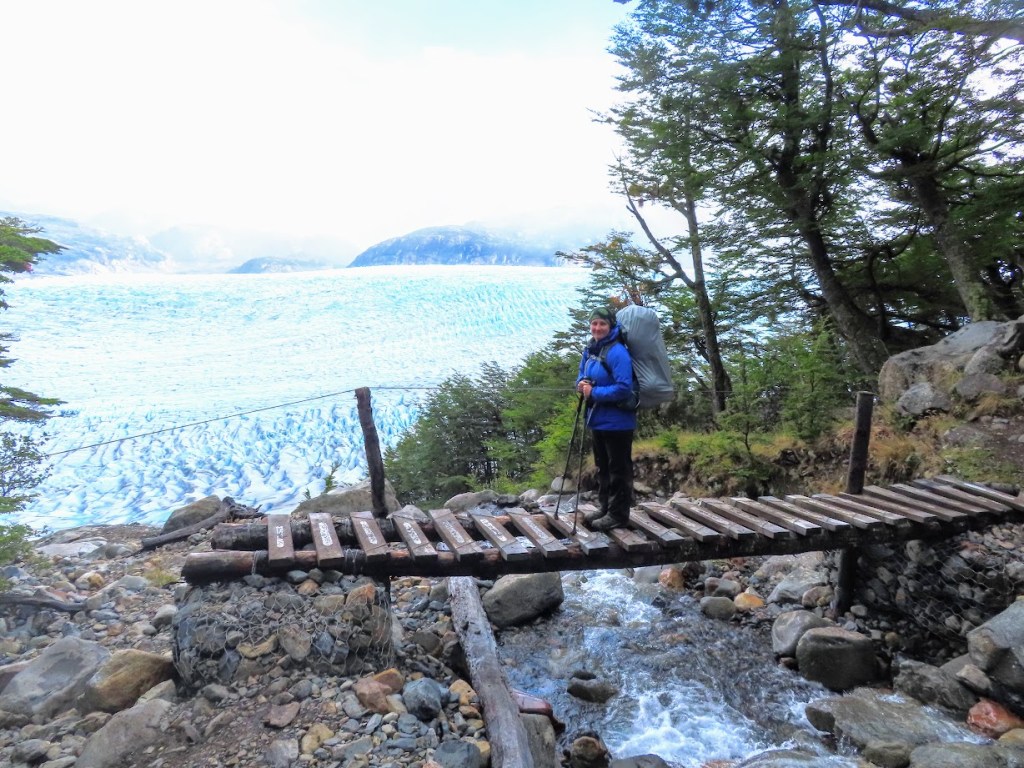
It is really special to be in the presence of this giant. And these thoughts are also energy fuel. When you’re running on close to empty, it’s amazing what you can find to use as drive. The snowstorm felt like days ago at this point.
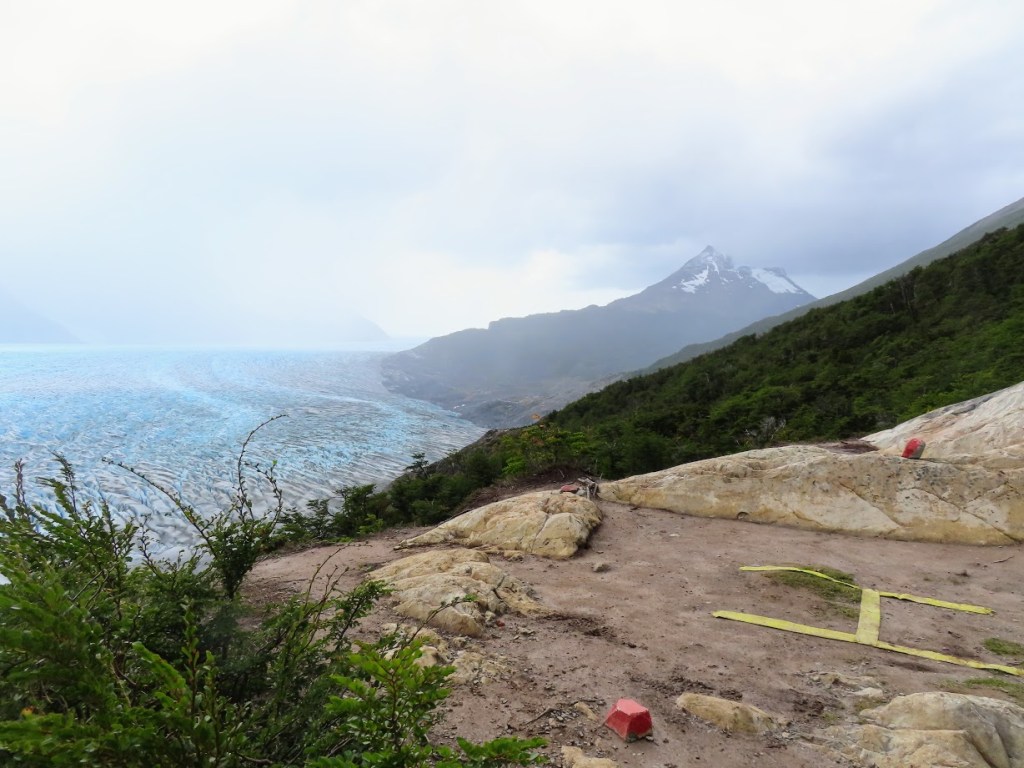
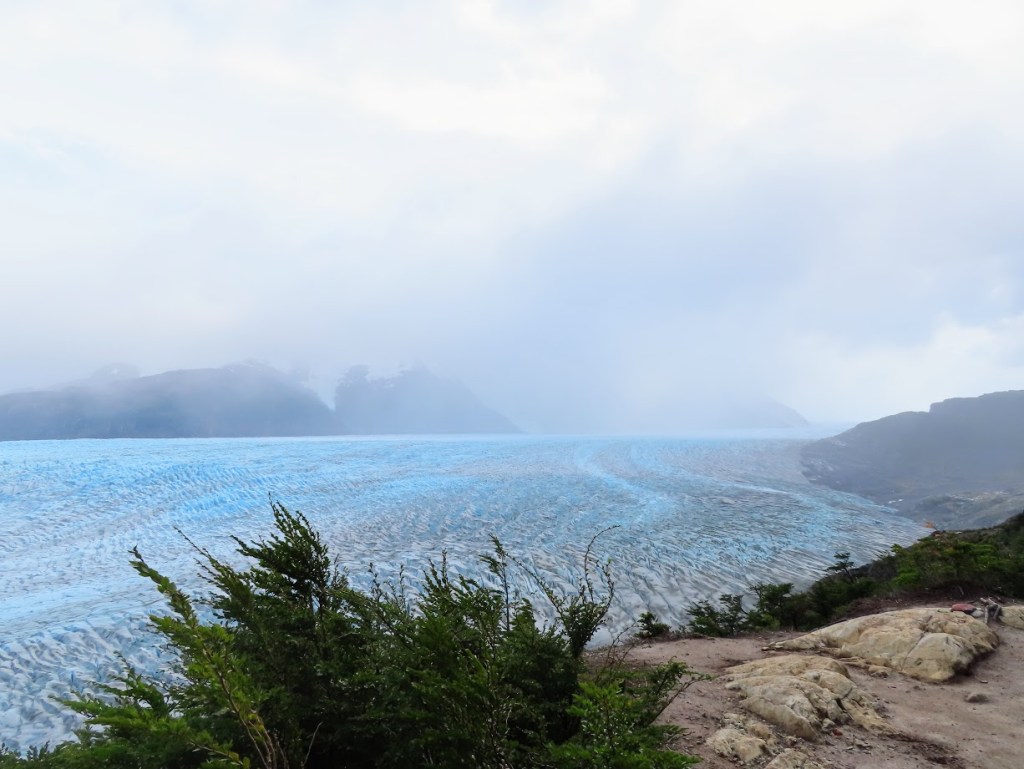
Glaciers like Grey are game-changing. Period.
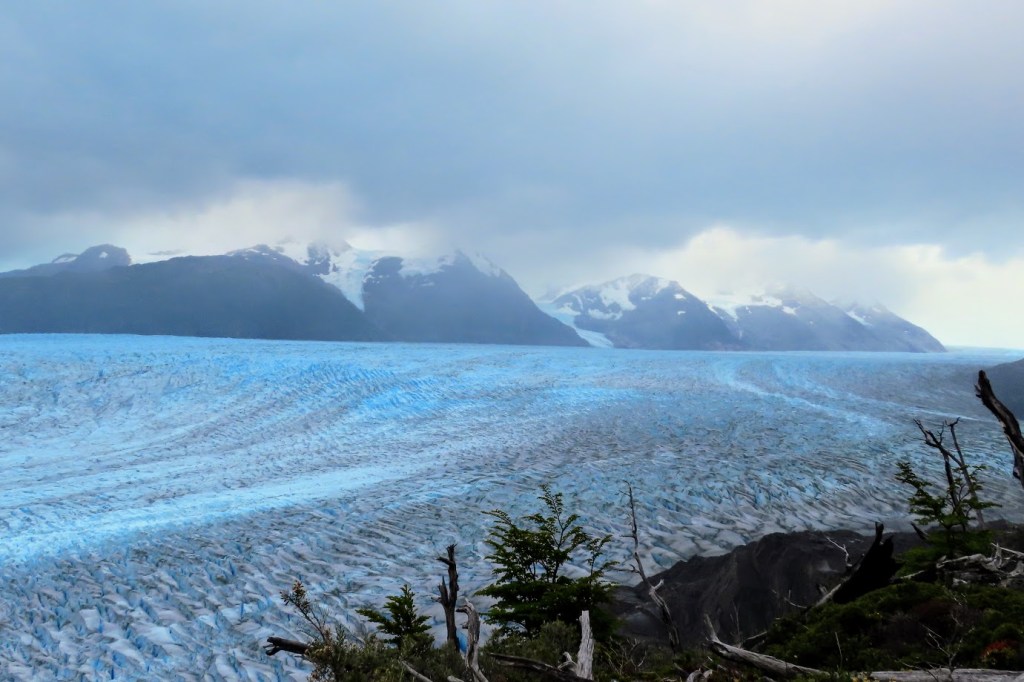
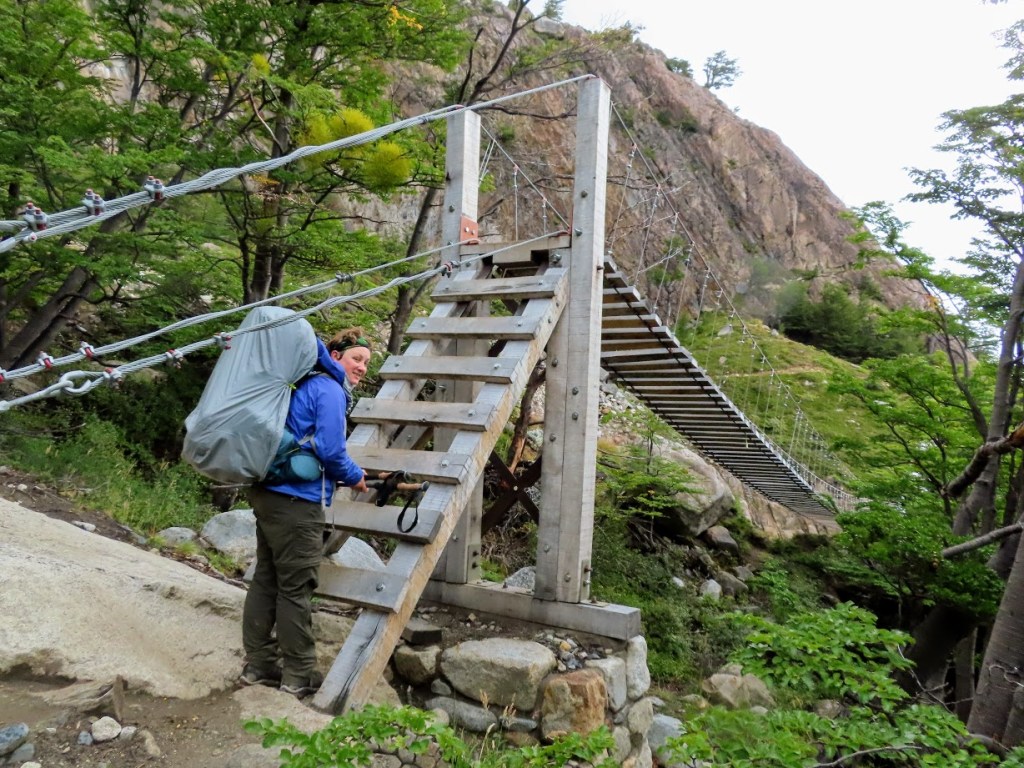
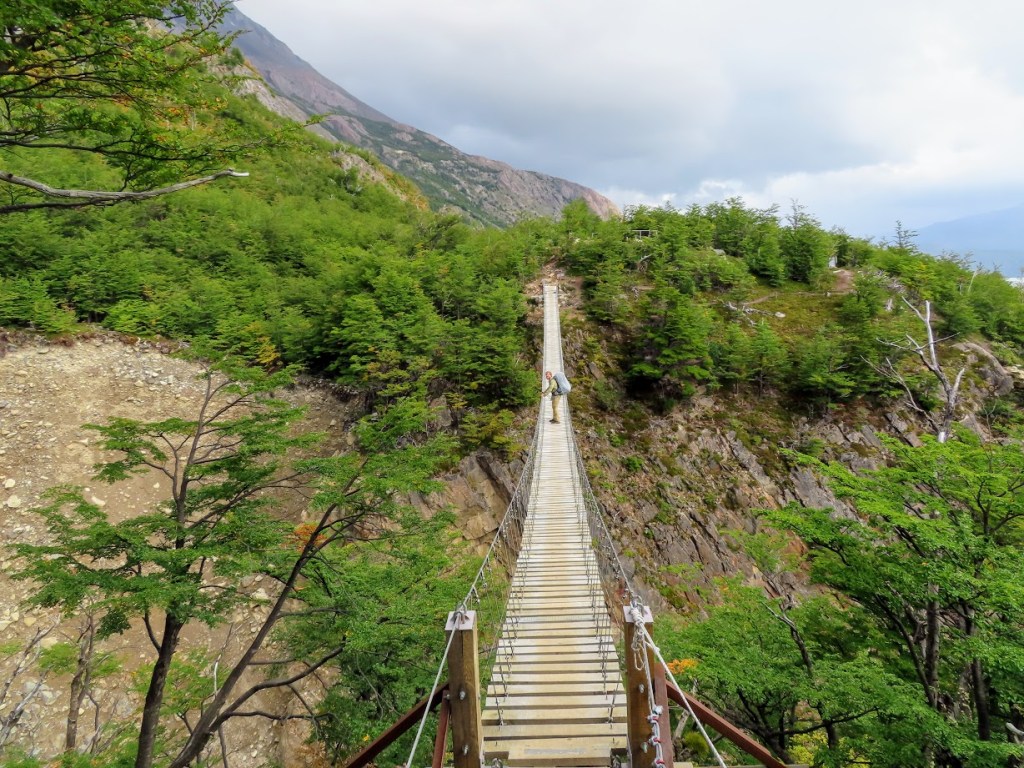
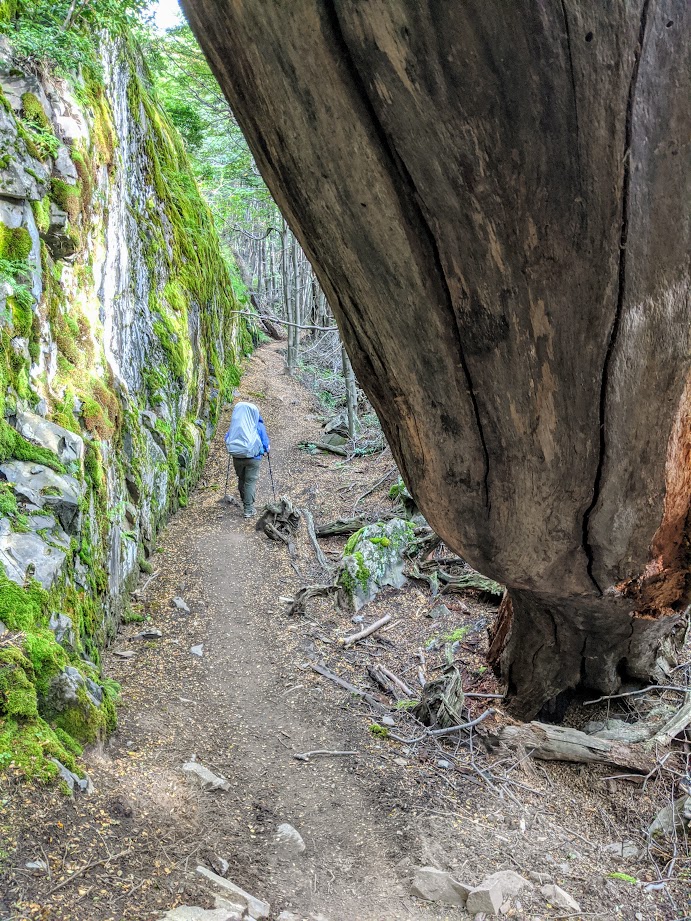
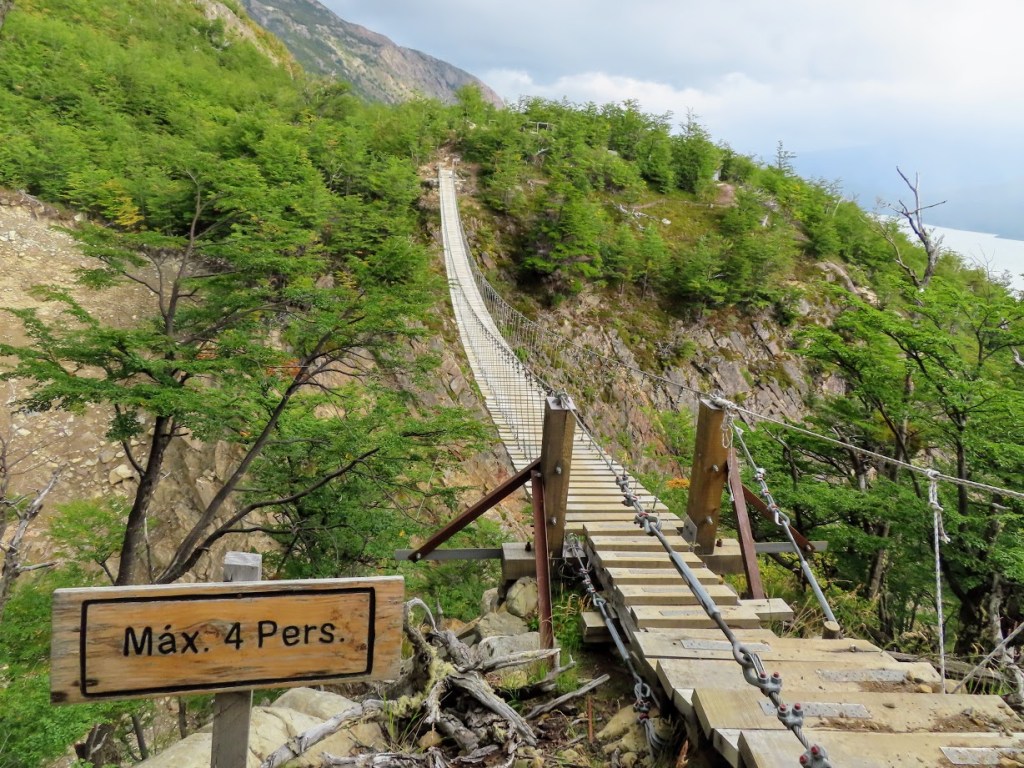
There are 3 really sweet and semi-frightening suspension bridges on this stretch that span beautiful gorges over streams running towards the glacier and its adjoined lake. The bridges would have signs in front of them saying “Max: 2 Pers. ” or “Max: 4 Pers.” which makes you think, oh good, this seems safe….
So much power and adrenaline in a single day. Probably a record bodily production between the two of us.
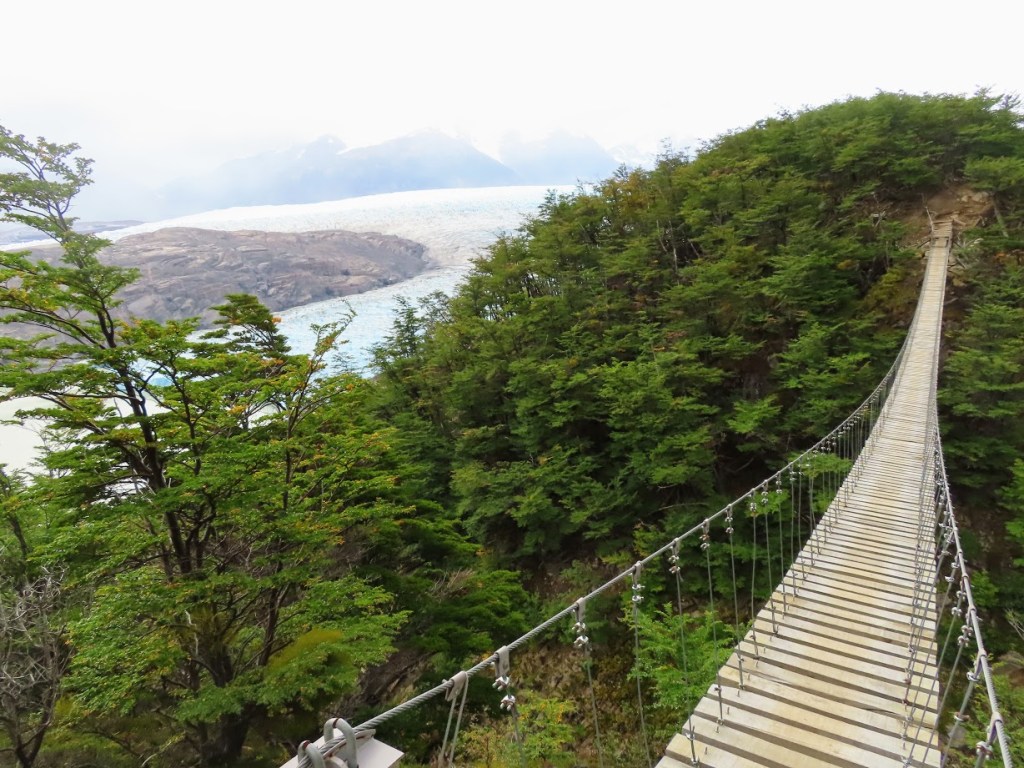
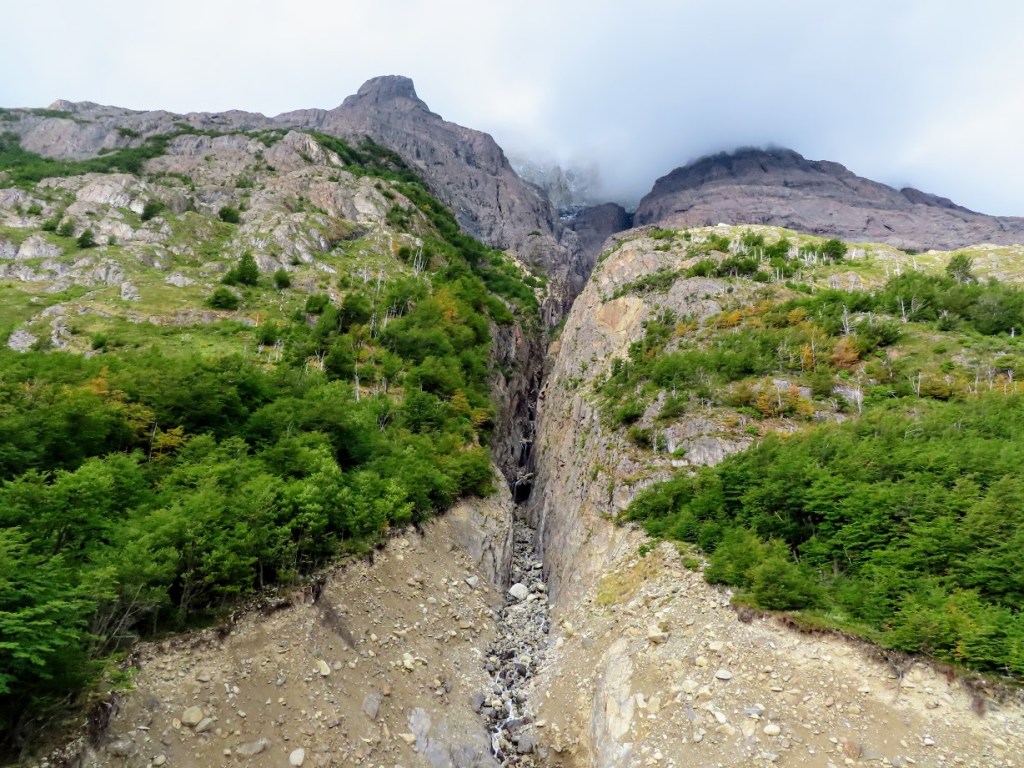
That last mile and a half was, simply, very rough. Every muscle in my body from face to pinky toe was sore. I don’t know how it works for everyone else, but when I am exhausted, my two natural defense mechanisms that come out are tears and anger. So I found things to be pissed at in between bursting out in tears. David kept laughing at the ridiculousness, so he got a lot of the anger directed at him. At some point I lost control of the sounds I was making and was just kind of panting/groaning/moaning while snotting on the sleeve, all the while punctuated by hysterical laughter. Near-ish the campsite, these two guys behind us looked like they were gonna try and pass us and I (of course) got tired-angry at them and decided there would be no more people passing us TODAY. By some act of God, I led what can only be described as a silent, fury-driven power trek into camp for about 3/4 of a mile in which I ignored all soreness and fatigue.

You never know what you’ll find within yourself out in God’s country. It can often surprise you what’s been there all along.

Bonus: Made it to camp at 8:50 PM, ten minutes before they turn off the hot water. We wouldn’t have had hot showers that night if not for powering through the home stretch with the walk-of-fury. The gal cleaning the women’s told me she was trying to close them 5 minutes early, to which I croaked out “Por favor…?” Then she saw my face. She knew. She let me shower. It was glorious.

Started the hike before sunrise, ended it after sunset. Definitely pitched the tent in the dark that night. It happens. I think our dinner was rice with something? Maybe just flavored rice. We were too tired to cook anything else. Oh, and a little Bourbon as an added reward.

This day was one of the hardest of our lives. We saw so many shades and hues, felt a lot of ups and downs across the board, and discovered things that have no name. We asked for Patagonia and we GOT Patagonia. Real life, wild and wonderful and worth every second of the challenge. I wouldn’t change a thing. I said it before, I’ll say it again: Game-changing. These are the kinds of highs you don’t forget and which bring you perspective as you move forward with your life. Captivating, in every sense of the word.

Savage.
Torres del Paine Day 3


It rained A LOT that night in Dickson and we awoke that morning to some wet stuff under our tent vestibules. We also had left our fold-up camp chairs out. All we could do was pack up everything but the tent and move to the covered porch of the main building. After eating breakfast and drying as much as we could, we packed up the still-sopping tent. Some things stay wet all day – it’s all part of backpacking and learning how to pack all your gear so the right stuff staying dry is important. Our trusty Duck’s Backs kept our bags pretty dry for the most part. Duck’s Back by REI is a waterproof covering that is designed to strap around your pack like a glove.

Now, ready to head out around 9, we ran into our new friend Kate and set out together. The trail moved uphill pretty quickly just outside of the Dickson campground. I was following Kate and we were talking and keeping a pretty good pace most of the way up to the first mirador lookout. 45 minutes had already passed and for the first time I remember thinking “this is getting a little easier.” Later that day I was a little gassed, so small steps. Getting close to a mirador lookout point is always a dramatic exit out of the forest and into a vast gallery of astonishing views surprising you every time.

Walking amongst the clouds, overlooked by mountain crags topped with gleaming glaciers.

The path through the forest followed a white water river roaring around the mountainsides. The majority of our time walking through the valley’s forest was in light rain.

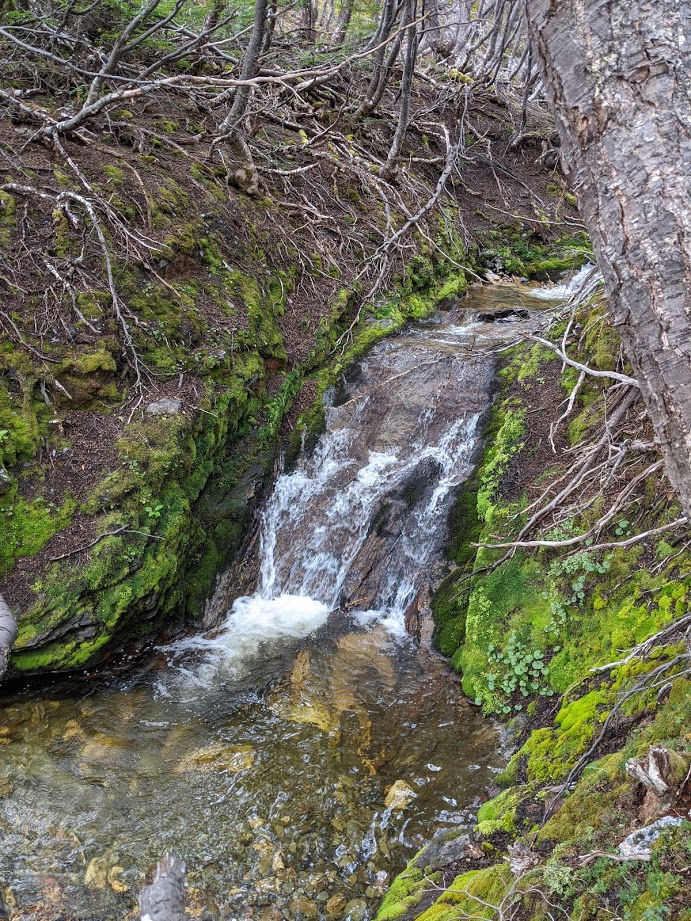
Break time to walk down to the waterfalls.

After the lunch energy boost wears off and you have been carrying this heavy ass bag all day, each mile seems longer then the last. I thought we would never get out of that forest! The last bit of our day was climbing up a boulder pile to this beautiful glacier lake:

Getting to this point in the day is the most rewarding I think. You get a nice grand finale on your hike and you know camp is close. Plus, how amazing is this place?!

Los Perros campsite is situated in the trees of a high mountain valley surrounded by towering peaks and scattered glaciers. Needless to say there are not a lot of amenities here – no hot water so no shower. Luckily, we got a good spot in the trees where all of the gear and clothes dried.

By this point of 3 days of being our own pack mules, we were ravenous for food. A tour group of older ladies who we’d seen on the trail the past few days were laughing at how much food we kept making that night in the kitchen common room. 4 bowls worth of food each! I think we just cooked and ate, cooked and ate on repeat for over an hour. Pasta and mashed potatoes and lentils. It all tasted amazing. And it was a good thing we loaded up too because we would need all that energy for Day 4!

Torres del Paine: Day 2


Morning in the Serón campsite dawned beautifully.

Which was encouraging and refreshing, as this would be our longest distance day. 11 miles to our next campsite!

The first few miles hugged the river, Rio Paine, so we enjoyed some level trail through the tall grass. Not a bad way to spend a morning. Not at all.

Our trail curved Northwest and began to incline, up to a high mirador (what they call scenic viewpoints in Spanish) with some gusty winds and incredible sights over a turquoise lake to more mountains in the distance.

Spectacularly lucky that we got to do this leg of the trip on such a gorgeous day. And then….a gift from the sky spirits! CONDORS.

As we were resting at the top of the mirador, there they were – floating on the warm thermals like it took no effort at all. Enormous wingspan, unmistakable black and white backs, with the distinctive white “collars” against the rest of their black feathers. It had to have been at least 10 of them, and as we stood there in stunned silence they just circled and glided, passing so close to us at times that they were almost in arms’ length. I was afraid to move because it might scare them and they’d fly away.

Our perspective was even cooler because, often, they would be flying UNDER us over the side of the cliff!

It was an awe-inspiring couple of minutes. Silent but for the wind, with giants gliding among us. When they finally moved away, David broke the silence with “Ooookay, mountain condors…my new favorite bird.”

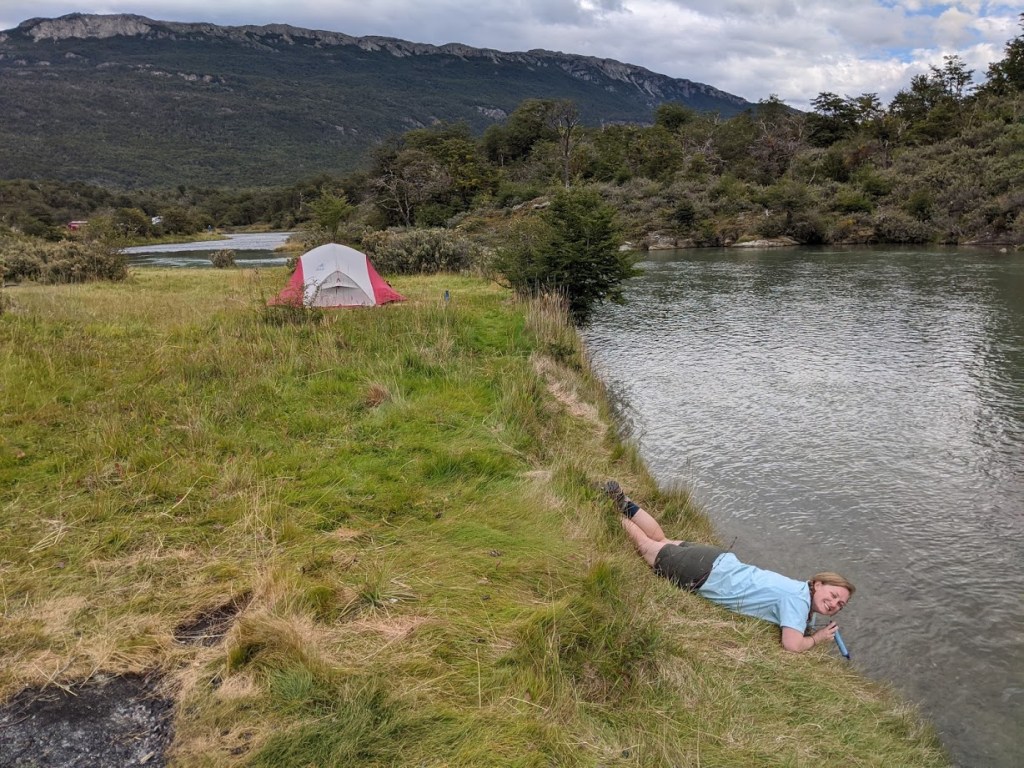
Continued on alongside the Lago Paine for a while until we hit our halfway mark at the ranger station, Coiron. Can’t get past this point without your hard-copy reservations of the campsites. Filled up our water at the stream nearby – it’s the most incredible thing, being able to drink some of the purest water on Earth out of a stream. We would fill our water bottles and camelbacks from streams all over the park and there would be hardly a speck of sediment. And the TASTE! So crisp, so incredibly cold and refreshing, nothing like any water we’d ever tasted before. Sometimes, we would stop to take drinks out of a stream even if our camelbacks were still full…just to savor the fact that we were in this incredible place where you are ACTUALLY able to do that.

After lunch near the ranger station, tackled our second half of the day. The nice part was that this half was much more “tranquillo” as they would say – snaking grassland paths through the foothills on the backside of the park. Reminded us of the foothills in Fort Collins, near Horsetooth area. Vibes of our home mountains ❤

Of course, then you come across views like Glacier Dickson devouring a mountainside and are reminded you’re not in the Rockies anymore. This is Patagonia.

We also got great sunset views of the backside of the towers and this magnificent granite canyon that basically looked like an amphitheater for God. Just…amazing. As we walked, the shadow of the sunset crept across it.

Those last 2 miles were brutal, my friends. We each, separately called for multiple “back breaks” as they were neeeeeeded. The shoulders and mid-backs were the most sore at the end of day 2. Plus it was infuriating to have tours of people passing us carrying basically nothing because they’d paid to have all their own shit carried in by other people or horses. ARGH

By the time we crested that last mirador and were looking down at Dickson refugio and campsite..the sun was getting pretty low, not gonna lie. Dickson was actually situated really nicely, on a peninsula on a lake that had a view in the distance of Glacier Dickson. Again, the hot showers were welcomed and dinner after days like that is just godly. I think we ate lentils and some pasta, and it was just a wonderful feast despite the simplicity (a common theme in our meals). All food tastes like heaven when you’re ravenous and have trekked all day. It is satisfying on a level that goes beyond being satiated from stuffing yourself full at a nice restaurant. Like, you eat to replenish your body from what it lost and because you know you’ll need it for the next day and it is just the best feeling to fall asleep knowing that your body did everything you pushed it to do.

We’d forgotten what it felt like to tap into the strength of a human when confronted with the savage of the wilderness. More on that to come.

Torres del Paine Day 1


Day 1! Good morning rain.

Besides for a good breakfast of scrambled eggs and oatmeal with honey, day 1 didn’t get off to a great start. For one, it is completely unclear which direction to head for the O circuit. The signage usually is pretty inconspicuous (if present at all) in South America, and became a bit of a running gag. As we got deeper into the park, it was harder to get lost or off trail because there is clearly only the ONE trail, so no problems there. It’s the big camp zones with various tent areas, refugio areas, parking areas, sometimes bus areas or boat harbors that can be the most confusing.

Our first mishap was due to some interesting directions the Torres Central staff member gave us in order to find the trailhead. If you were told “You just have to follow the trail of cars”…how would you interpret that? Well, if you think like David and I, then you would think it meant where virtually all the cars were parked, hence “trail of cars.” Sooooo we walked all the way back to the entrance where we got dropped off, through the bus station, and began wandering around the edges of the parking lot looking for signage. When we didn’t find it, we backtracked and asked another staffer, who told us it was way back by the campsite and to take a right at the road. Great, first 30 minutes down the drain.

We find the path that points to our next campsite, Serón. Only 8 miles away! The switchback path up the foothills that is the start of the O circuit is actually a road for awhile before it becomes a hiking trail further up. At the top of our first mini-ascent, already all sweaty as the sun came out and we needed to shed some layers, it occurred to me what had clearly been lost in translation. Trail of cars, as in the TRAIL that CARS TAKE. My verbal exasperated reaction at the time “…why the F#@$ didn’t he just say FOLLOW THE ROAD?!!” In retrospect, his English was probably sub-par.

Second setback was really a “D’Oh!” moment as it is the oldest trail-fail in the book – do NOT assume the people in front of you know where the trail is (even if they are happy, chatty Americans). There was a spot that got a little rocky and this group of 4 headed off to the right, straight up a vertical foothill filled with shrubs, small trees, and bushes. For about 20 minutes into this ascent it seemed fairly reasonable that we were on the path, as clearly many others had walked it and it looked like a freakin’ trail. Continuing to go steeply uphill, one of us noticed that there was no one else around besides those four and us…come to find out we had veered way off to the East of the actual trail, up a damn vertical horse path. Facepalm. Clumbered our way back down to the base of the valley and found the nice, now obvious, steadily climbing trail through the ravine that we could’ve been on the whole time. COOL. Another hour down the drain.

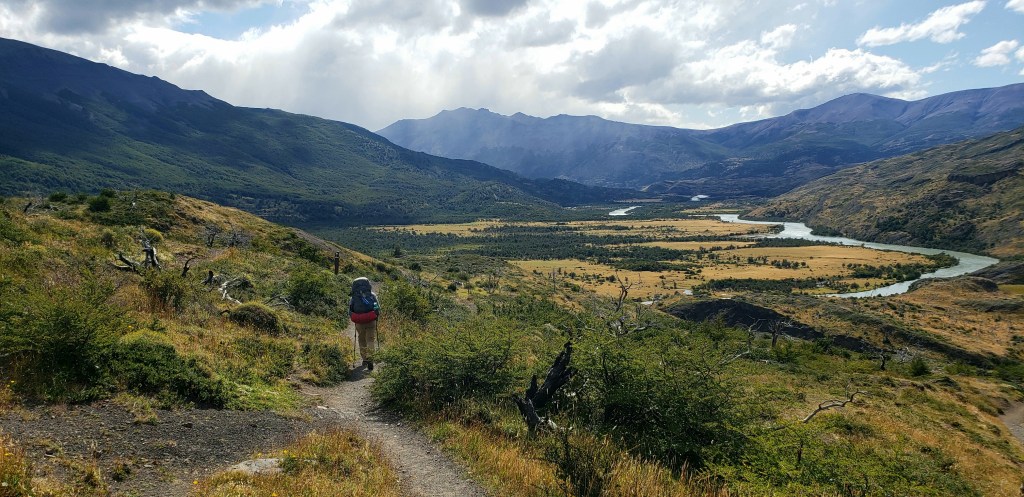
Our luck came back after that and the rest of the day was pretty straightforward. After climbing vertically about 200 meters through patches of forest and rocky overlooks (and regularly turning around to watch base camp and the lake disappear into the distance) we were met with a rewarding and tranquil view of the Rio Paine in front of us, and the lovely river valley through which we’d be weaving to get to camp. The descent was nice, not too steep! And the last 4 miles were basically just flat, tall grasslands with a few streams to cross.

The Rio Paine valley, into which we delightedly descended.

We appreciated the end of our first day being flatland hiking, as our shoulders and legs were definitely feeling the burn. There was another couple who we kept going back and forth with passing each other when we’d take breaks. They had huge packs of clunky camping gear that had to be heavy, definitely heavier than ours. We always got a bit of a spring in our step when we’d see other people with bags way bigger than our own.

Beaten down by a long day of schlepping packs, we all found time to take a break by the riverside and creeks along the way.

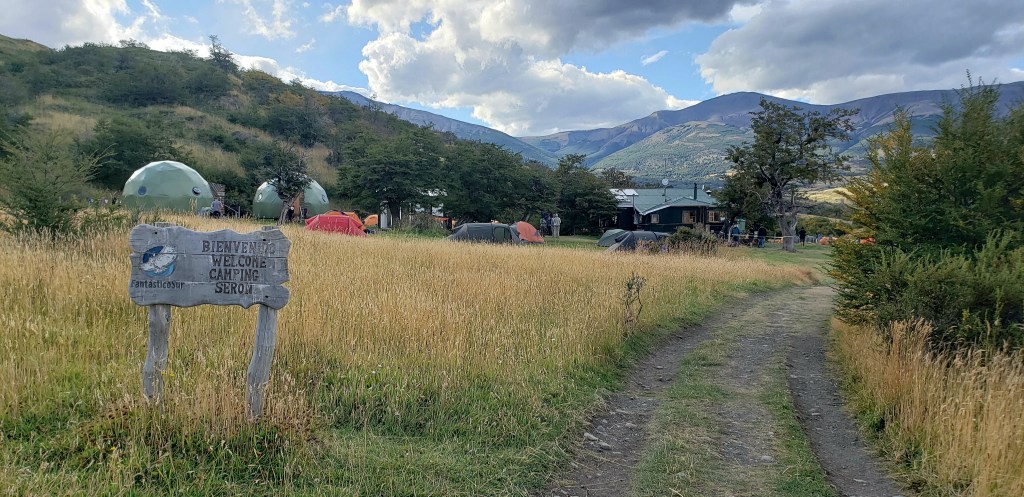
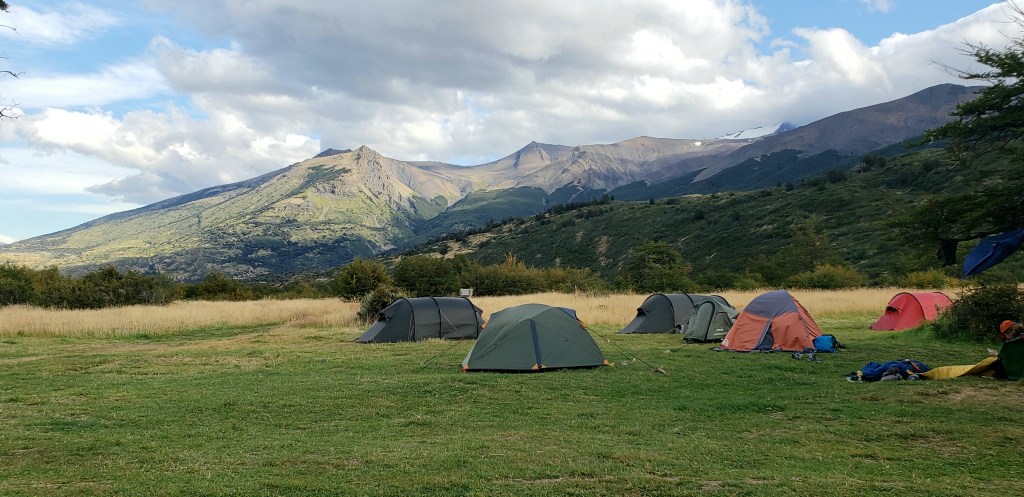
Winding left and right along the river we finally made it to Serón where the party was going on! People were playing soccer and slacklining and everyone had a beer in hand. This was us:

While washing dishes, made a new friend. Kate, a teacher from Oakland, CA, who became one of our favorite hiking buddies! She had hiked to the base of the towers that morning and back (nbd, just 12 miles round trip with an elevation gain of 600+ meters then back down again), ate lunch, took an hour nap, then woke up and decided to do the 8 miles we had just done to Serón. She’s a badass! And the nicest person ever, to boot. Kate, we miss hiking with you! Let’s do it again sometime (half dome, maybe?)

Took welcomed showers, cooked dinner over the stove, enjoyed the sunset views and the hilarious caracara birds in camp, attempted to watch a show on the tablet and failed, PTFO. Success.

Parque Nacional Torres del Paine Day 0

Intro


What a couple weeks it has been, folks. Let me just lead with that.

A LOT has changed since March 3rd, the day we set out for Torres del Paine National Park. David and I have had some of our highest highs, alongside the world and the human race having some of the lowest lows. I can’t recall a time in my life where those two were so back-to-back chronologically…usually it’s more spaced out, probably for the betterment of individual mental state, balance, and coping ability, you name it. But life is never what we expect it to be. There are powers in place that we have no control over and it is better if we can focus on what we are able to control in these tiny blips of time we call our human lives. This was one of my reoccurring thoughts while gazing out at vast, sight-encompassing glaciers that began forming 20,000 years ago…now only remnants of the original Southern Ice Field of Patagonia, but striking, enchanting, and humbling to a human nonetheless. You leave their presence with a greater need to make your own years count.

On that note, back to the present moment. Bittersweetly, we speak to you today from back in the US, specifically southern Illinois. Sweet because we made it home safely while many are stranded in foreign countries around the world, bitter because of the very serious and real reasons we had to come home. The spread of COVID-19 throughout all the inhabited regions of the world has put a halt to everyone’s plans and expectations for 2020 (remember around the New Year when we were all calling 2020 the year of “perfect vision?”…there’s a sad, ironic joke in there somewhere). Not 2 days after our return to Puerto Natales post-trek, we received messages from the US Embassy in Chile urging us to get flights back to the US while “commercial flights were still available.” So here we are.

Having to go through 2 major airports on the way home in Santiago, Chile and Atlanta, Georgia, David and I are aware that we were at a higher risk of exposure and are currently self-quarantining for the next few weeks in Alton, IL. We are blessed to have loving and gracious family members here who reached out and offered a home that is currently uninhabited for the next several months. (THANK YOU, AUNT ROSEMARY! We are sending you all our love and gratitude and will take good care of your beautiful home <3)

It’s funny…with all the craziness of coming back to civilization from the Chilean wilderness, getting hit with 12 days worth of news ALL AT ONCE on March 15th (from which I literally got nauseous after reading), and having to book passage and jump on a plane lickety-split and find a place to live and self-quarantine for weeks… we haven’t had any chance to reflect or process our 12-day trek. Let alone look at practically any of the pictures. Until now.

There’s a parallelism here that could mean nothing, but I’m gonna go ahead and choose for it to mean something. About two weeks in the mountains of Chile without any wifi, cell service, or any type of connection to news or civilization….and now two weeks in quarantine. Huh. It’s almost as though this experience was given to us so that we may share this raw, wild joy we found with the world…in a time when this world seems turbulent and joy more scarce. So for each day of quarantine, we will share the story of a day from our 80 mile trek along the complete O circuit of Torres del Paine. If it transports even a single one of you reading this to a better place mentally or inspires some kind of small joy, well, then that’s enough.


Arriving to Torres Central: March 3rd, 2020

We spent the first few days of March prepping in a town known as the “gateway to Torres del Paine” – Puerto Natales. I liked that it wasn’t too built up, still had the small-town feel of a lot of the towns in Patagonia, but with the occasional big outdoor recreation/camp store and fair amount of tour companies. Oh, and a TON of hostels, we saw at least 30. Puerto Natales gets a large amount of tourists from every corner of the world. As we were going the most economic route for food and packing in every meal we ate, David and I had fun collecting dehydrated foods, trail snacks, and lightweight foods that will last. Some of it we knew from having camped in Colorado, or from packing lunches in our ski coat pockets on ski days so we didn’t have to pay Vail Resorts prices! Ha. Wish we had a picture of ALL the food…everything deboxed, debagged, and rolled up in ziplocs.

Dinner foods (all dry): Lentils, garbanzo beans, rice, assortment of pastas, mashed potato flakes, instant polenta, quinoa, and a whole little pouch of various dehydrated flavor cubes

Lunch foods: 8 cans of tuna, separated in half, with one half plain and one half with cut up pickles and pickle juice added, dry sausages/salamis of various flavors, dried apricots, dried and slightly sweetened green bell peppers (LOVED these! have never seen them in the US), tons of mixed nuts, honey roasted peanuts, a jar of peanut butter, sunflower seeds, a Toblerone, pack of oreos, and a huge bag of fun size snickers bars FTW

Breakfast: Oatmeal, honey, marmalade in a pouch, power seed mix w/ chia, flax, and pumpkin seeds, some oatmeal crackers, jasmine tea and instant coffee

Dude…believe me when I tell you those backpacks were HEAVY. Heaviest they’ve been to-date. Luckily, we left a large shopping bag of stuff we didn’t need on the hike with our airbnb host, who kindly offered to hold onto it in her home, but still…first time taking on 12 days worth of meals. We didn’t know what we’d gotten ourselves into.

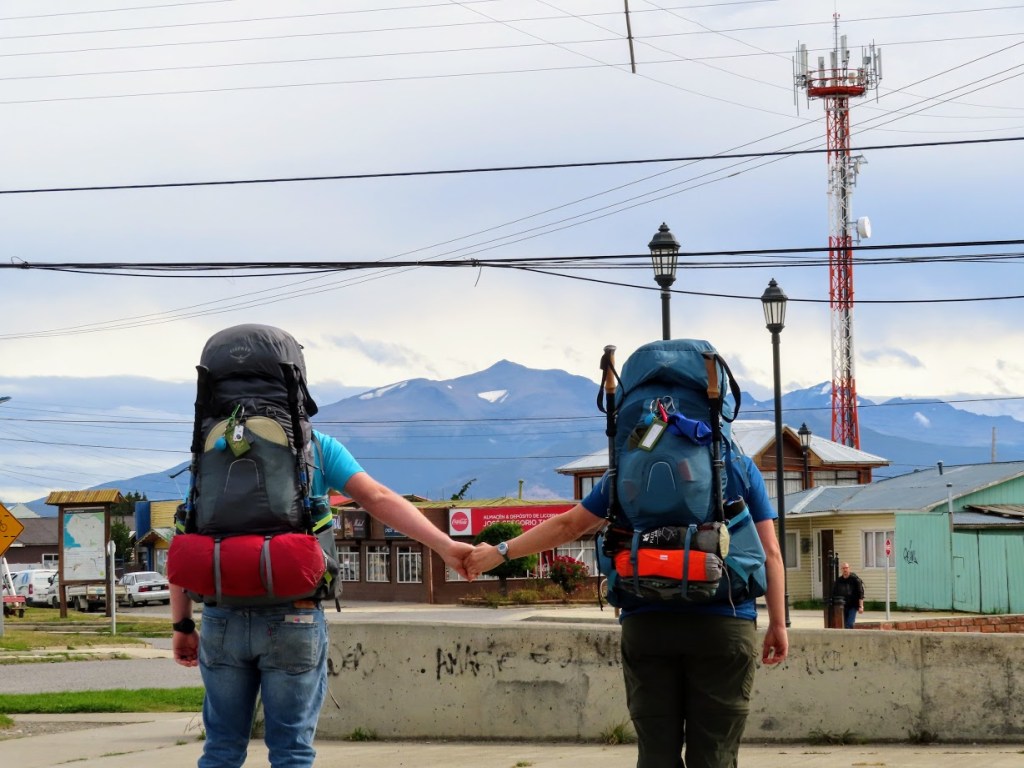
Last point of contact with the world right here….

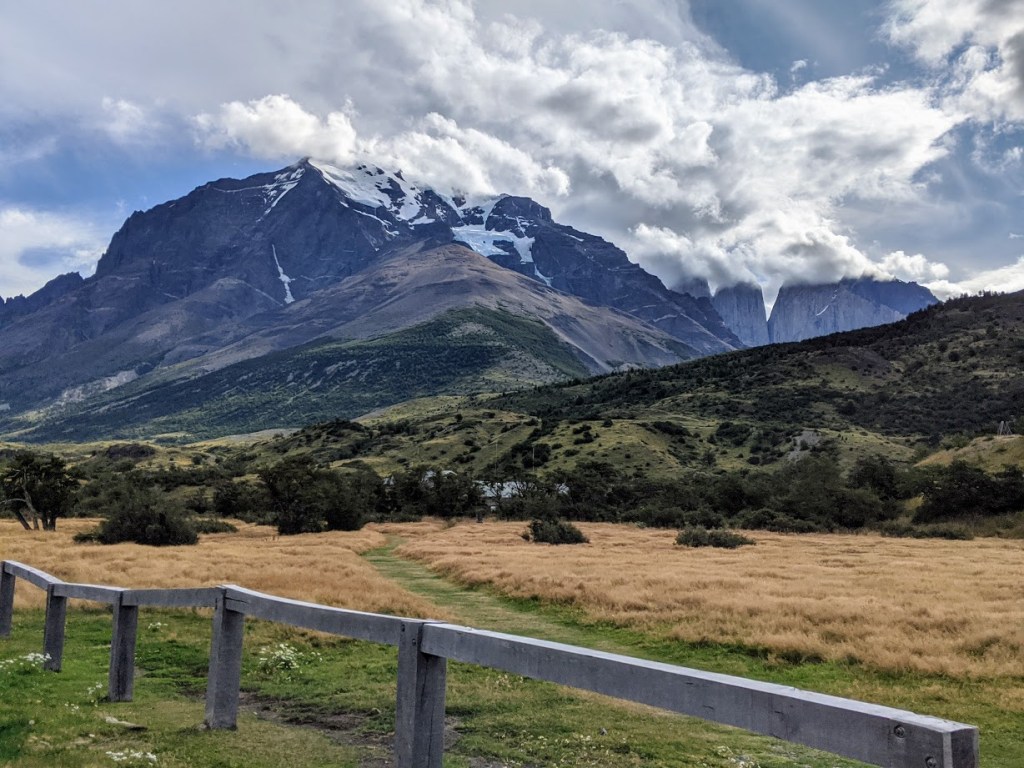
Then, ONWARD! An hour and change bus ride to the entrance. You stop at the park entrance at Laguna Amarga to sign in, and then have to take a shuttle to Las Torres campsite and refugio, a base camp area which everyone just calls Torres Central. The sense of anticipation just ramps right up as the mountains of the Paine massif and Torres get larger and larger on approach! We were lucky in that we arrived on a clear sky day and could see the granite spires from afar.

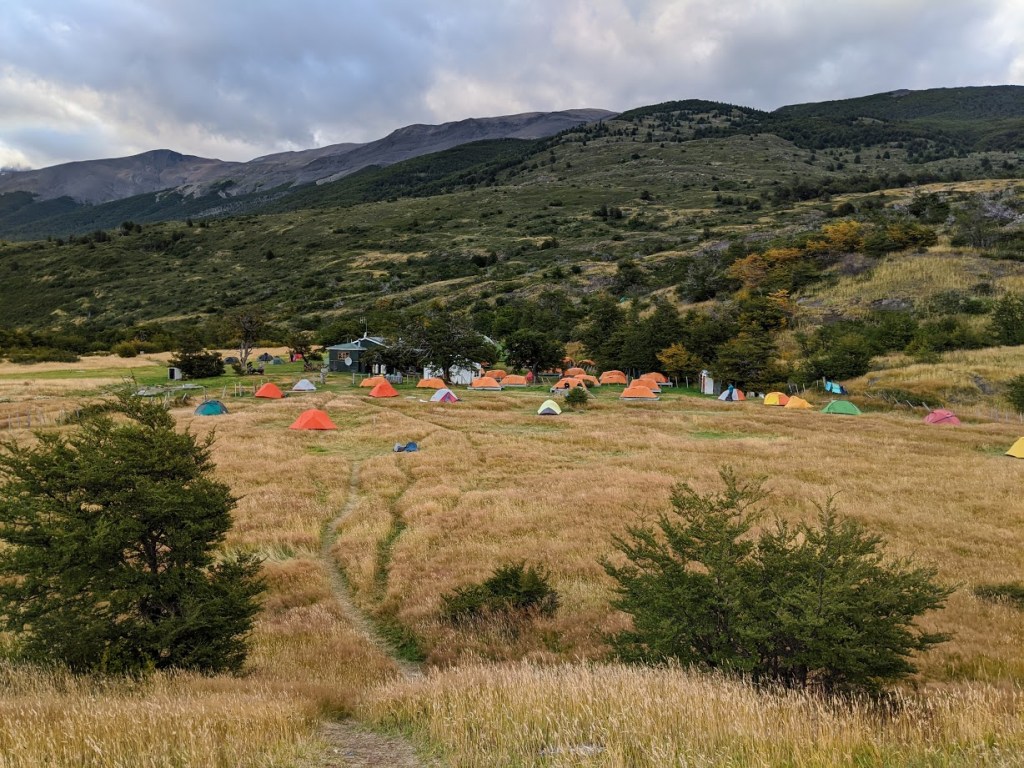
The campsite was a 5 minute walk from the refugio and bus station. In the park, trekkers have designated areas that you are required to stay at overnight – it is strictly enforced. If you try to camp outside the campsites, you will be fined and kicked out. They don’t mess around, as this is a UNESCO World Heritage Site, a place of intrinsic and endemic beauty and value, and basic leave-no-trace ecological conservation guidelines are posted throughout the trail. Most of the campsites are owned and operated by 2 private companies: Vertice Patagonia and Fantastico Sur. We had to book our campsites for the specific day we were going to be staying at them about 6-8 months in advance. It requires some KA-razy advance planning and knowledge of your logistics, weather for that time of year, and travelling plans to be able to do this. Luckily, one of us is a master of detail orientation…mwahaha.

The most expensive option is to stay at the refugio (basically a hostel with bunk beds) and have all your meals prepared for you by the refugio staff. These folks only have to carry their clothes, lunches, and essentials while hiking. The middle price option is to rent a tent that the refugio sets up for you and you just leave it in the morning. The cheapest is carrying your own tent, setting it up every night, cooking your own food you brought over the stove you brought and then breaking down the tent every morning and carrying it with you to the next campsite. Yup.

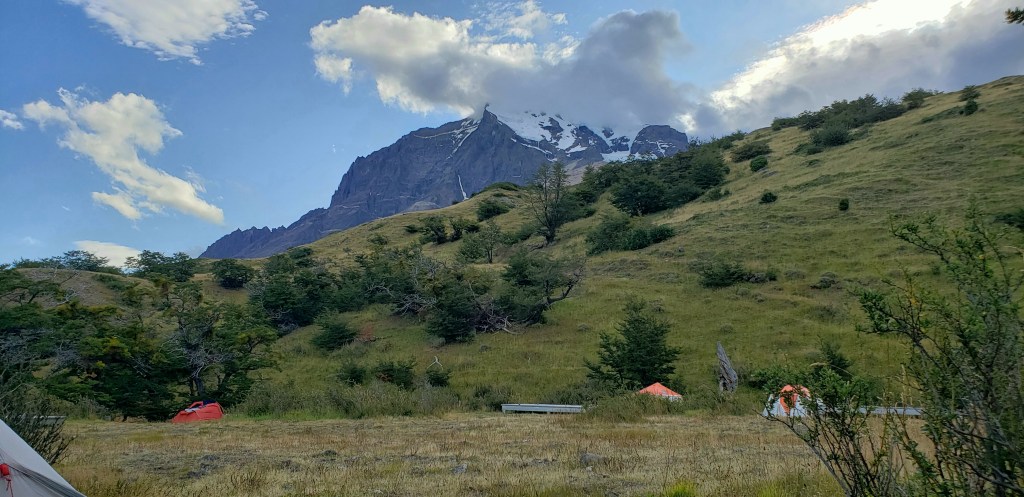
We cooked some garbanzo beans and pasta with rehydrated cream sauce, a “treat” on the night before our first hike. A couple shots of the Torres Central campsite and Mount Almirante Nieto peeking out at us behind the hill.

The O trek actually takes us East, in the opposite direction of Almirante Nieto, so we wouldn’t be seeing it again until day 7 or 8.

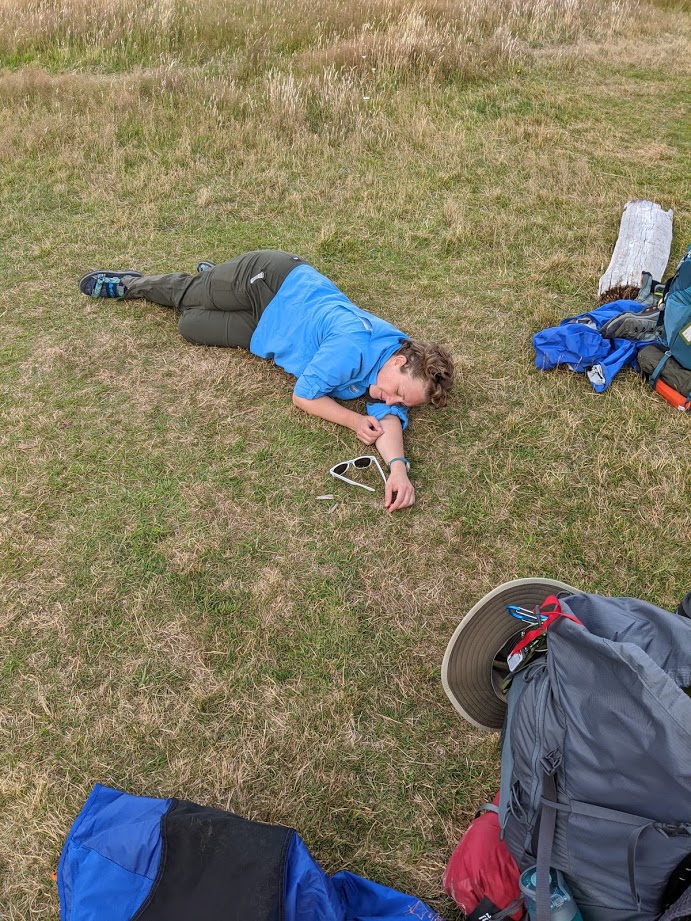
It was interesting walking around Torres Central and seeing all the “ominous” signs of hard trail ahead on other hikers – band aids on ankles, limping people with sore muscles, wrapped ankles and knees, faces flushed and exhausted. One guy was even laid out facedown and shirtless moaning while a gal gave him a back massage. Hell or high water….dawn, here we come.

Ushuaia, Tierra del Fuego: El Fin de Mundo

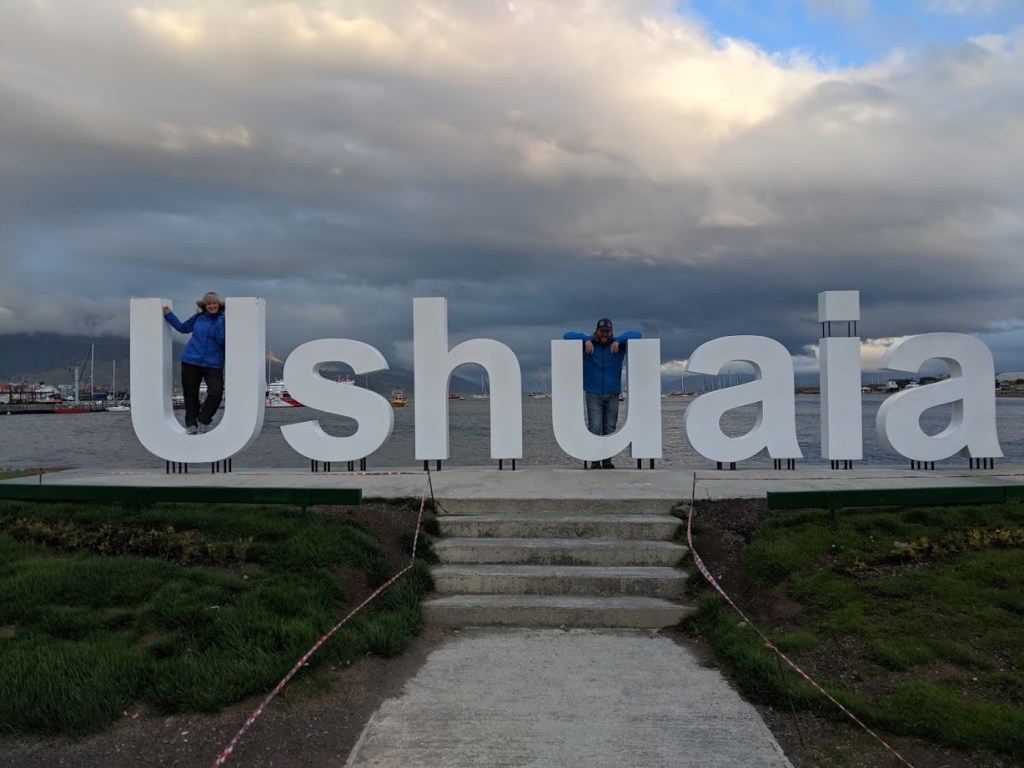
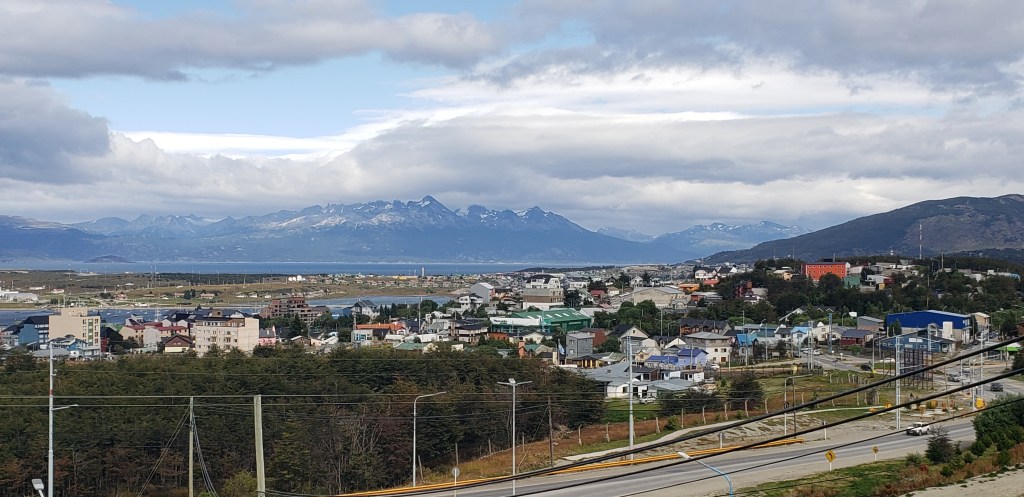
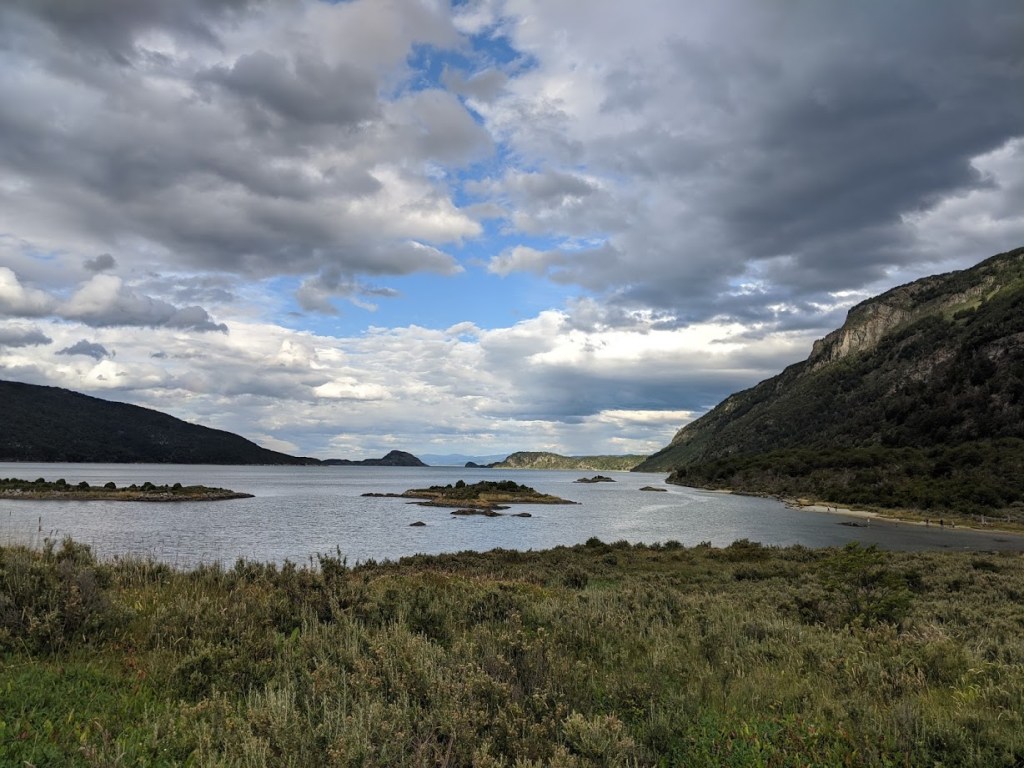
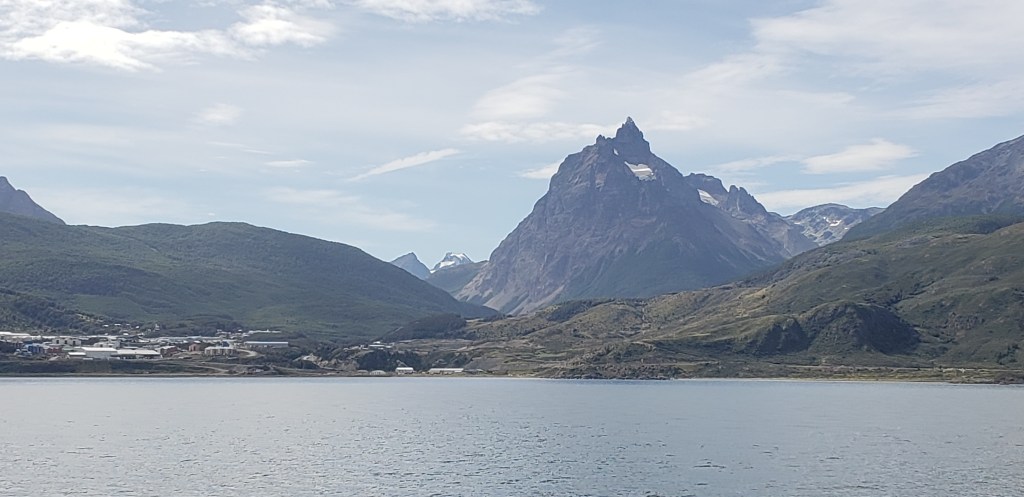
Tierra del Fuego, the land of fire, is an archipelago at the (almost) southernmost tip of South America, separated from the mainland by the Strait of Magellan. The main island is know as Isla Grande de Tierra del Fuego. The western side of it is Chile and the larger eastern side is Argentina. At the bottom of the island is the city of Ushuaia that sits on the Canal Beagle (or Beagle Channel in English). This city has the honor of being the furthest south city in the world! The area surrounding Ushuaia is very unique because it is the only place in South America where the Andes Mountains run west to east and into the ocean and create fresh water ecosystems with glacial melt water fed rivers and lakes. Ushuaia is also the gateway to Antarctica through the Drake Passage, which is the shortest distance from a continent to Antarctica. Many cruise ships come through the town and you can book passage to Antarctica for as low as $4500 US. Needless to say we could not afford this. There is also an airport here that sits out on the Beagle channel.

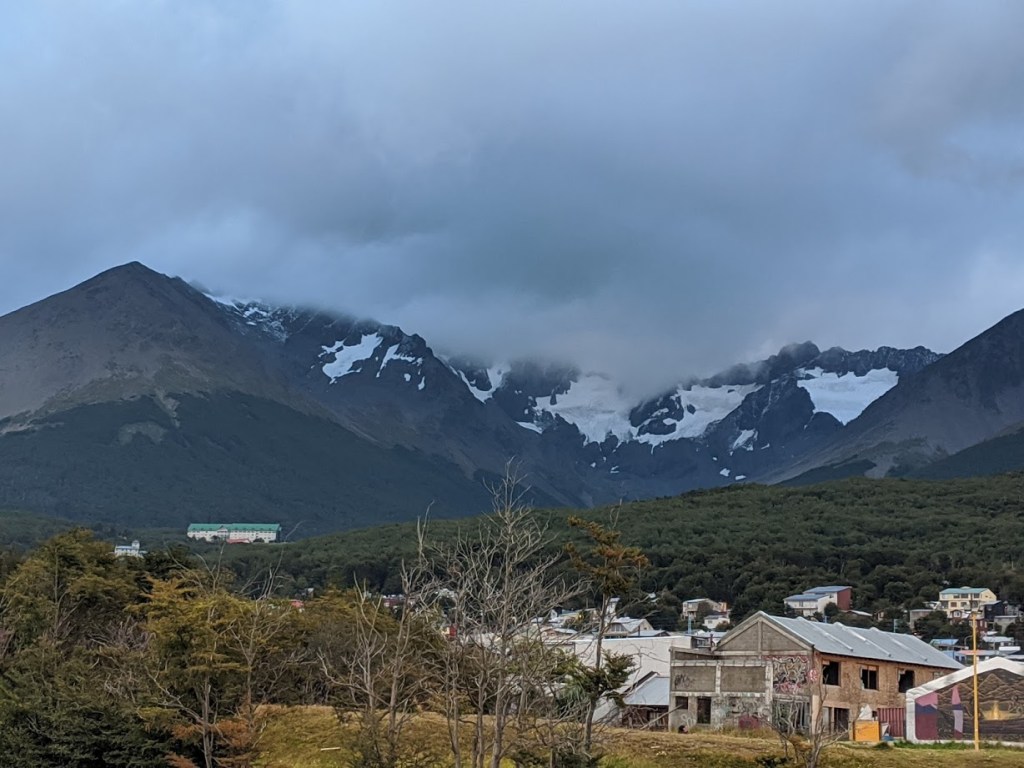
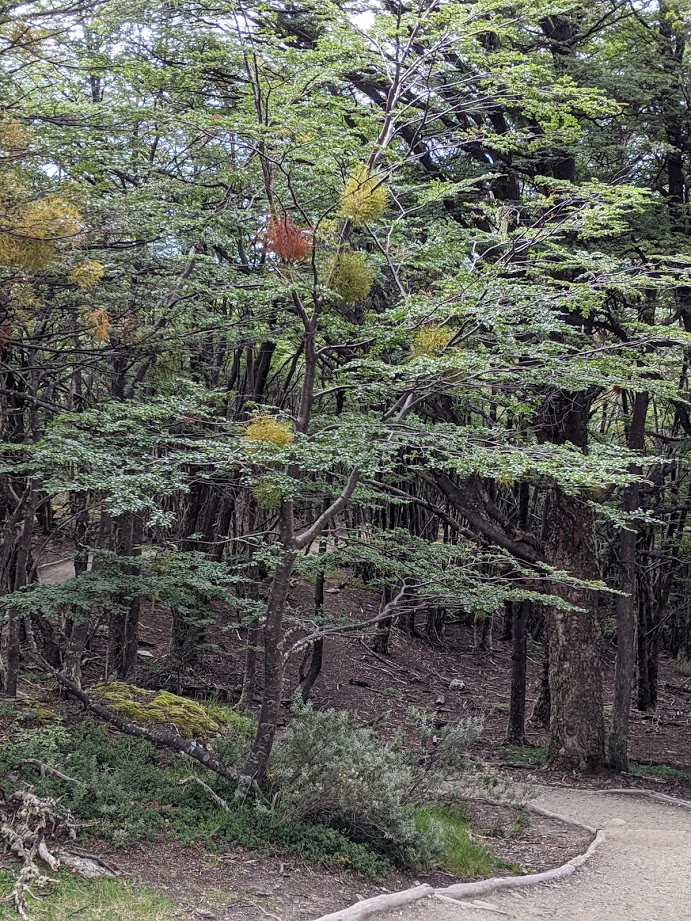
Ushuaia is basically surrounded by mountains in all directions since across the Beagle channel is another mountainous island called Isla Narvarino that belongs to Chile. The Martial mountain range here is unlike any we have experienced because they are so vertical and the flora is so different. The highest peak here is only 4,270 ft but that looks very high since in town you are at sea level. The best comparison I can give you is Breckenridge, Colorado. The town sits at 9,600 ft and you have peaks nearby at around 13,000 ft so it is all relative. You can see the tree lines easily with snow caps and glaciers in the distance, even though it’s summer here. The lenga trees here dominate the landscape flaunting their tiny leaves and hosting a plethora of a lichen called old man’s beard!
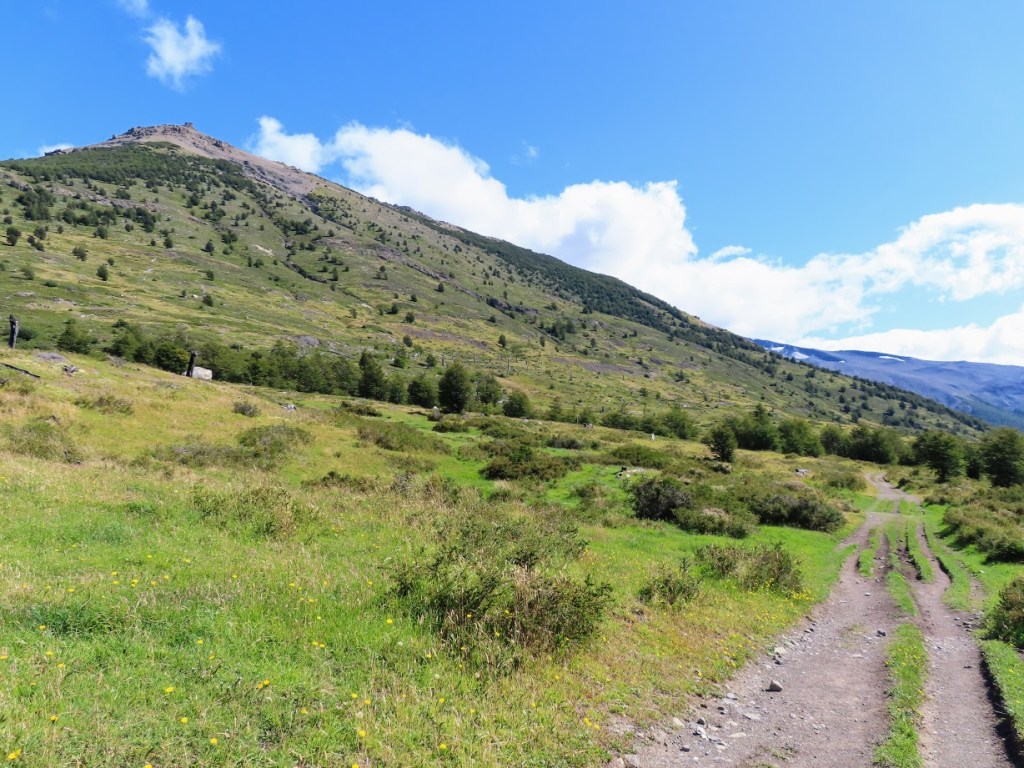
We had a nice Airbnb apartment for 4 days here to get to explore the city and its surroundings. The whole city sits on a gradually climbing hill from the downtown area off the channel sprawling up to the mountains. Our apartment was 6 blocks north of downtown so we had a great view! The downtown is very touristy full of shops, restaurants and bars, tour companies, and hotels. But usually people can associate the word touristy as negative – not so here! Lots of local dives, old general stores, and cool converted old buildings mixed in, all you have to do is accidentally wander into one. We found a good handful of local craft beer bars here that boasted locally made brands such as Cape Horn, Beagle, Oshovia, & Muntzer.

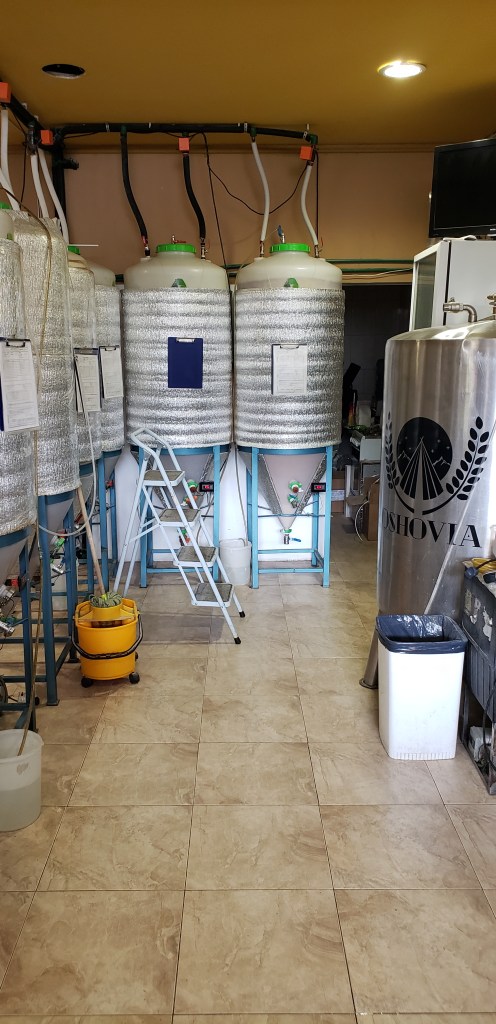
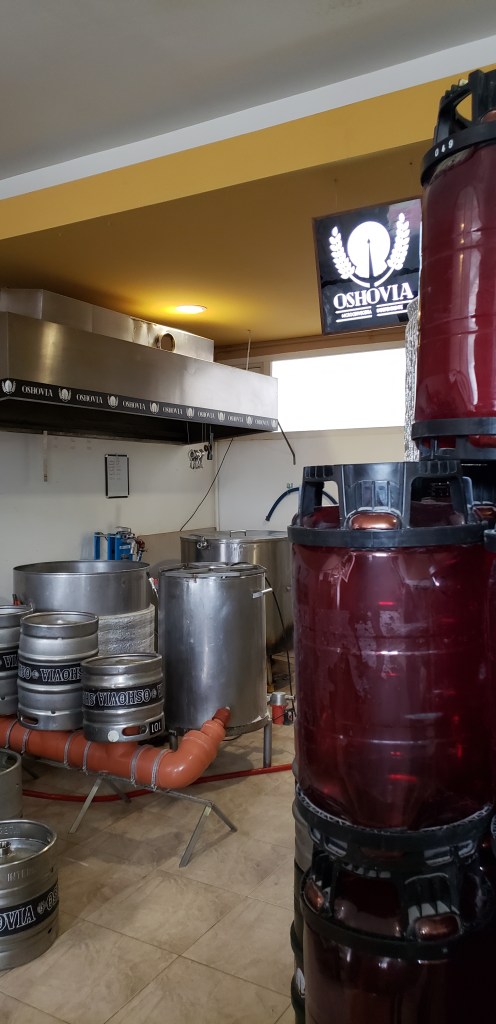
Oshovia is east of downtown and calls itself the brewery at the end of the world, since it is technically the furthest south brewery. They showed regular hours online so we ventured the 20 minute walk over to check it out. We walked right into not a taproom but the small brewhouse where the brewer was happily working away! He did not speak any English but was happy to show us around and explain that they only sold cans and kegs to local bars and restaurants. He gave us some recommendations of where we could try his beers but would not let us walk out the door empty handed. Pulling out 3 glasses, he tapped the smallest keg we have ever seen to produce an unfiltered IPA that had been dry hopped to infinity and beyond! I have never tasted such hop juice before, so juicy and fruity, with only the slightest bitterness all complete with many hop flower particles floating about. After thanking him many times over, we walked back into town tasting those hops still lingering in our mouths the whole way back as if we had the exquisite nectar still in our mouths! This was such an awesome experience and something that customers in the US often would pay a lot of money to get to do.

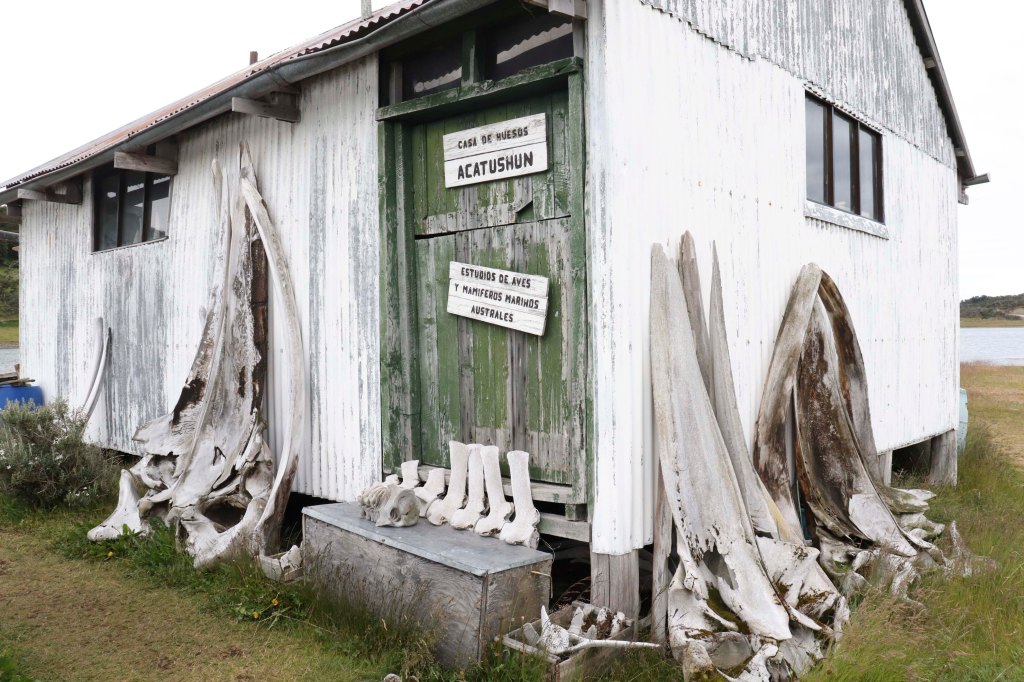
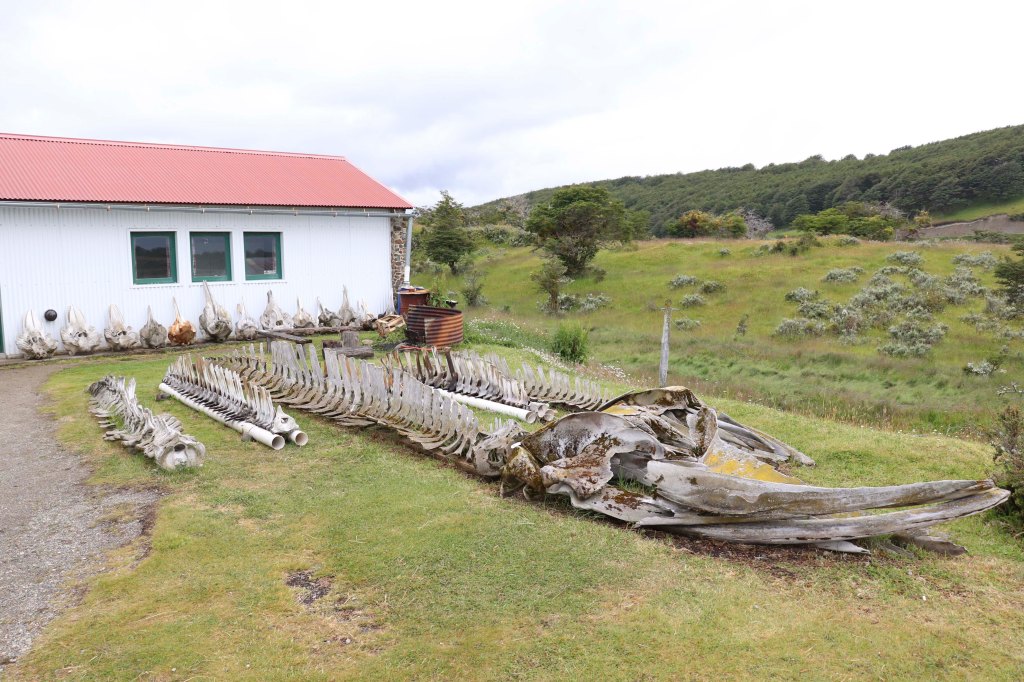
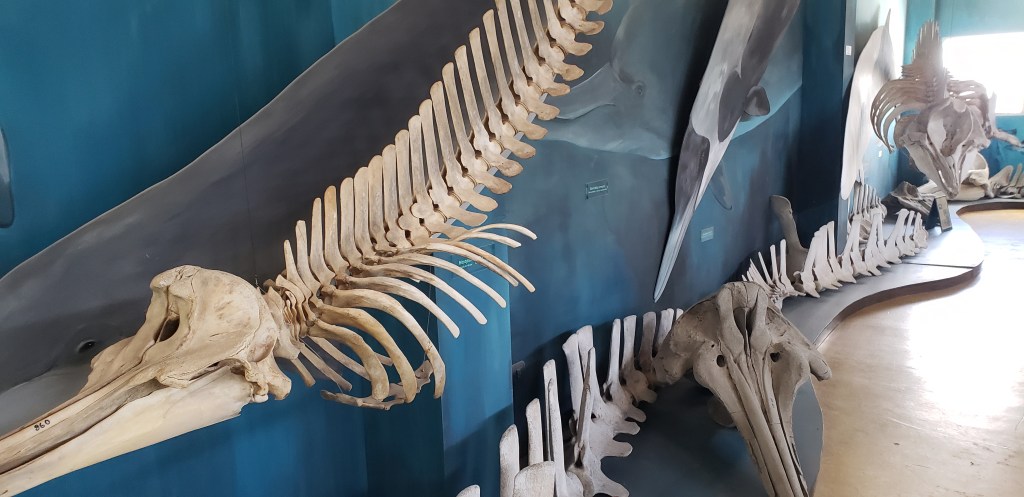
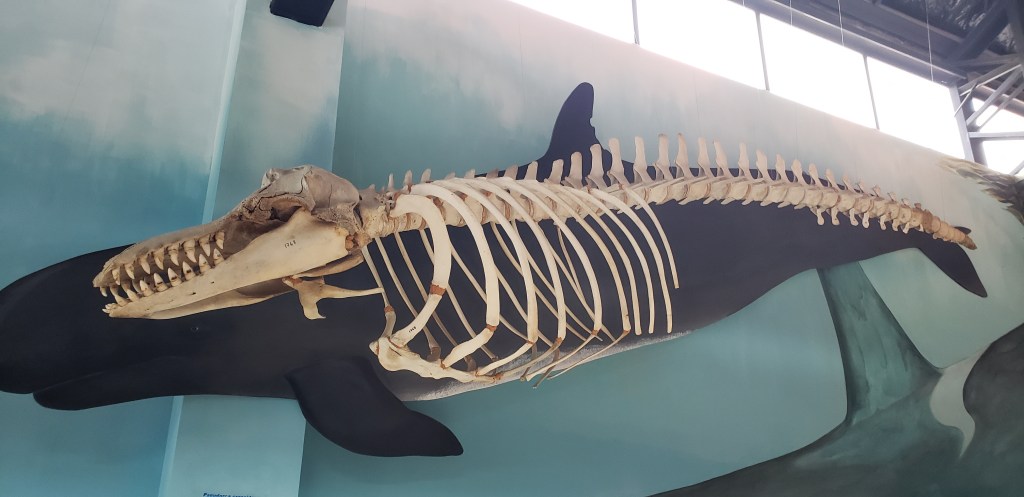
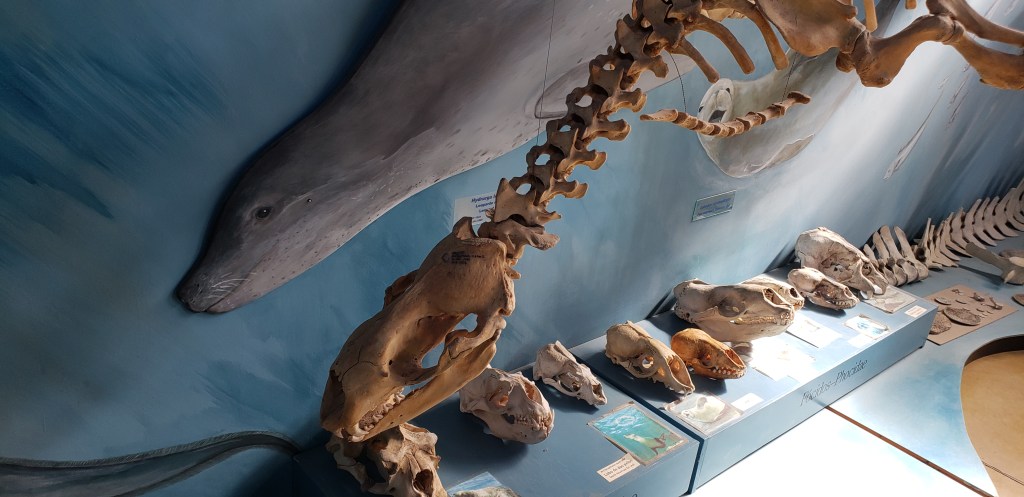
Our best experience by far though was our tour we booked on our second day. There is a ranch east of Ushuaia along the channel called Estancia Harberton. It was the original settlement in the 1800’s that was a land grant given by Argentina to the Bridges family. Now it is a guest ranch with a restaurant, tea house, and a museum filled with skeletons of the local marine life.

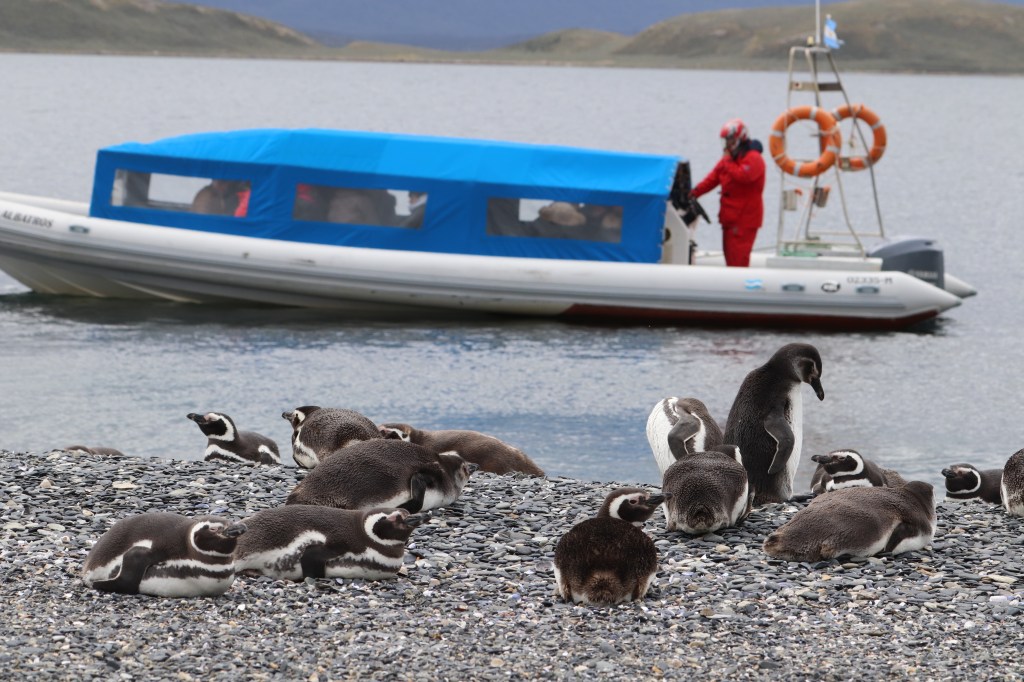
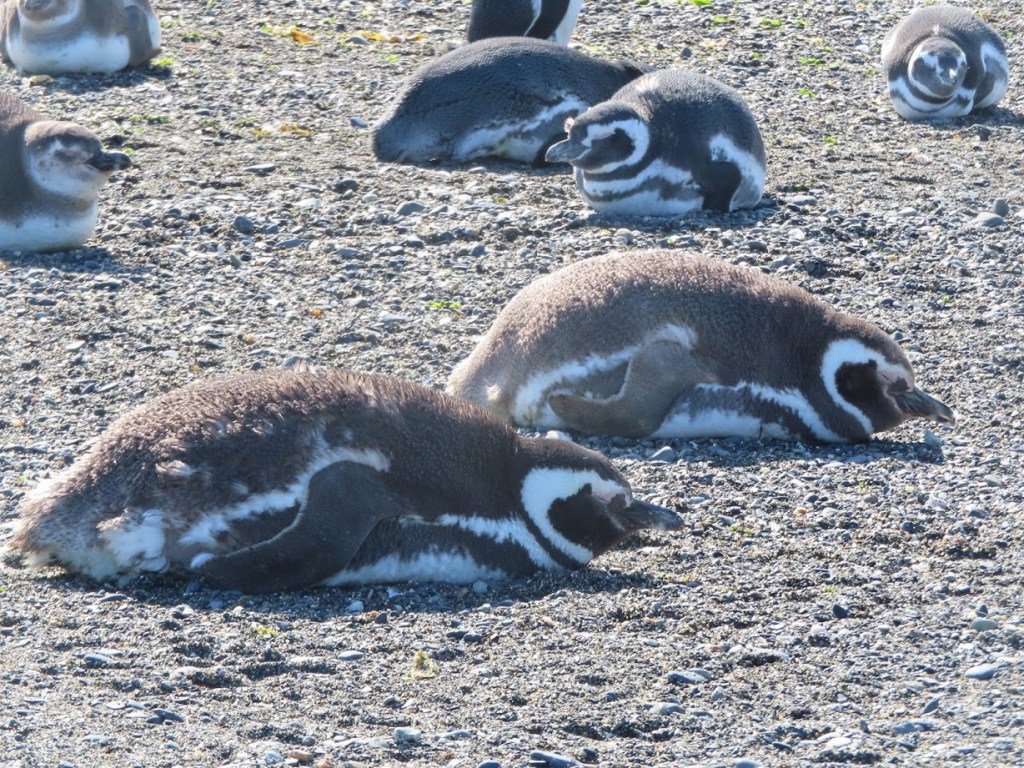
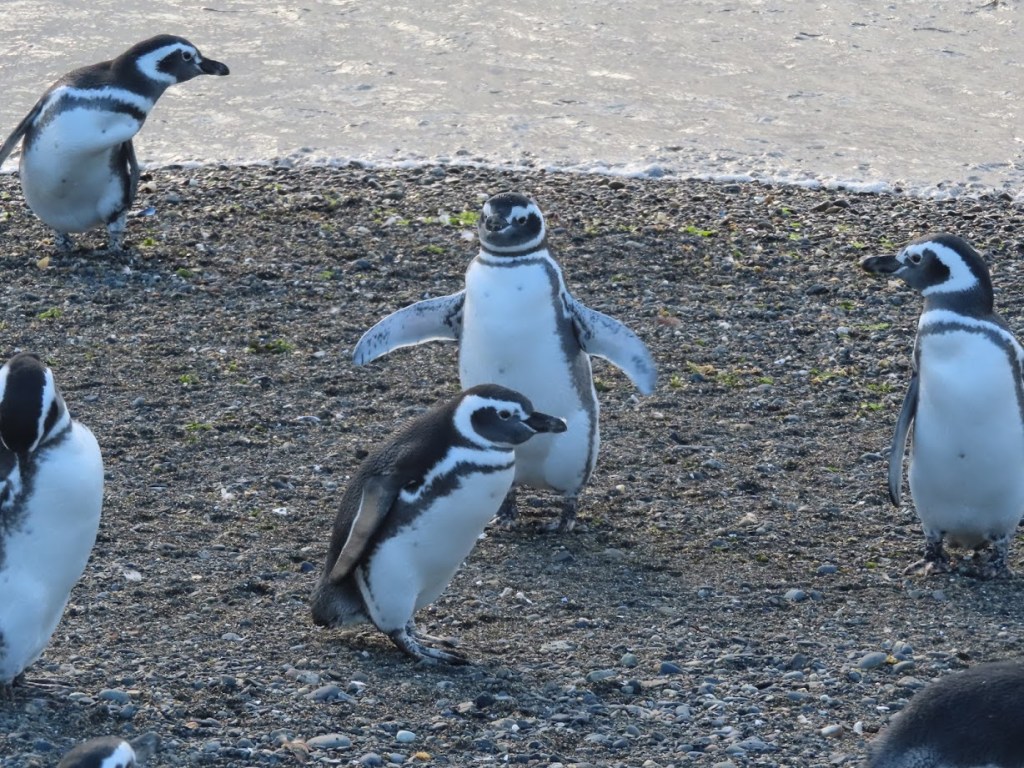
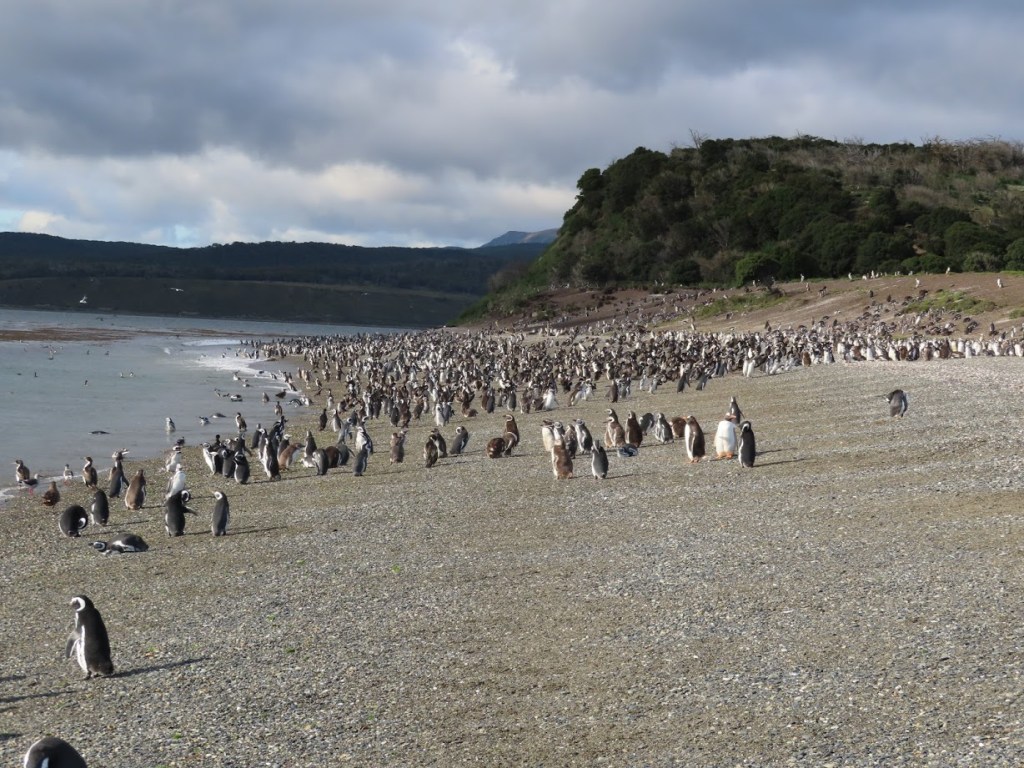
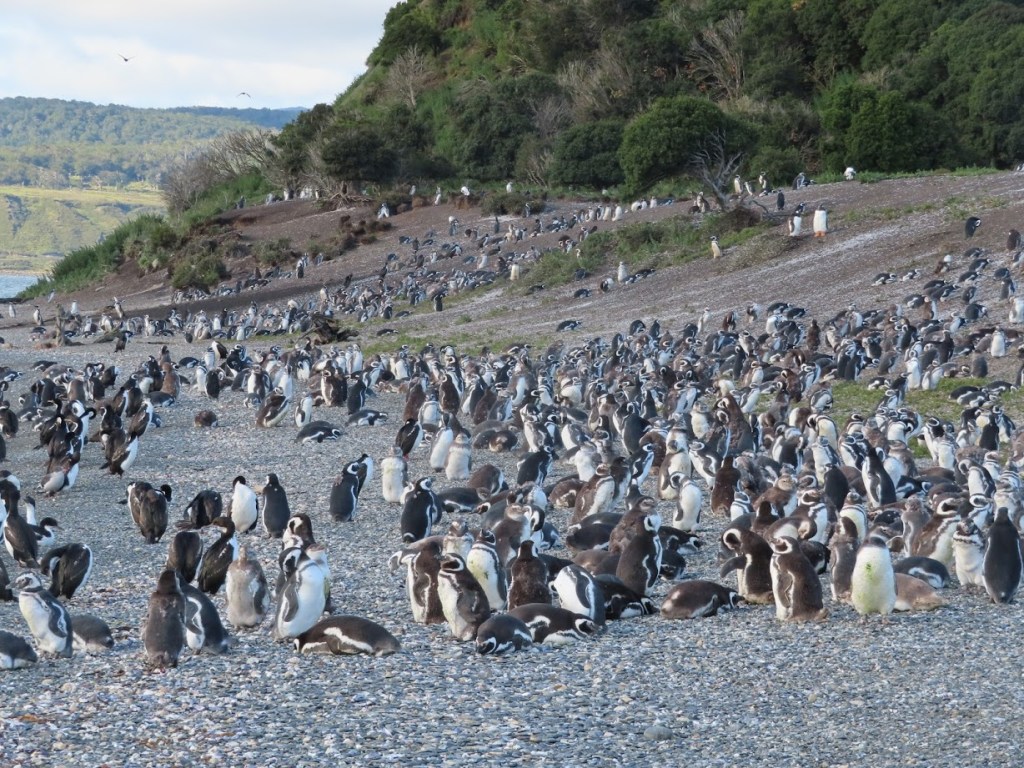
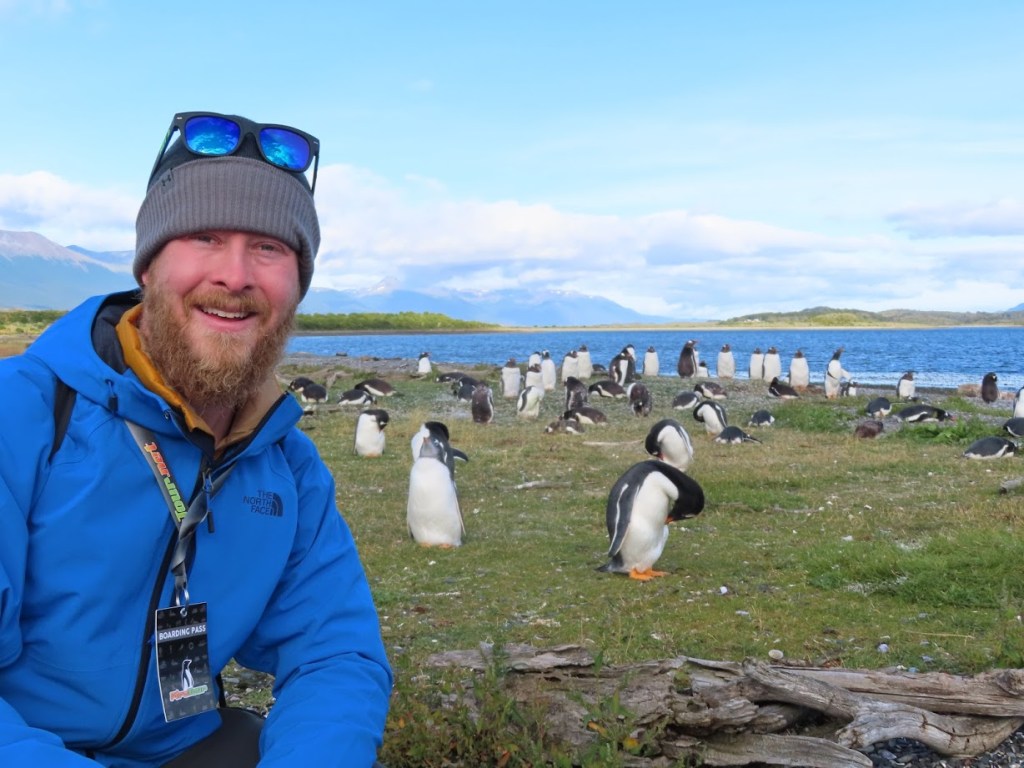
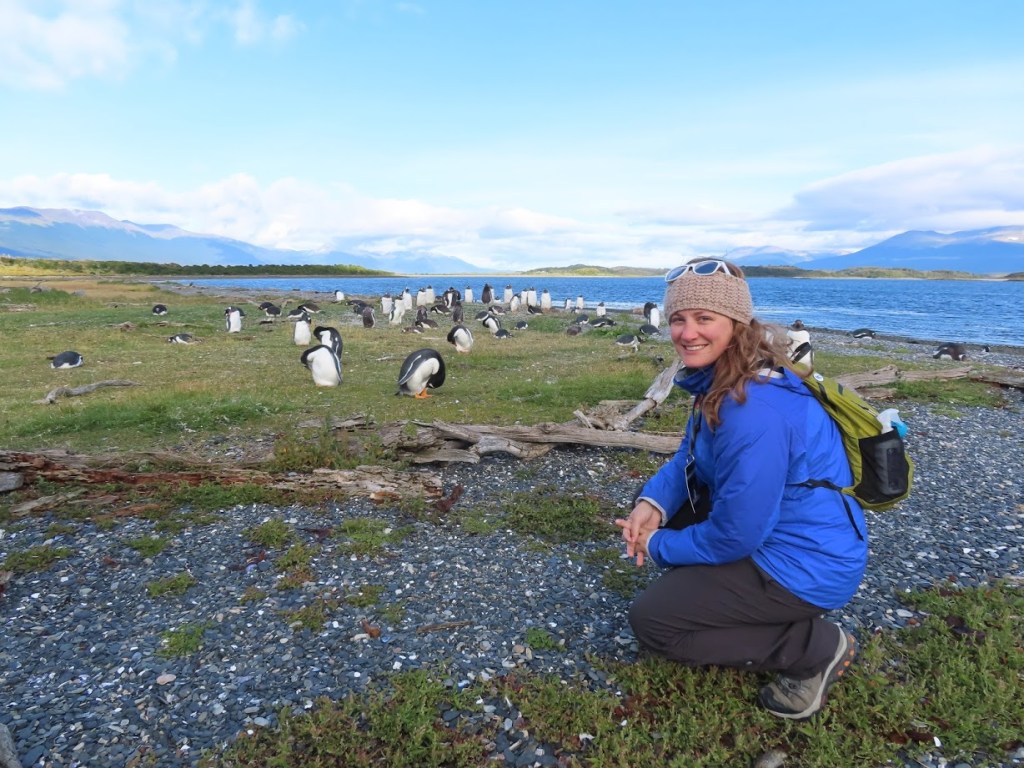
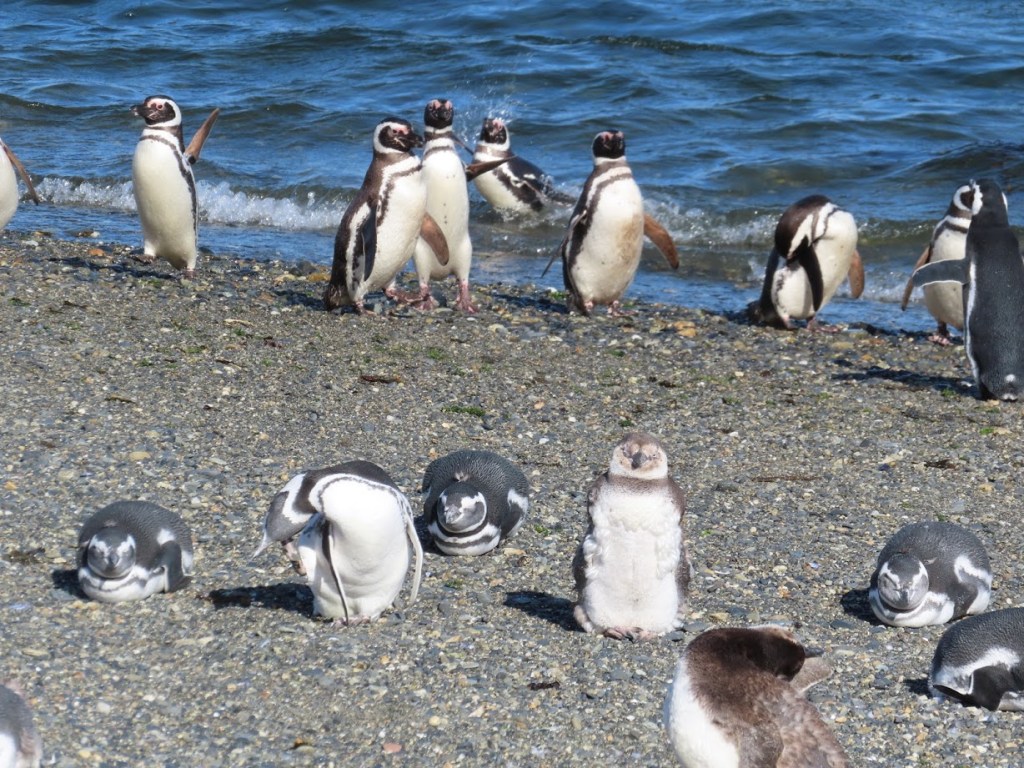
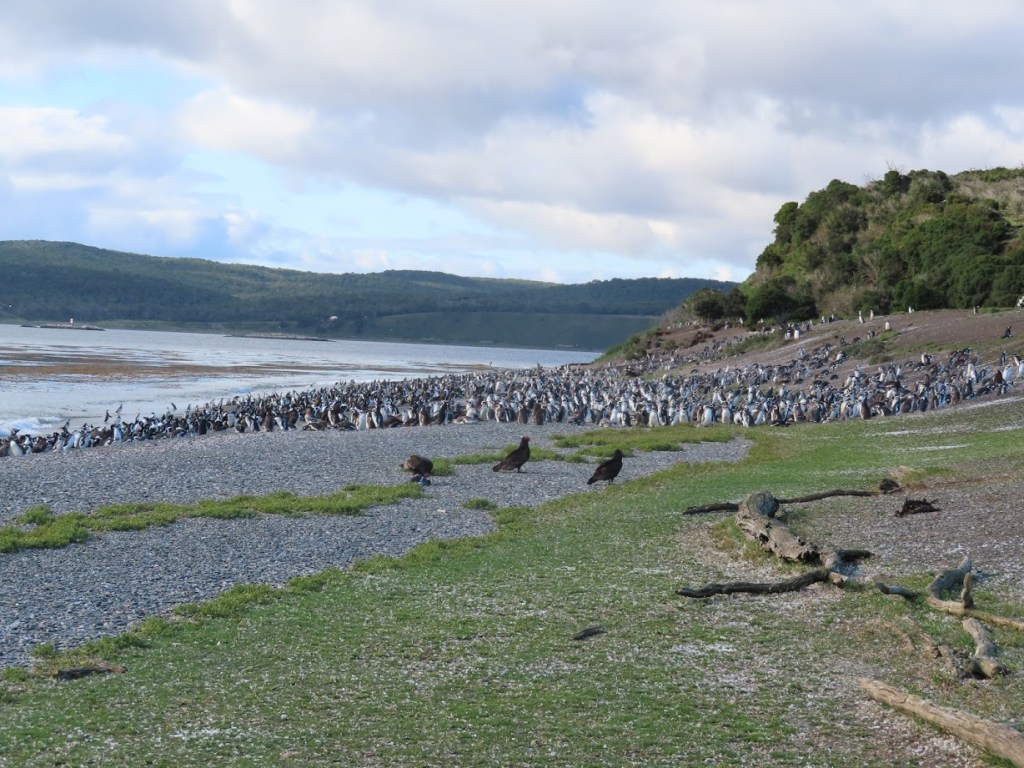
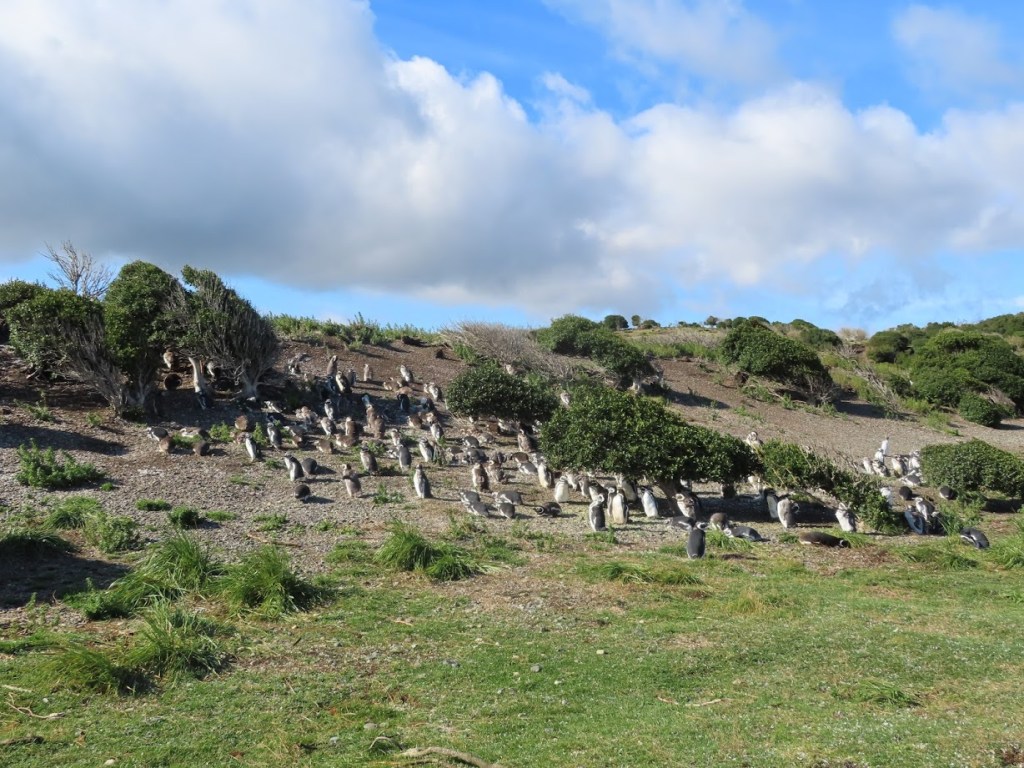
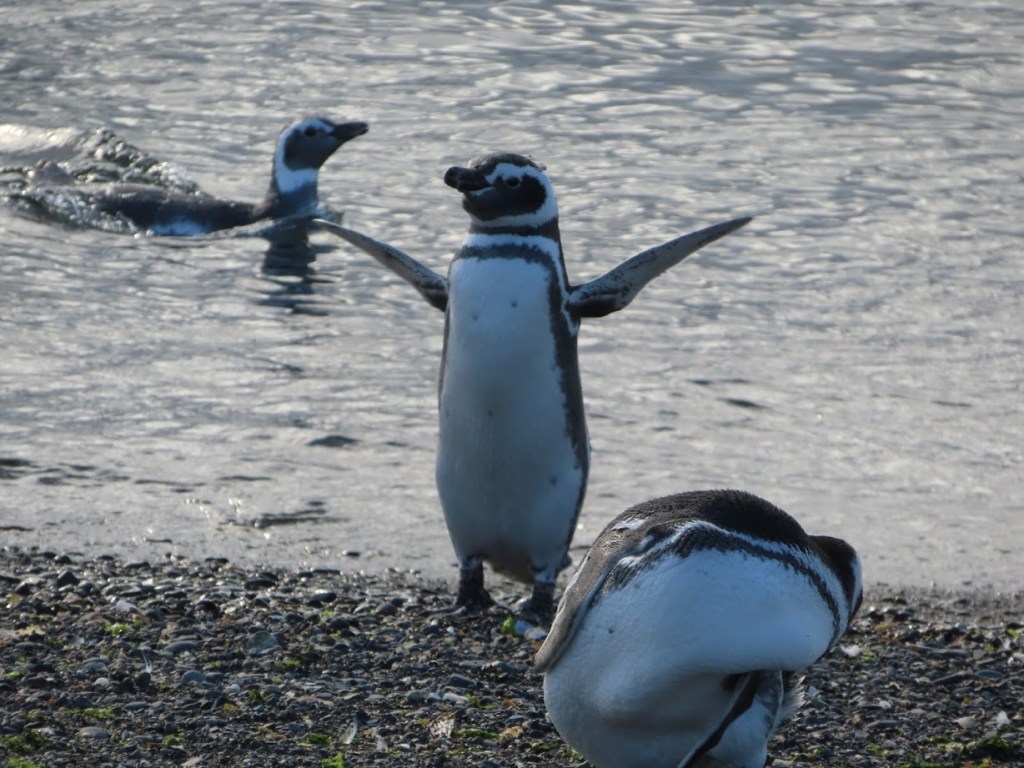
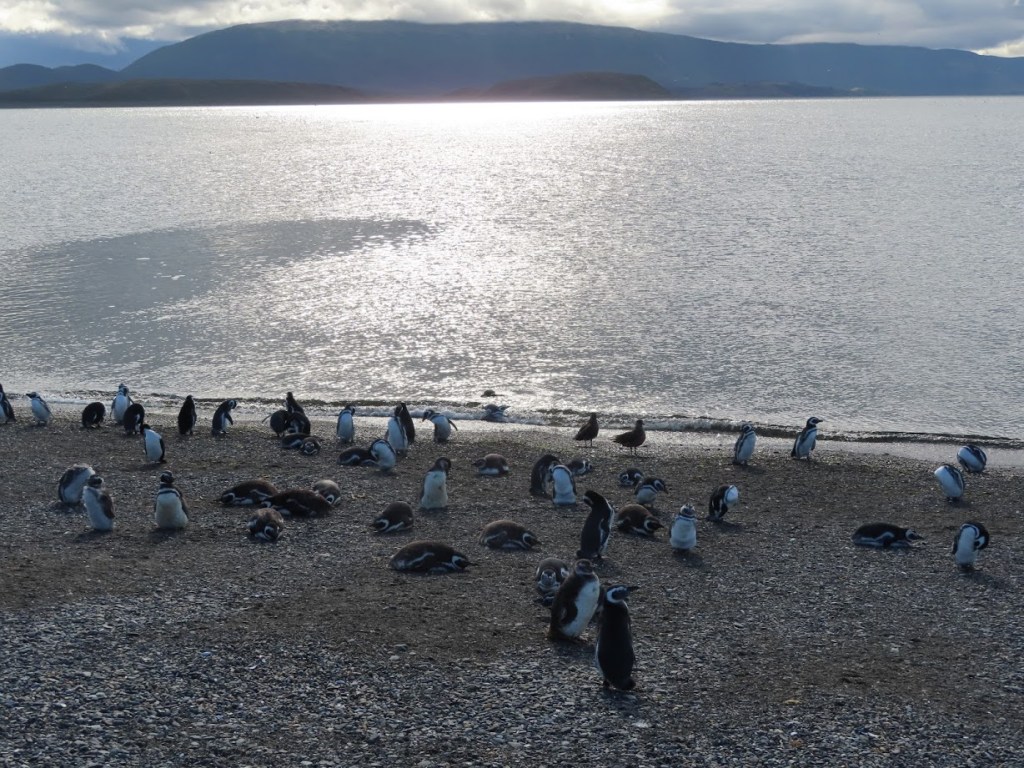
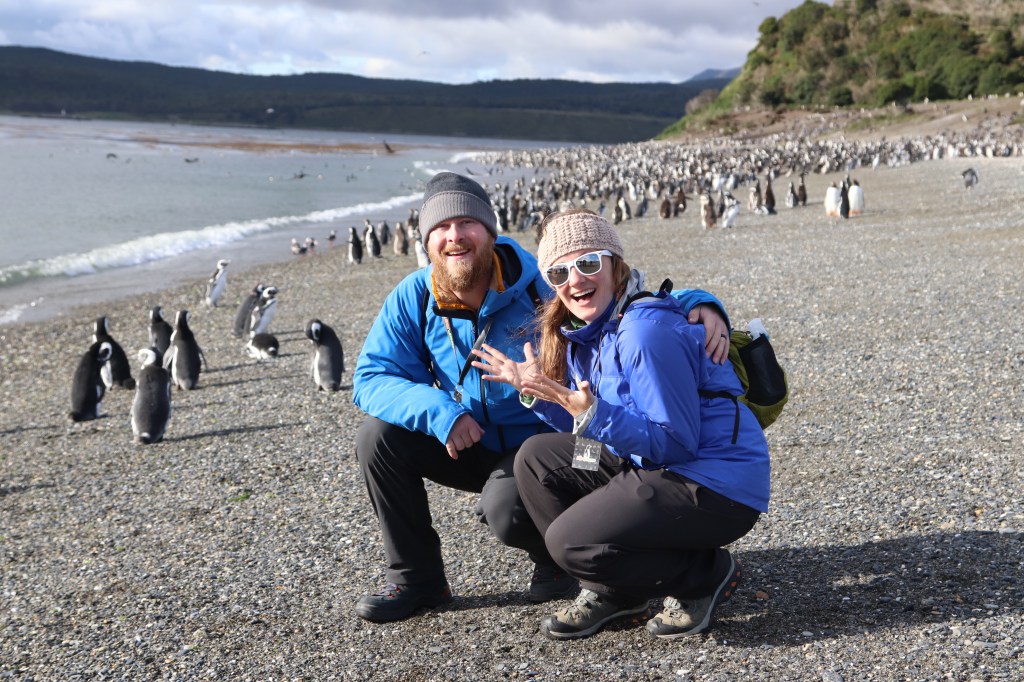
Our tour company, Piratour, took us there in the morning by bus to visit the ranch. From there we departed by small boats to visit the nearby Martillo Island where there are penguin colonies! Piratour is the only company with permission to walk on the island. When we landed, we were met by a colony of Magellanic penguins all squawking about the beach. There were thousands of them! At first they were scared of the boats, but once we all had gotten on shore, the penguins became curious little dudes coming up inspect the newcomers. We weren’t allowed to touch them because they will peck you, but they were sometimes inches away from us. The guide said this colony numbers 15,000!

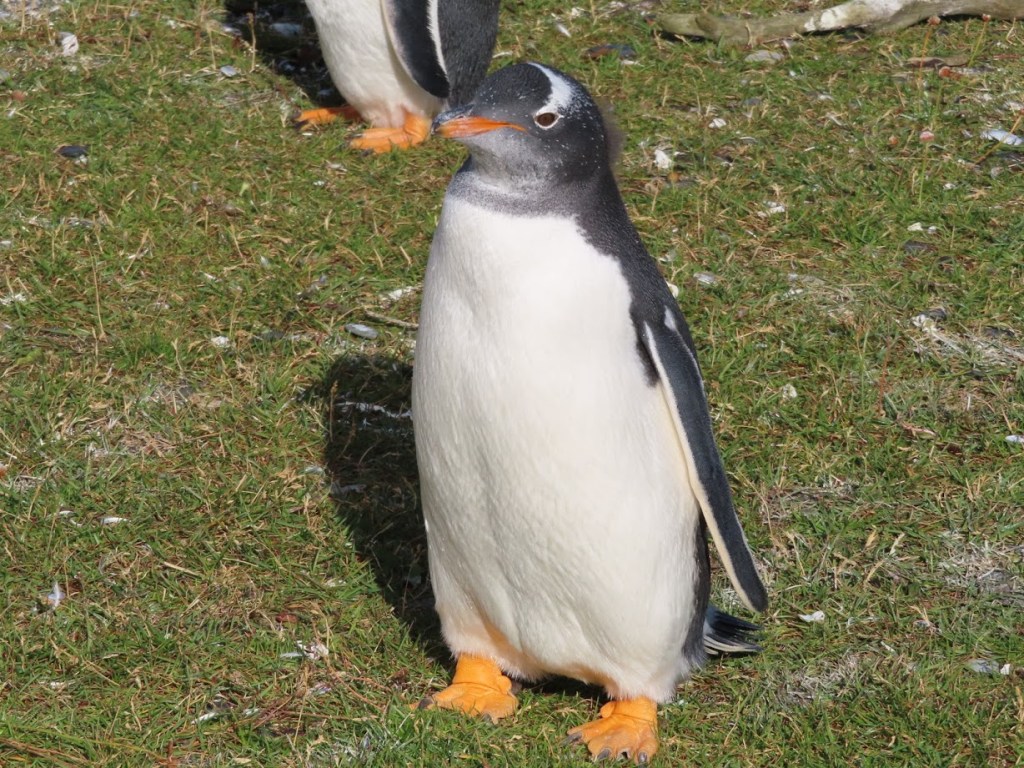
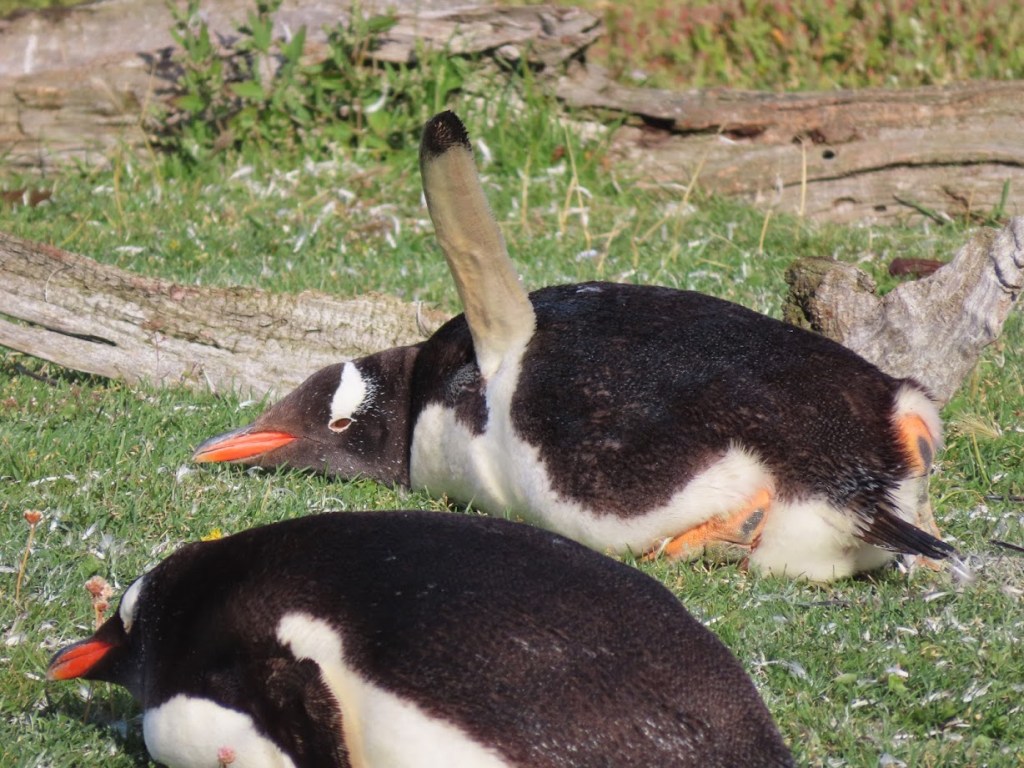
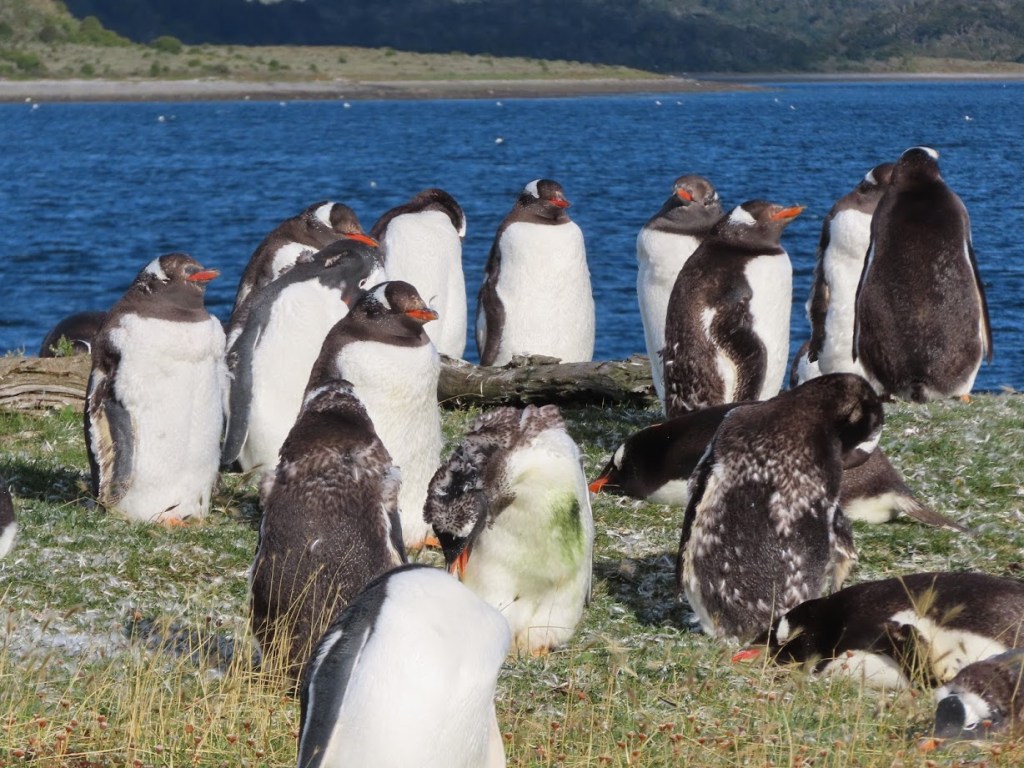
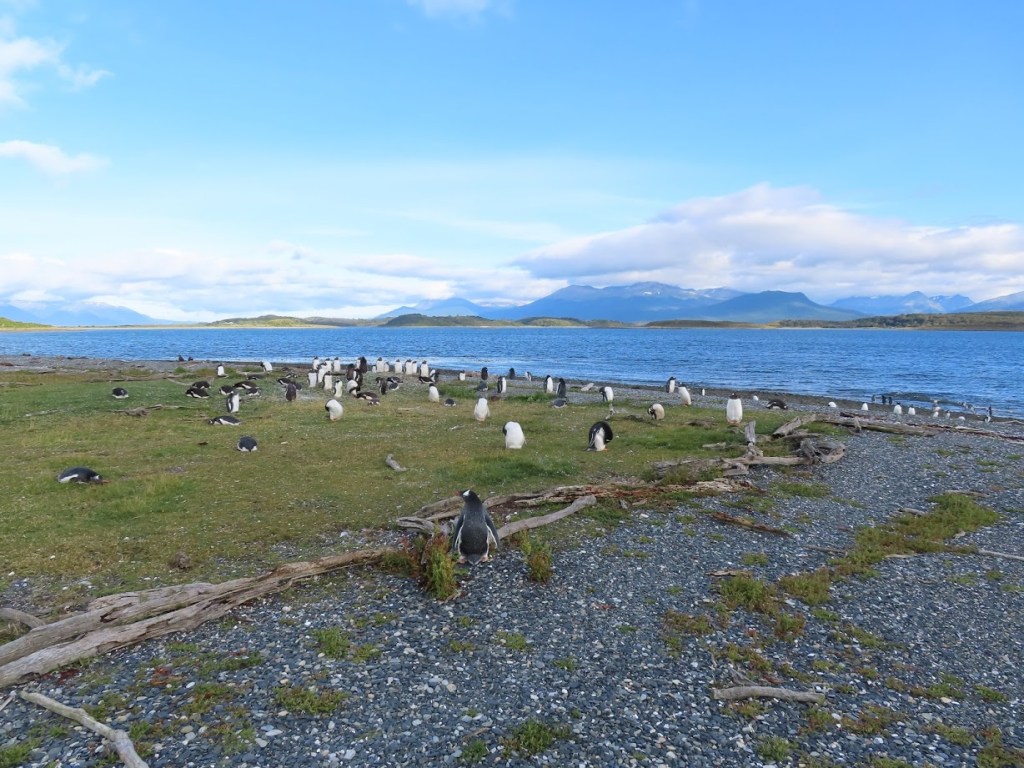
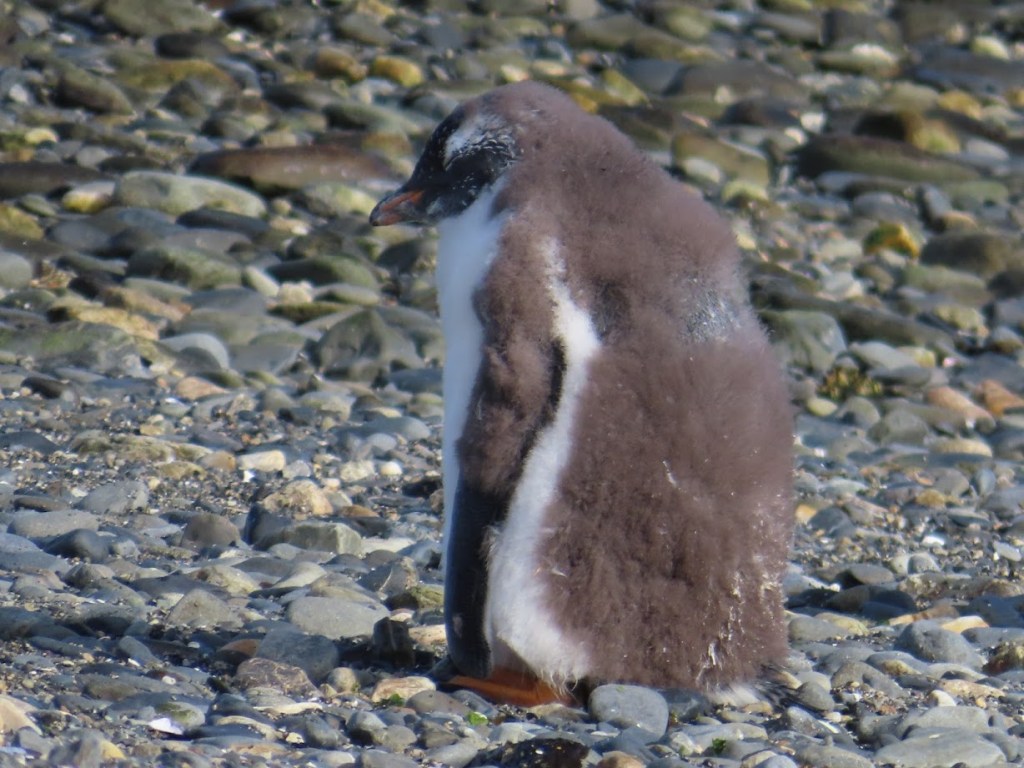
Next we walked over to see a larger species, the Gentoo penguin. It is the 3rd largest breed of penguin and were happily chilling in bunches while a few would waddle flippers out down to the water for a tasty fish. These puffy, fluffy, funny guys reminded me of that picture of that fat bluebird you see everywhere.

We were so taken aback by the penguins that we didn’t even realize our surroundings – mountainous islands in all directions! It was a paradise that few people get to witness. There were all kinds of sea birds flying and swimming around us. Some coexist with the penguins while other feast upon their eggs and little chicks! We also saw vultures feasting upon a penguin carcass.

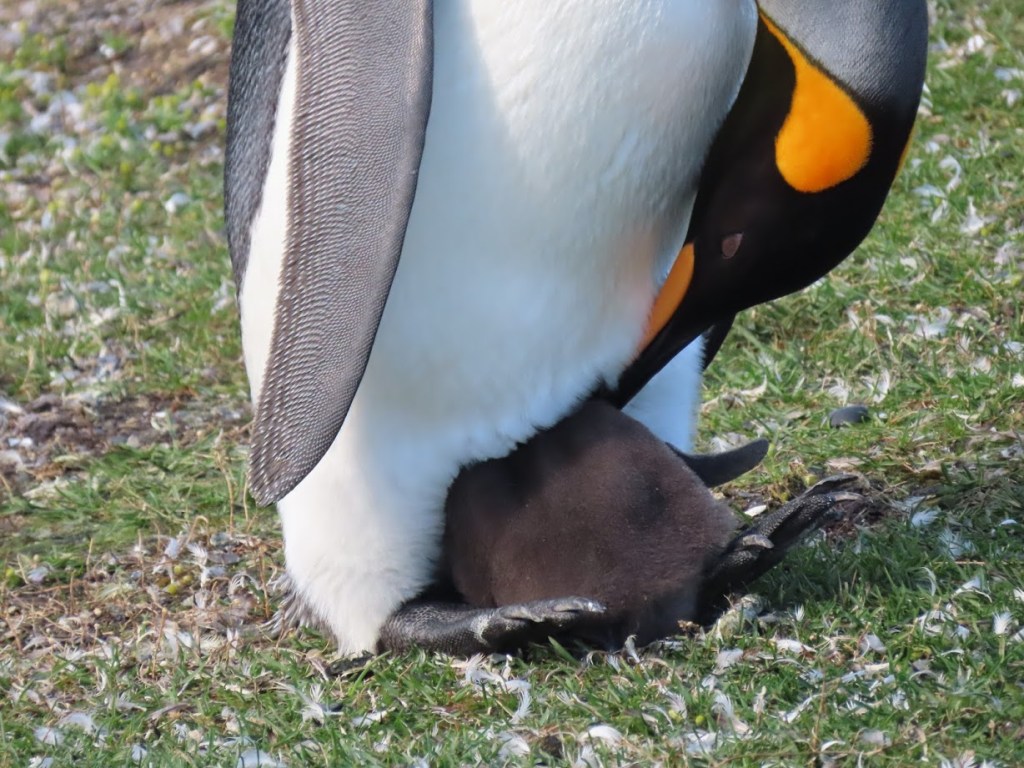
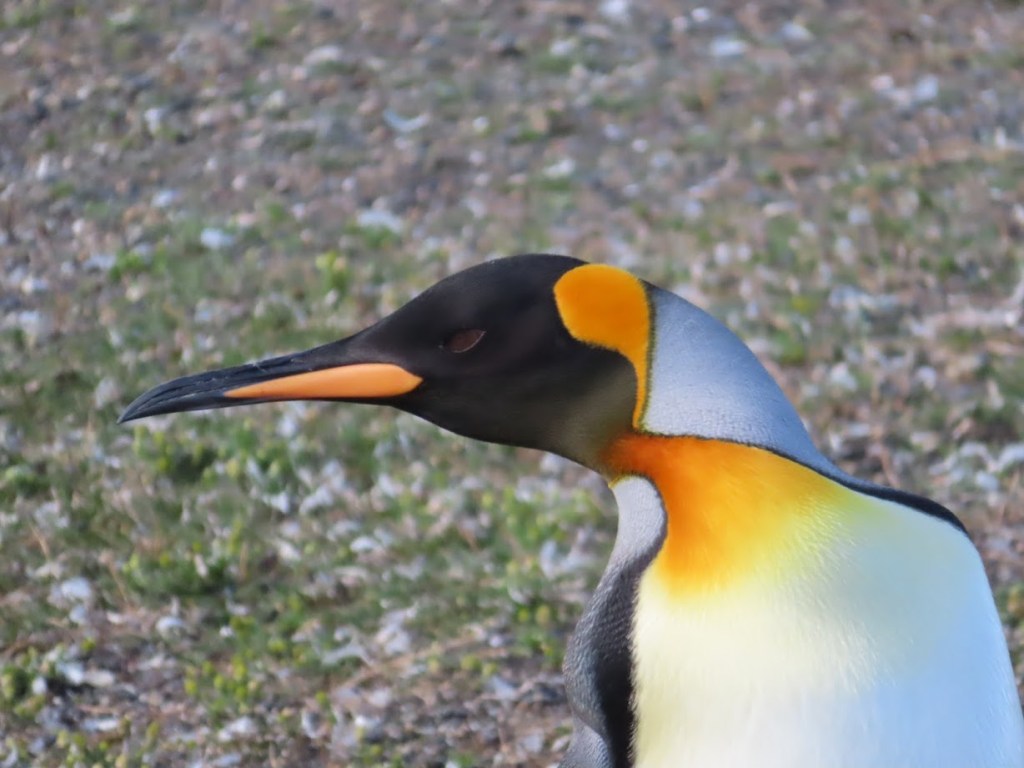
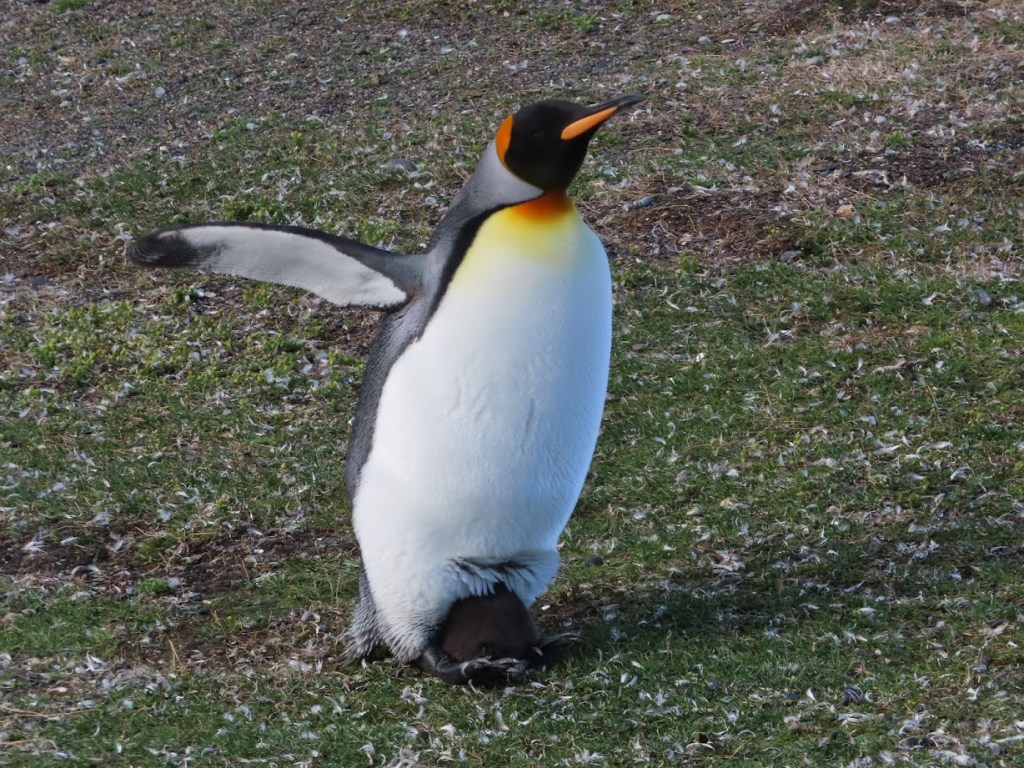
To top it off, we were incredibly lucky to see a king penguin and a chick! Only recently had a pair of king penguins come to the island and had a baby. This is very rare since the king penguins usually only inhabit Antarctica. They are the 2nd largest penguin after the emperor penguins. The adult was taller than my waist, maybe 3 1/2 feet tall. What a splendid array of color from bright yellow to deep orange on top of its classic tuxedo body. Such beauty.

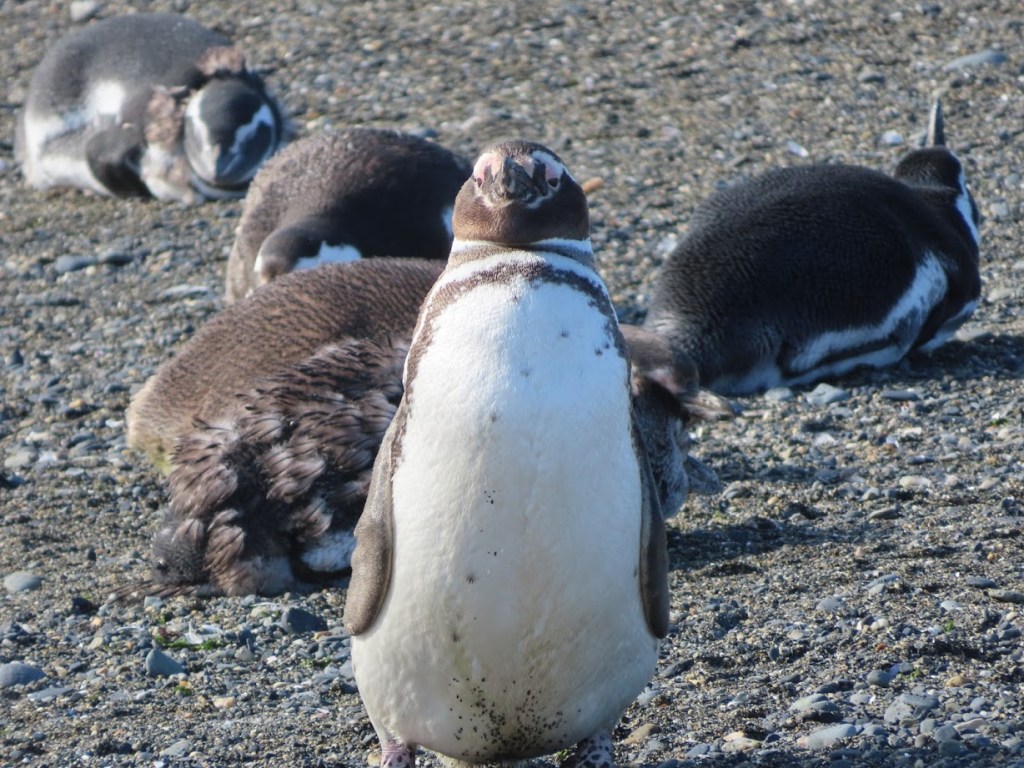
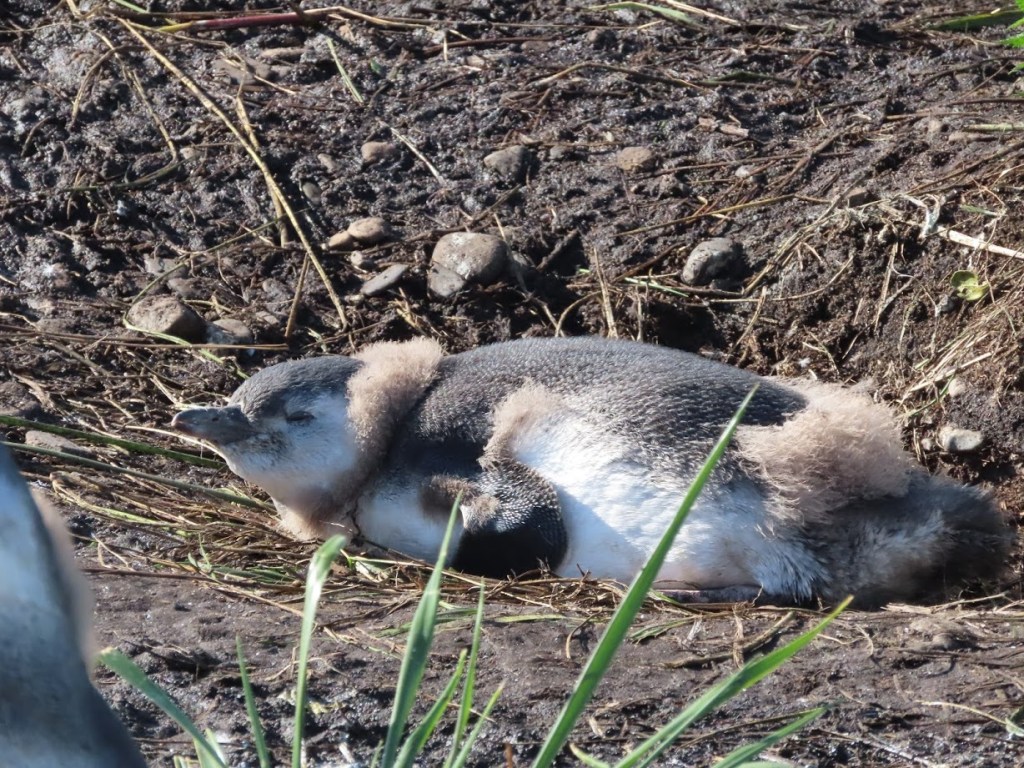
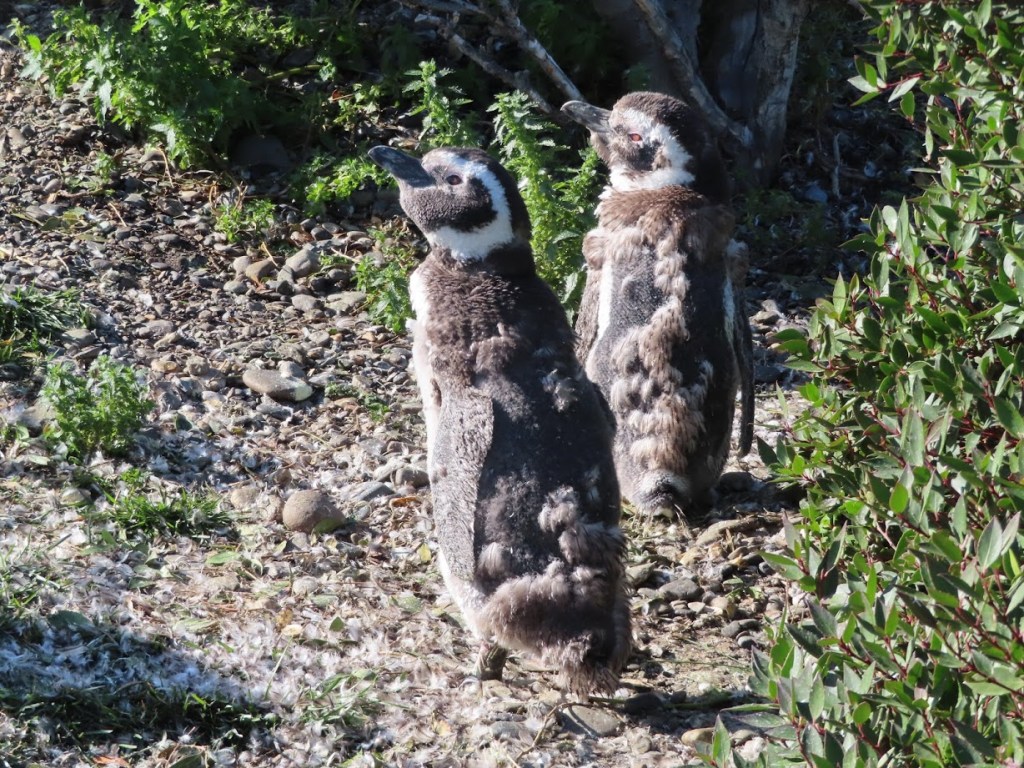
We spent an hour on the island visiting different areas. On the north side we walked among the burrows of the Magellanic penguins. The penguins here were starting their moulting process as the summer was coming to an end. Our guide told us about how the new chicks were mostly already fully feathered but there were still some that had their adolescent grey feathers. The chicks would take turns calling out, saying they were hungry and waiting for their parent to take them fishing. It was quite a show of flapping and running about the beach.

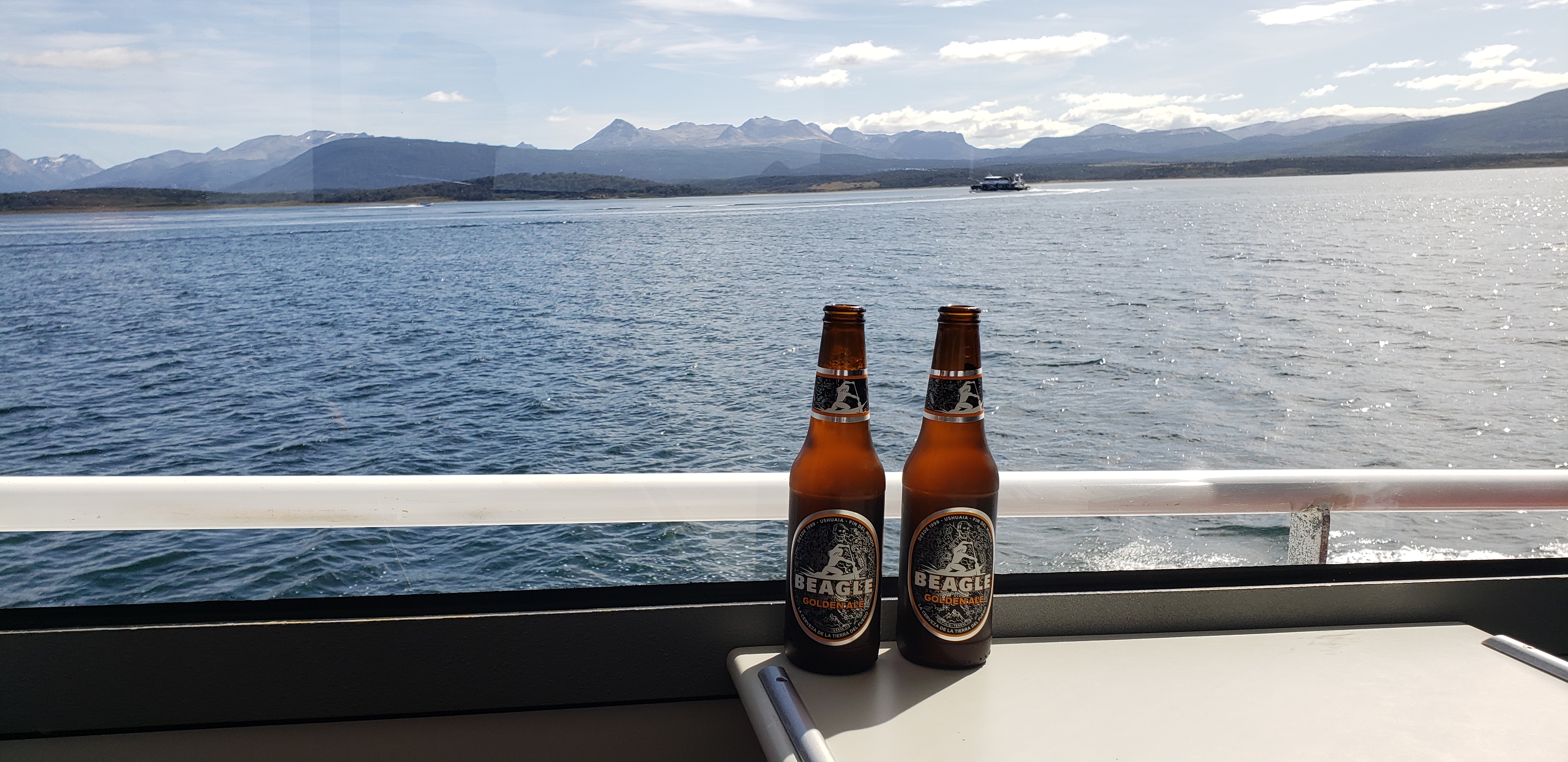
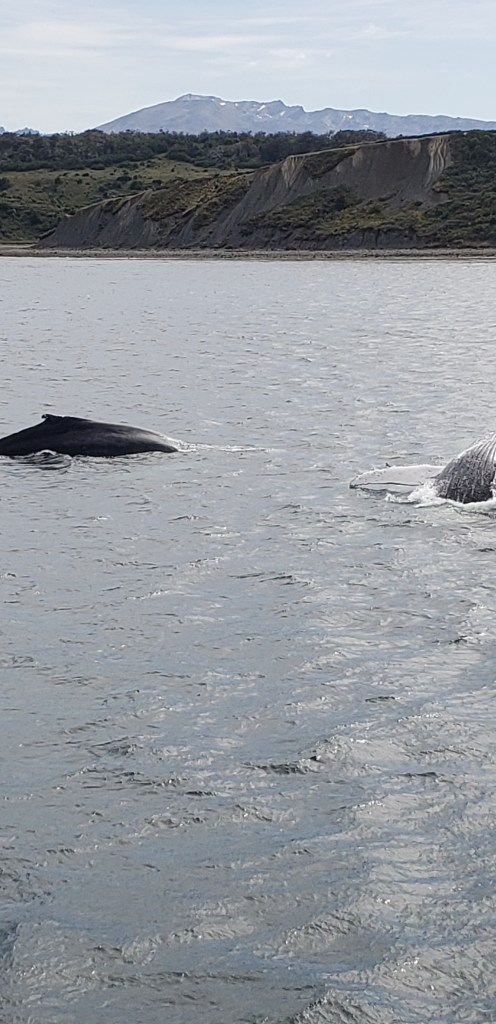
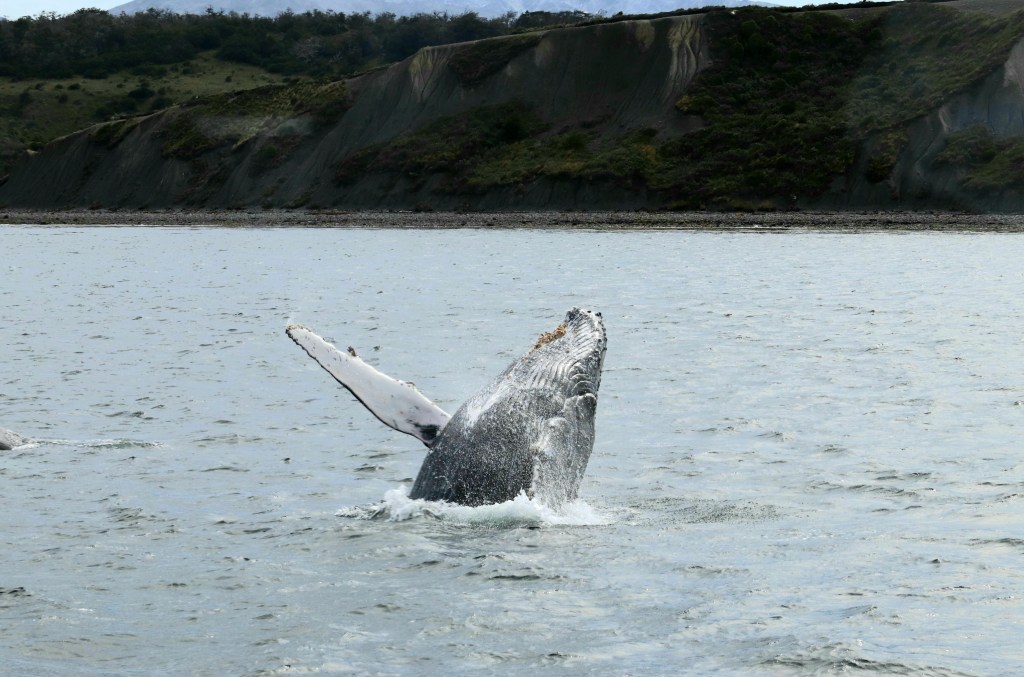
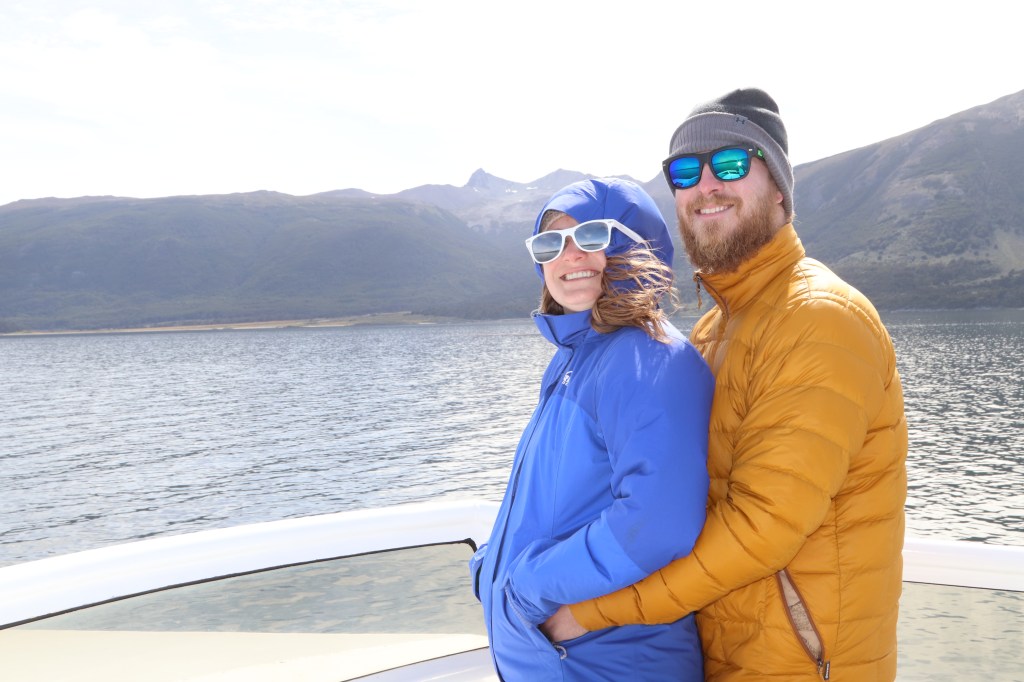
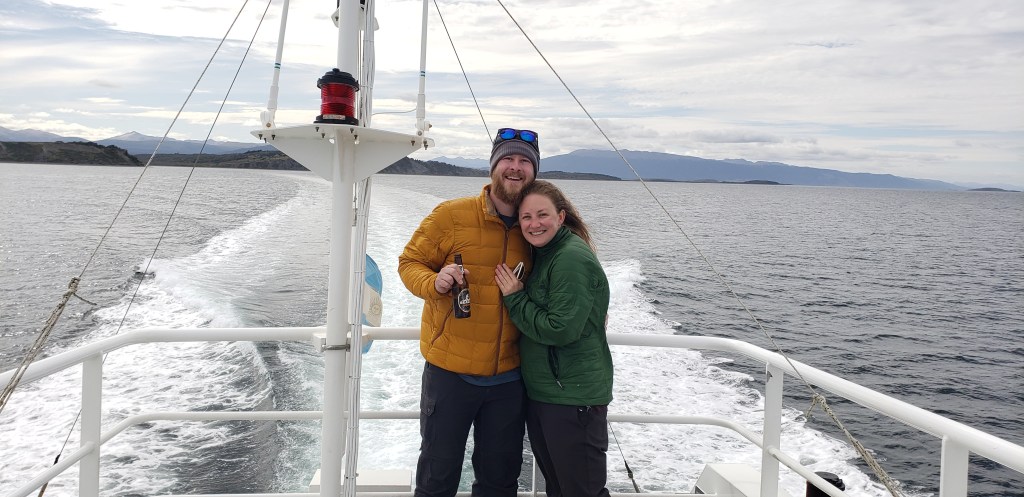
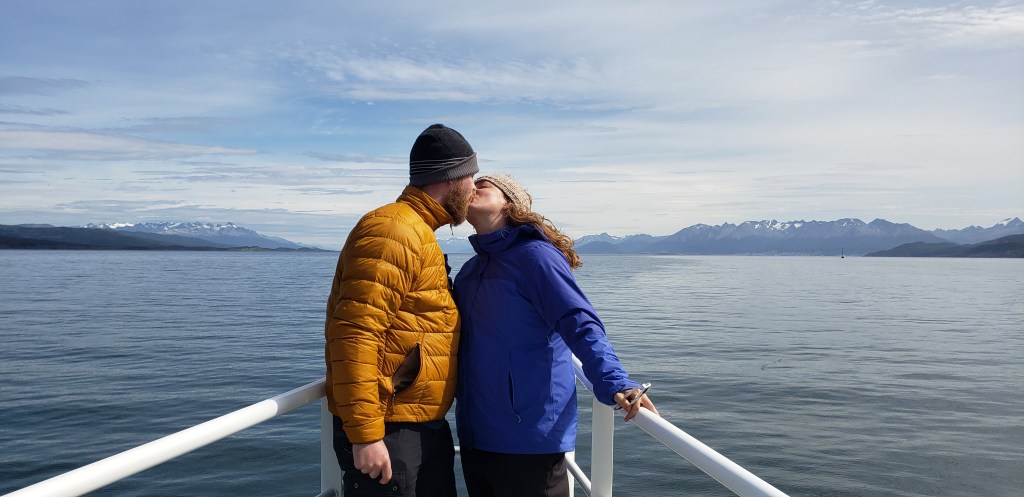
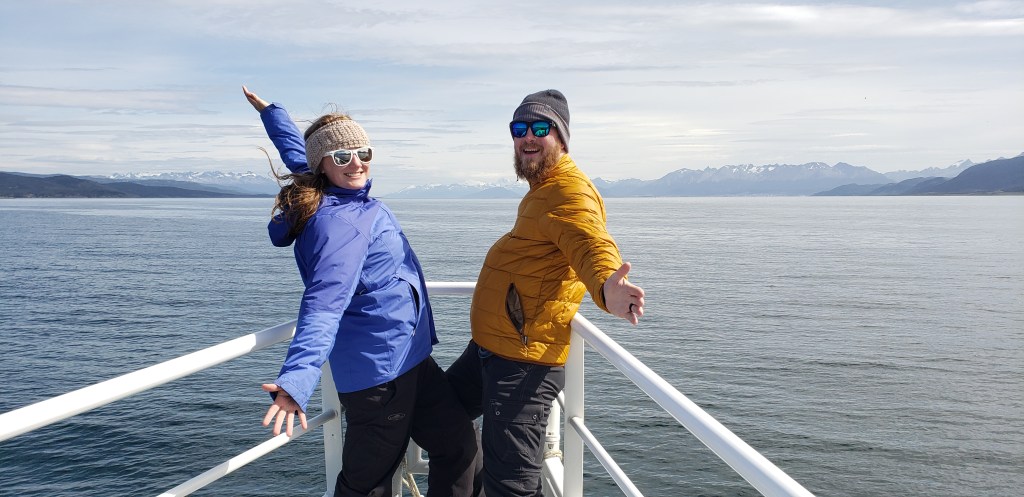
At last it was time for us to depart back to the ranch. It will forever be one of our favorite hours spent. Once all of our tour group was gathered, we boarded a small yacht that would take us on a 2 1/2 hour journey back to Ushuaia along the Canal Beagle. They served us pizzas and we toasted some Beagle golden ale, very apropos. After eating we decided to brace the winds and explore the upper deck to take in the views. Not 5 minutes later we were graced with another lucky spectacale: Humpback Whales!

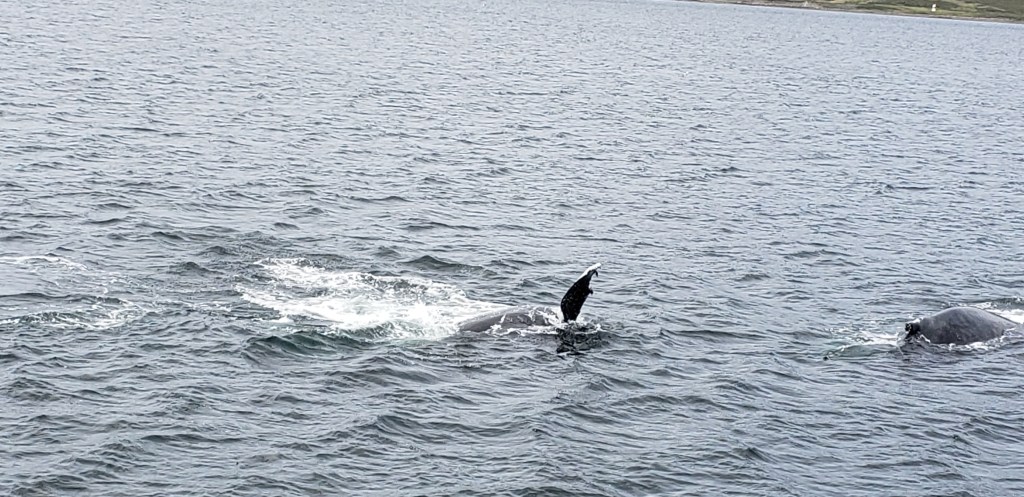
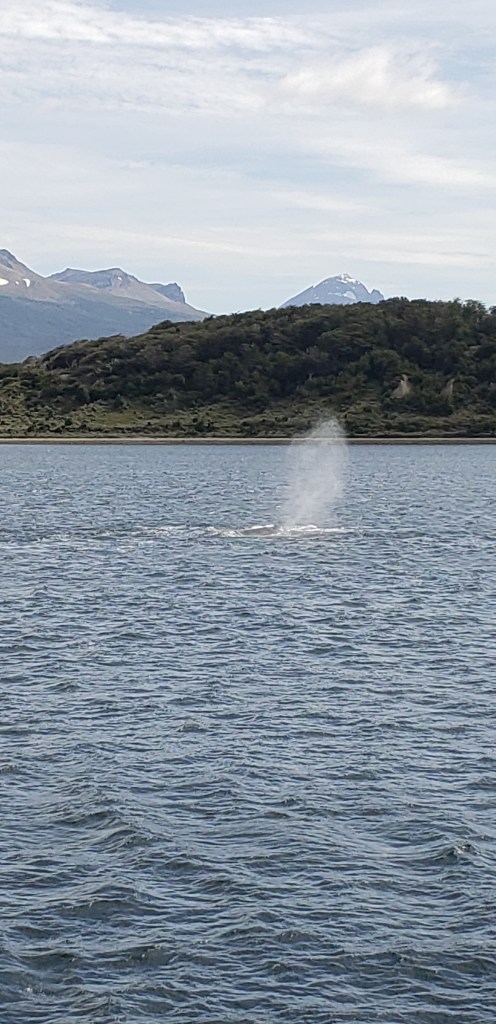
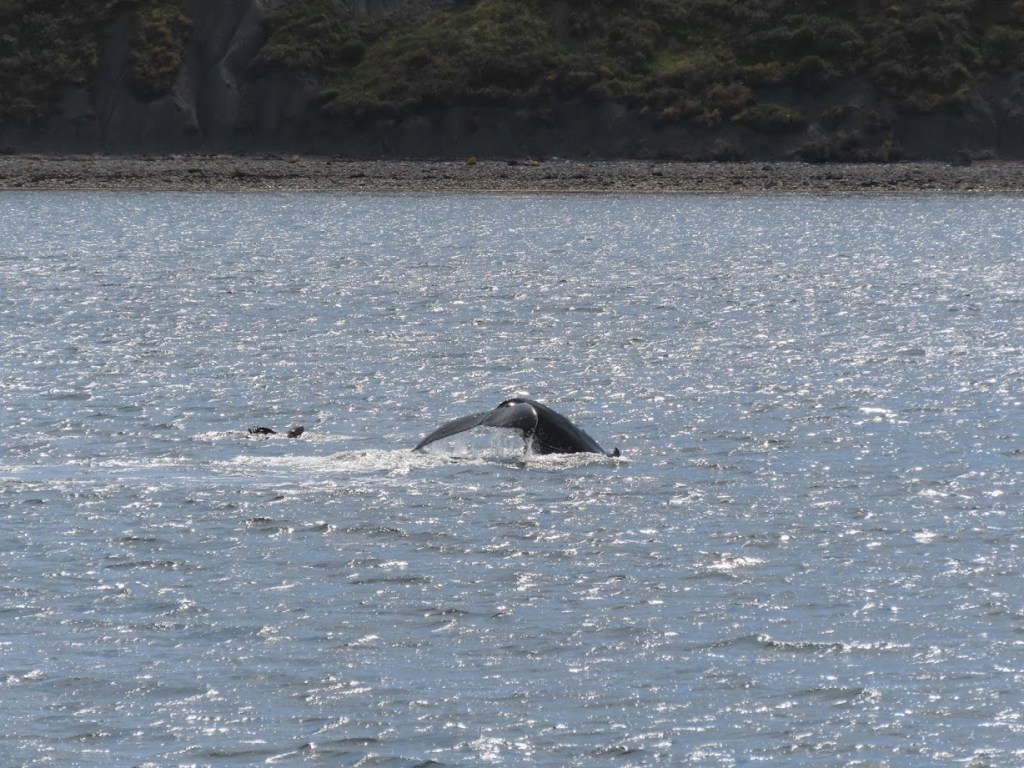
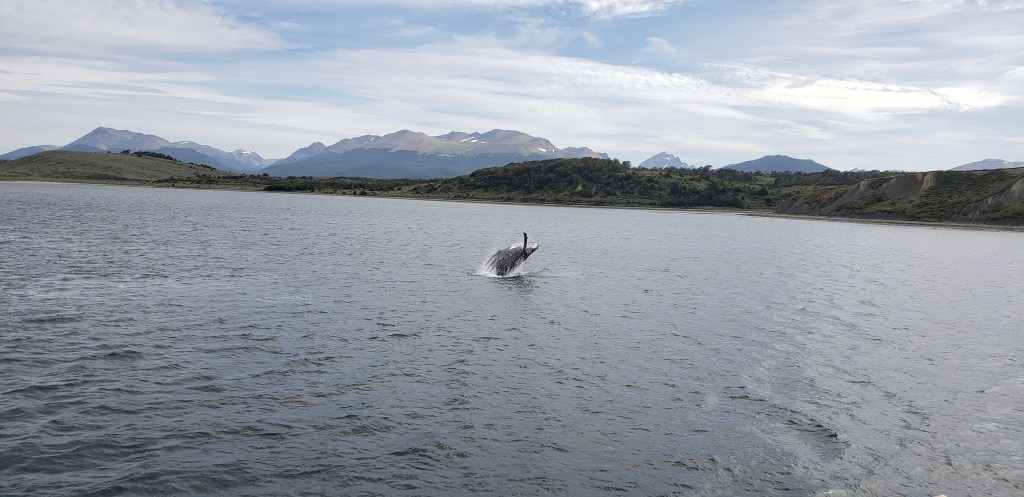
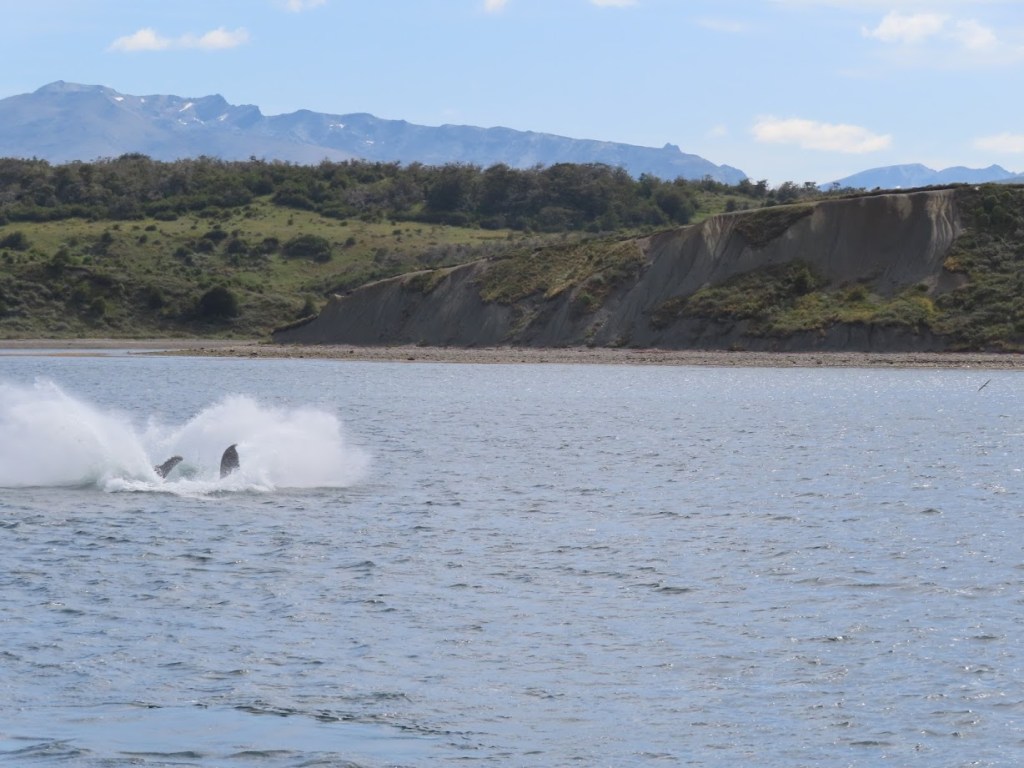
A mom and a large calf had made their way into the channel and put on quite the jumping show! It was awe-inspiring, being so close to these huge, magnificent sea creatures…a hush came over the whole ship as we watched them play in the water, fin slapping the surface and jumping in and out of the water. It really does just fill you with joy and a feeling of thankfulness for being in the right place in the right time. A rare gift to we blessed few on the boat from Mother Earth. That’s the best I can describe the experience, but it still really can’t fully be captured in words.

I think Gabrielle was the first one to see them because she yelled out and pointed, and then everyone up top turned and the boat switched direction to head near to them. Talk about a spotter!

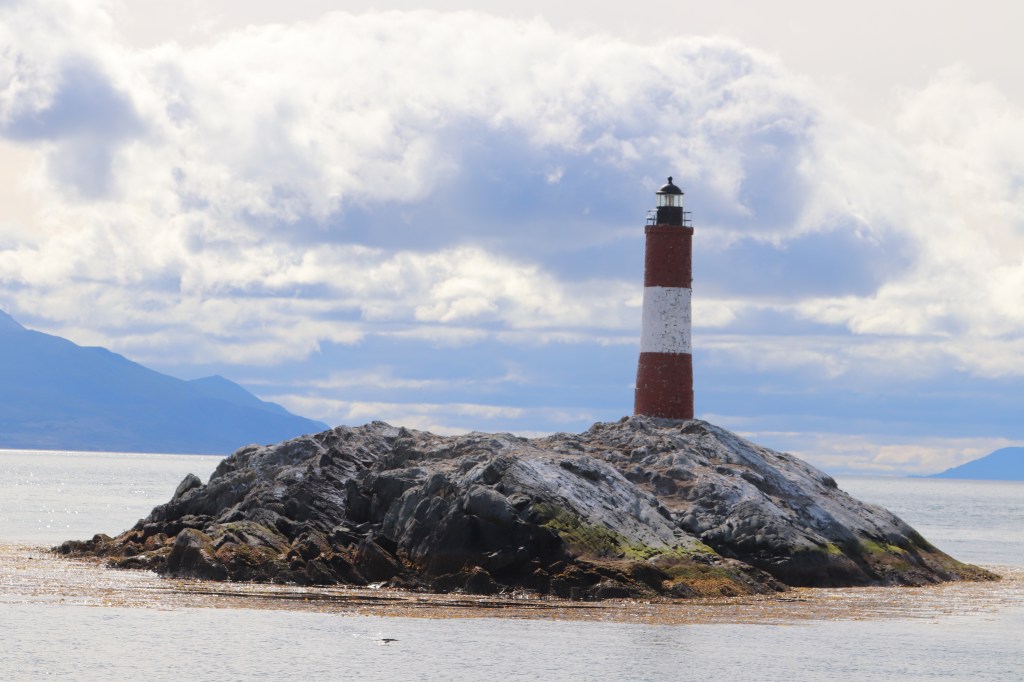
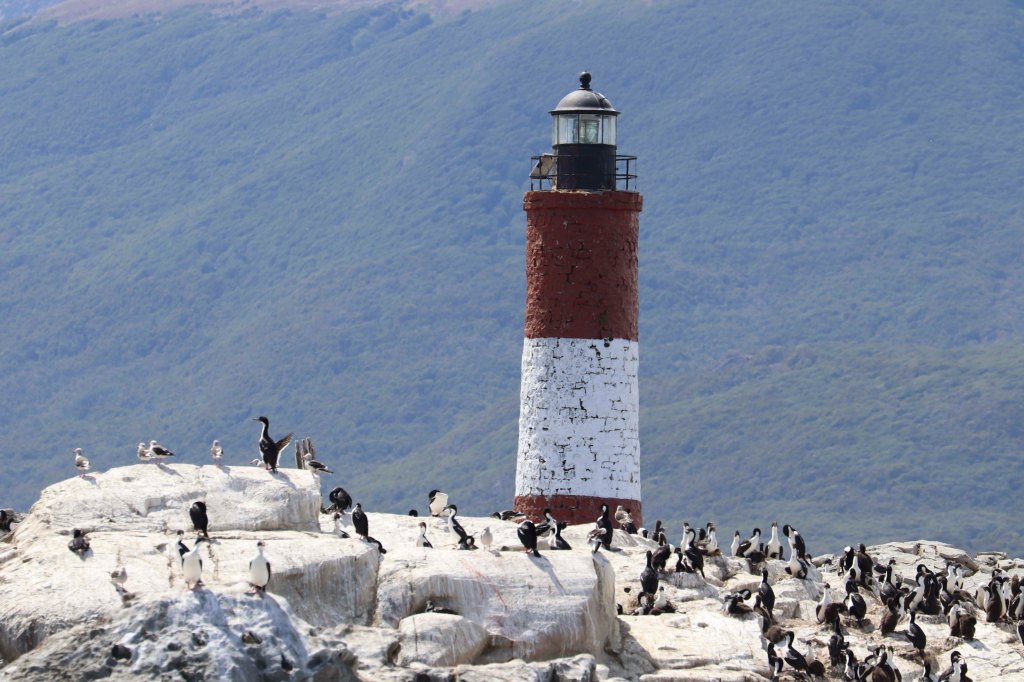
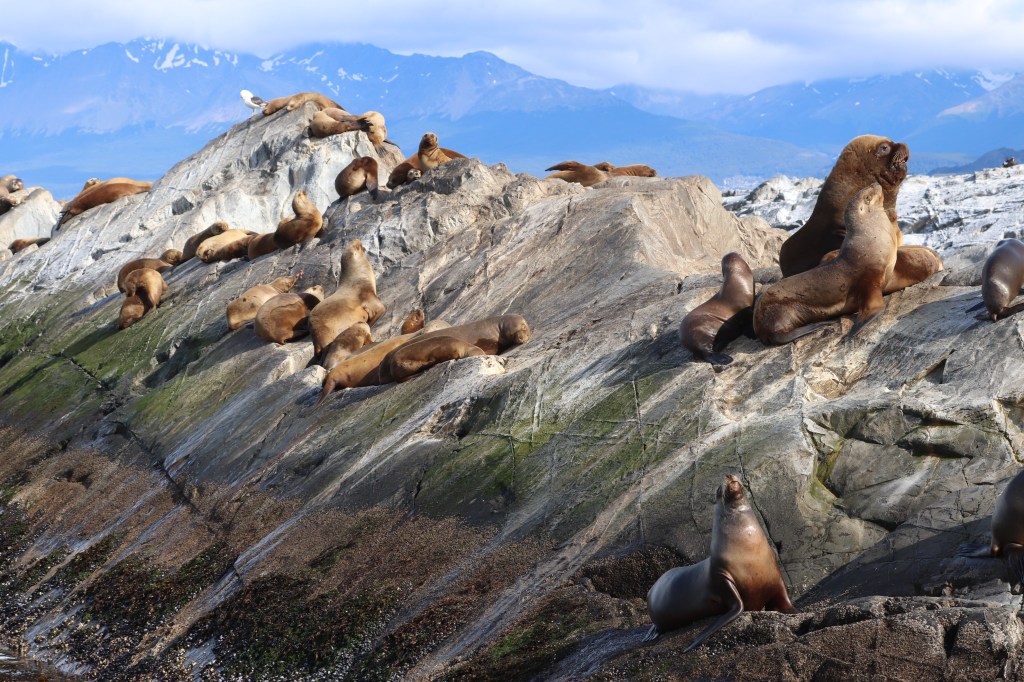
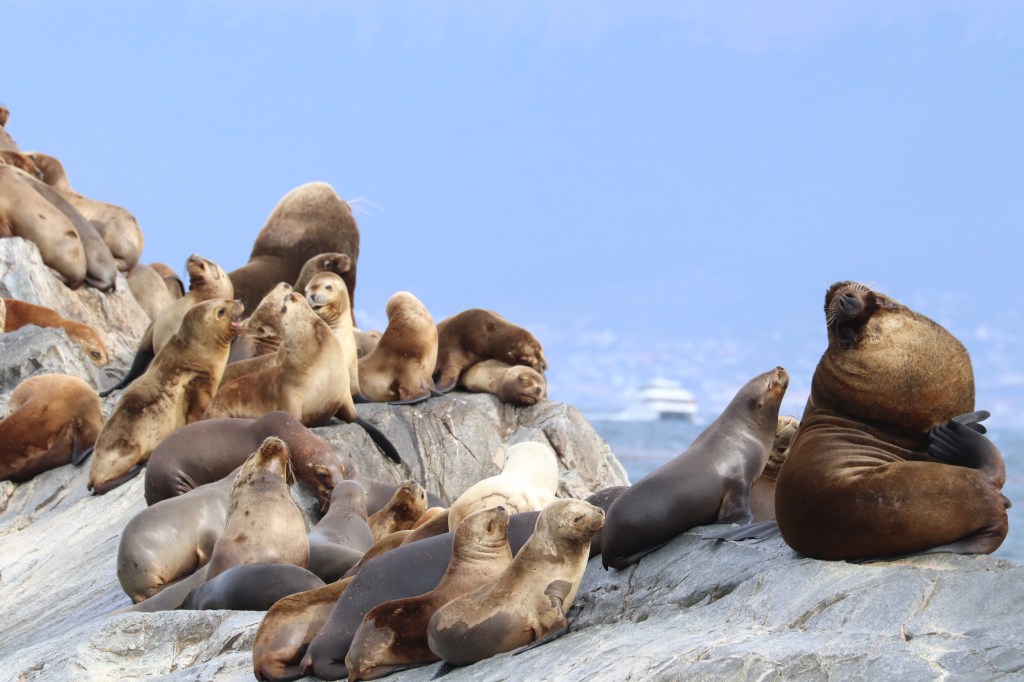
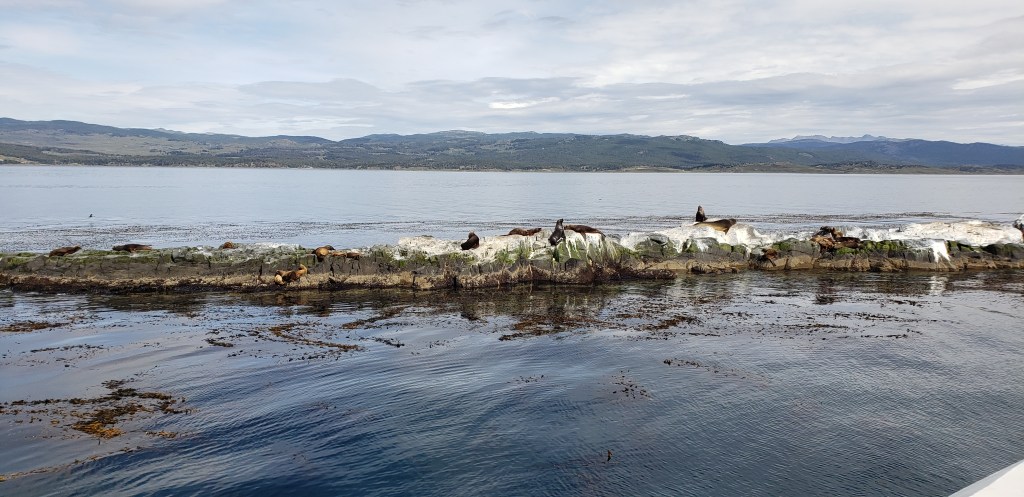
Getting closer to Ushuaia, we stopped by a few small rock islands where the original lighthouse of the city stands. Here lives sea lions and fur seals fishing the kelp beds around the rocks. Once again we were lucky to see an elephant seal up close napping as the king of the rock! There were also an abundance of black and white cormorants swimming about. They had claimed one of the rocks for themselves and their poop had bleached the rock white. The cormorants are hunted by another type of bird: the Sooty Shearwater. They dive down as the cormorants are coming back up to the surface and can peck their head to pierce the skull and kill them on the watery ascent.

One of the best days we have had on our trip – we were sad to get off the yacht. Seeing such natural wonder in its untouched surroundings is a life high that carries you for a long time after.

A few days later we packed up and took a bus west into the Tierra del Fuego National Park to camp and do some hiking. We found a great spot right next to the river just down from laguna verde – its a translucent turquoise. The Pan-American highway ends here in the park coming 11,000 miles from Anchorage, Alaska. So David has now been to the beginning and the end! We hiked to the endpoint which reminded us of the crowded walkways to the top of Iguazu Falls. Fortunately, we found a side trail that took us even further south along the bay to a secluded spot far less crowded.

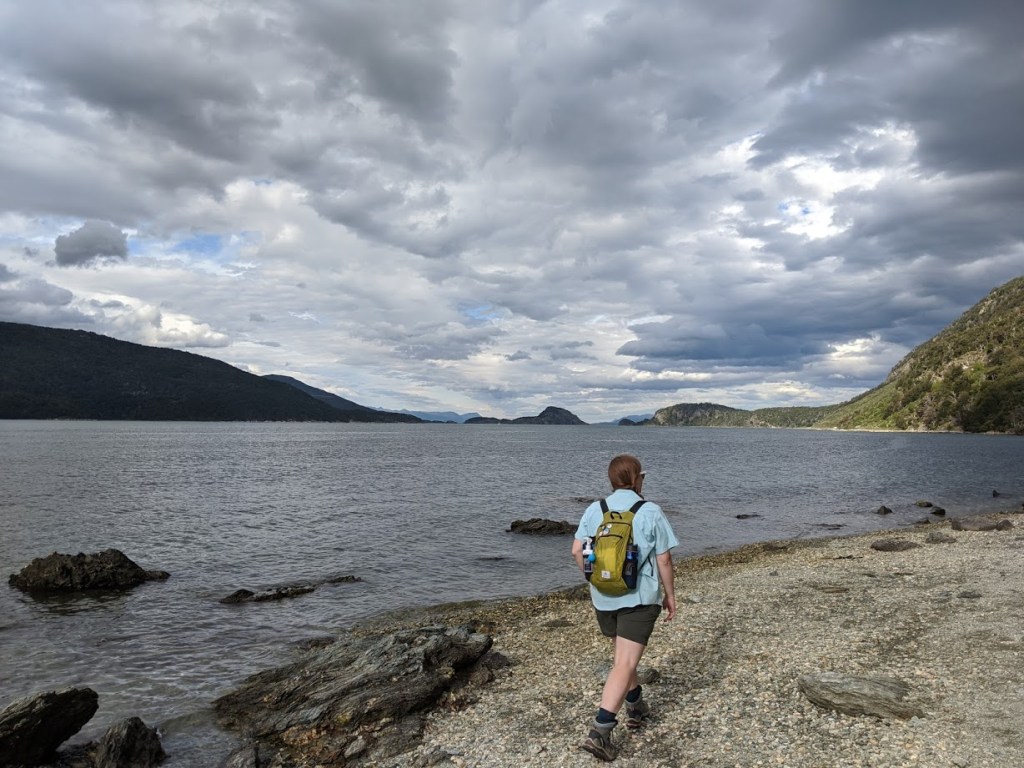
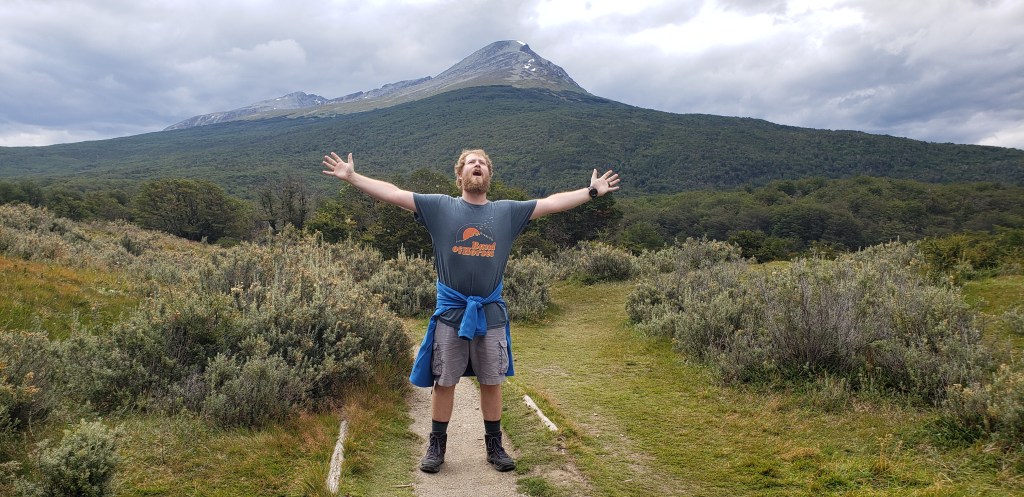
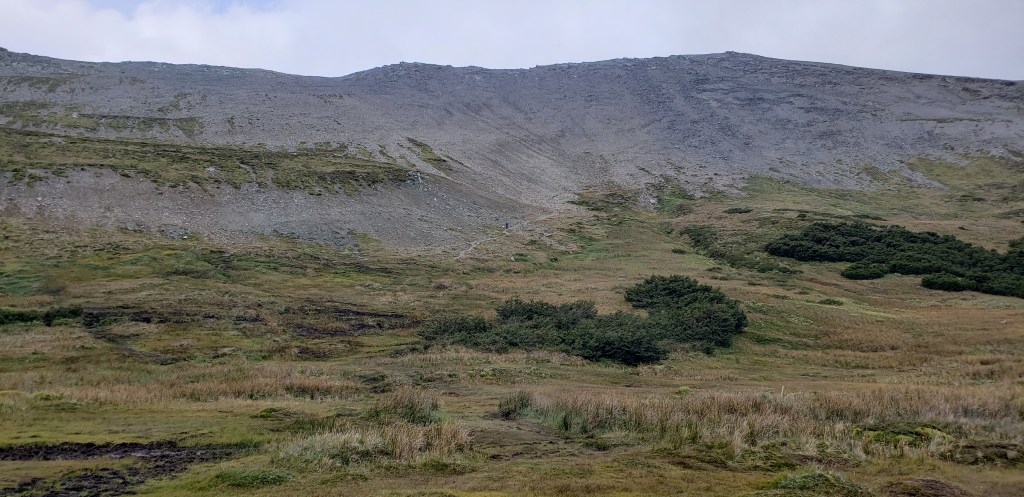
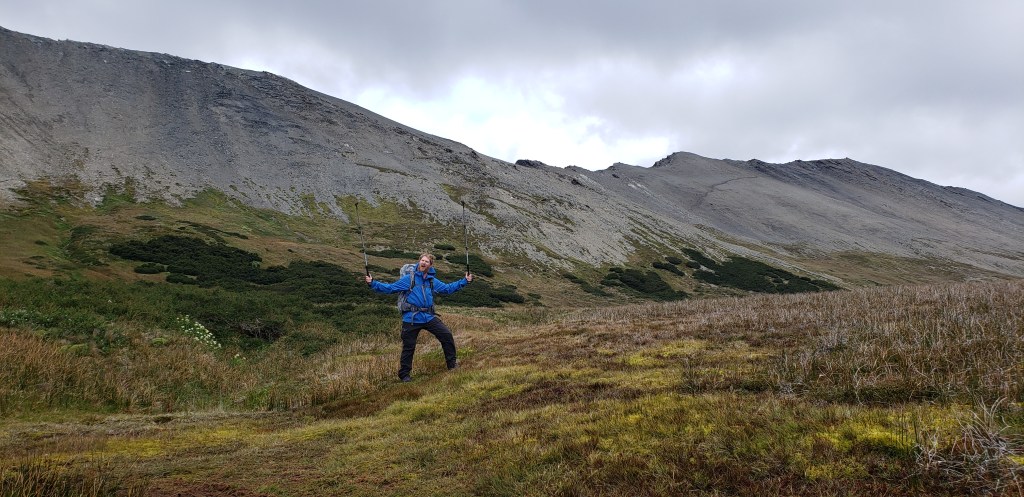
Our second day we attempted the hardest hike in the park which took us far above the trees into the beautiful Patagonian alpine tundra! It was very vertical and challenged us with our big packs. Unfortunately, is was raining that day so we ran into a lot of mud and couldn’t finish the last part of the ascent up the steep rocky slope to the peak, as it would likely be too trecherous. But David was determined to get above the tundra to get the best view for pictures!

Can you spot David?

The decent was way harder than normal as we slid all over the place down the steep muddy trail. Legs shaking and wiped, it was still well worth it to be able to take in as much of the park as we could. It was a good thing we didn’t wait another day since we woke up the next morning to find the mountain tops snow packed!

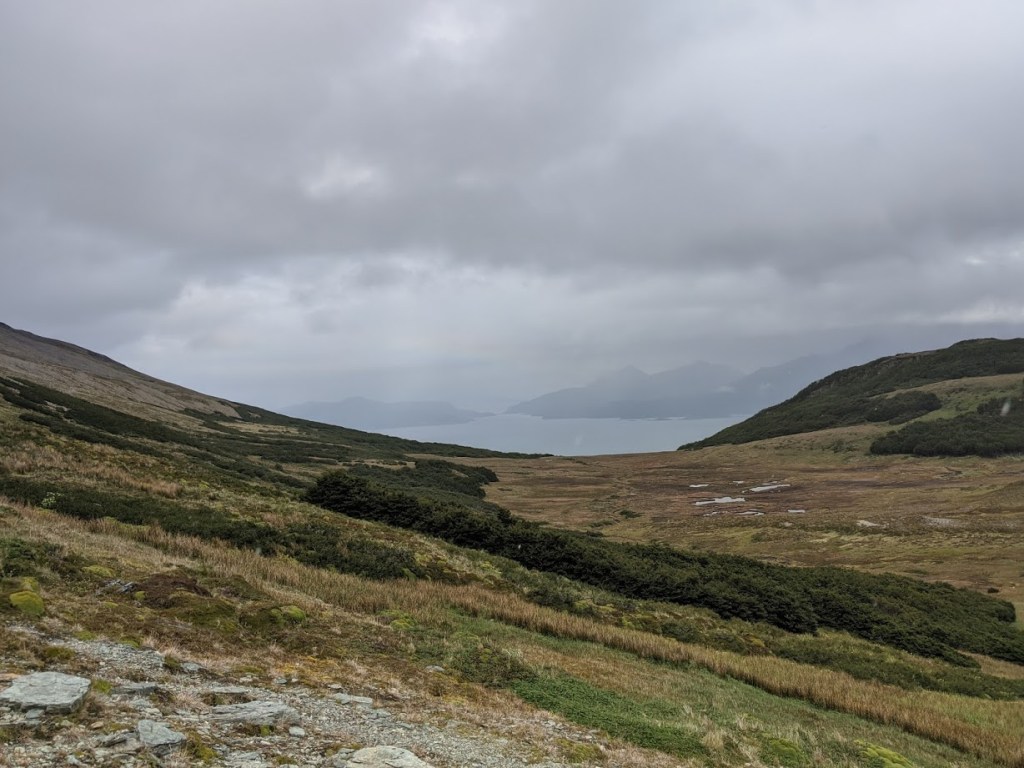
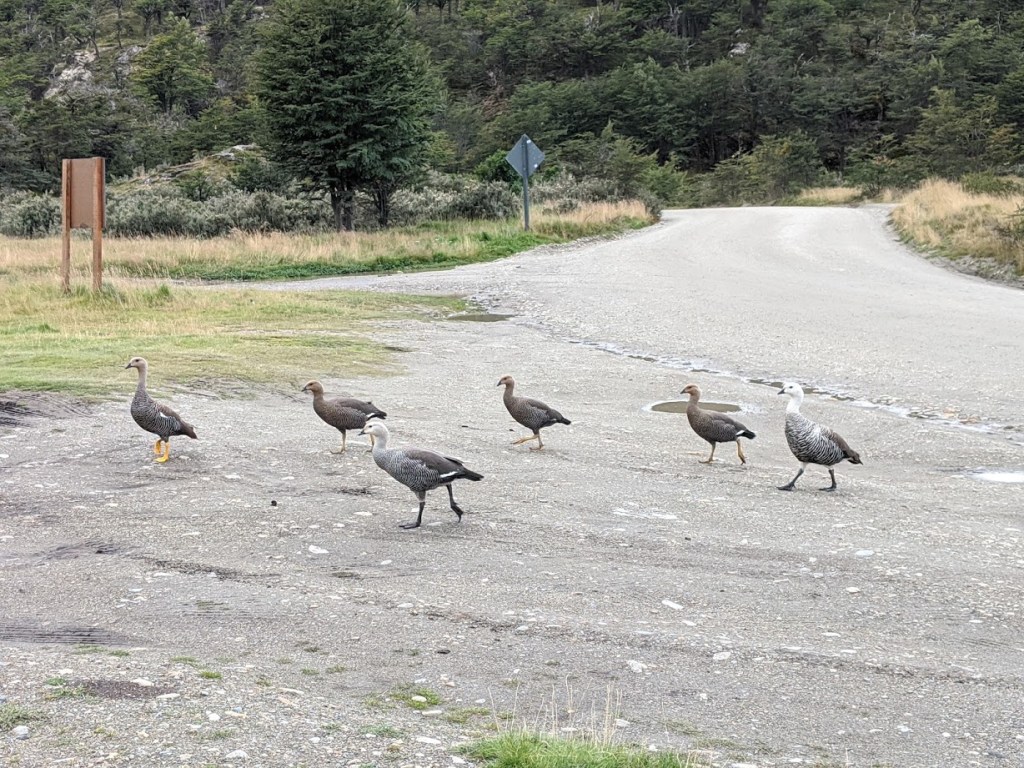
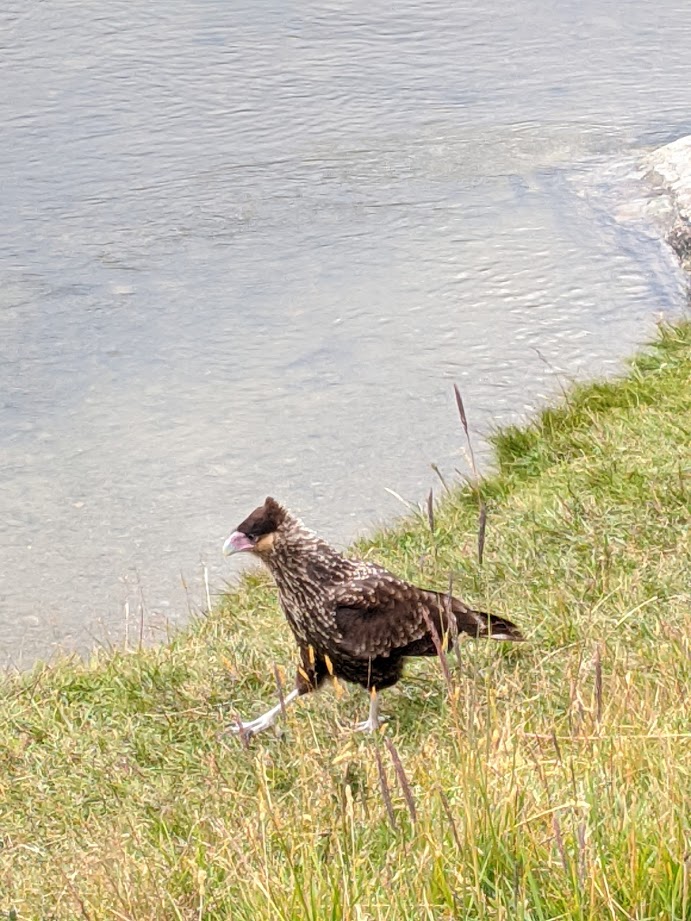
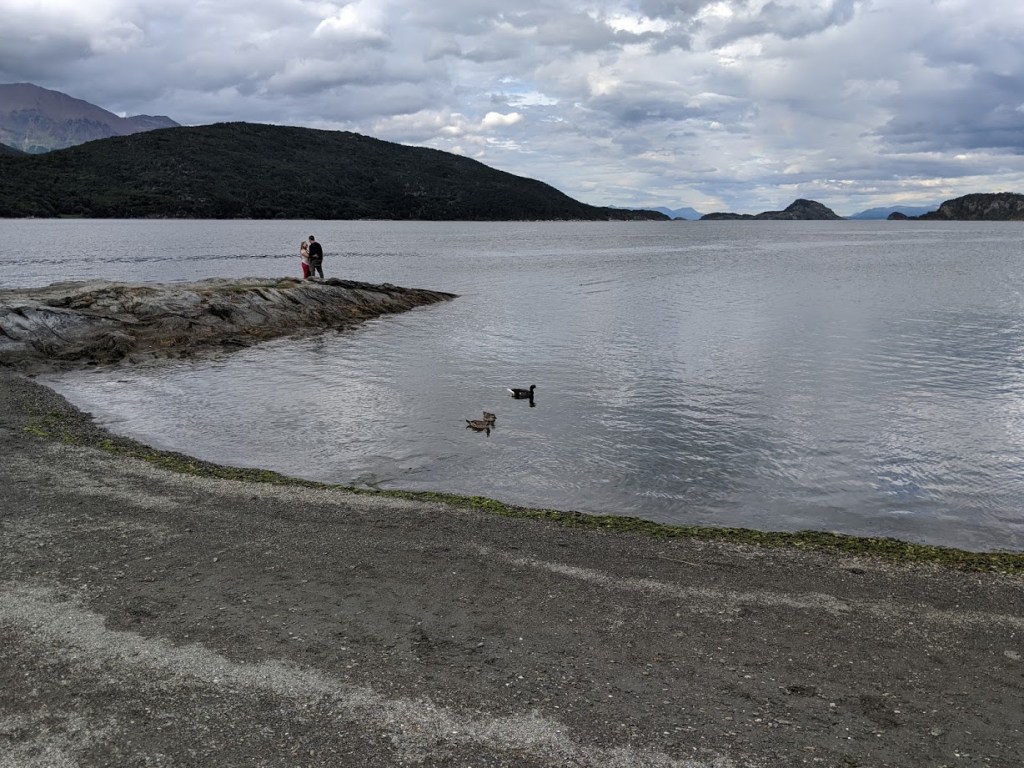
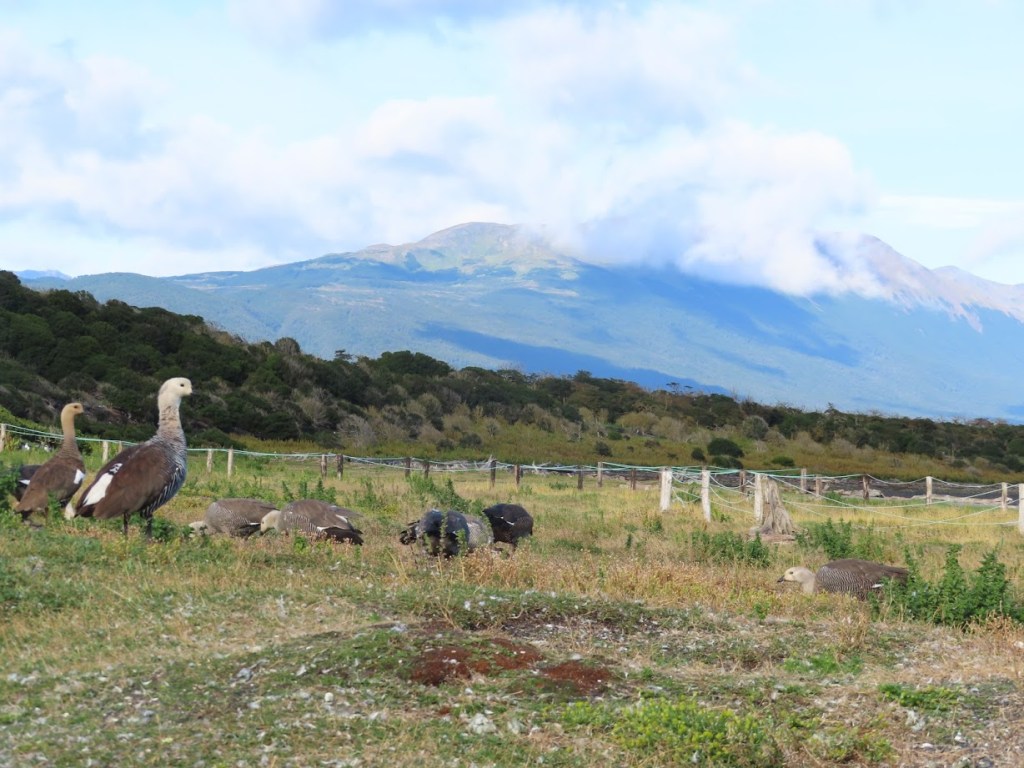
In the park we were greeted by many more species of raptors and waterfowl unknown to us.

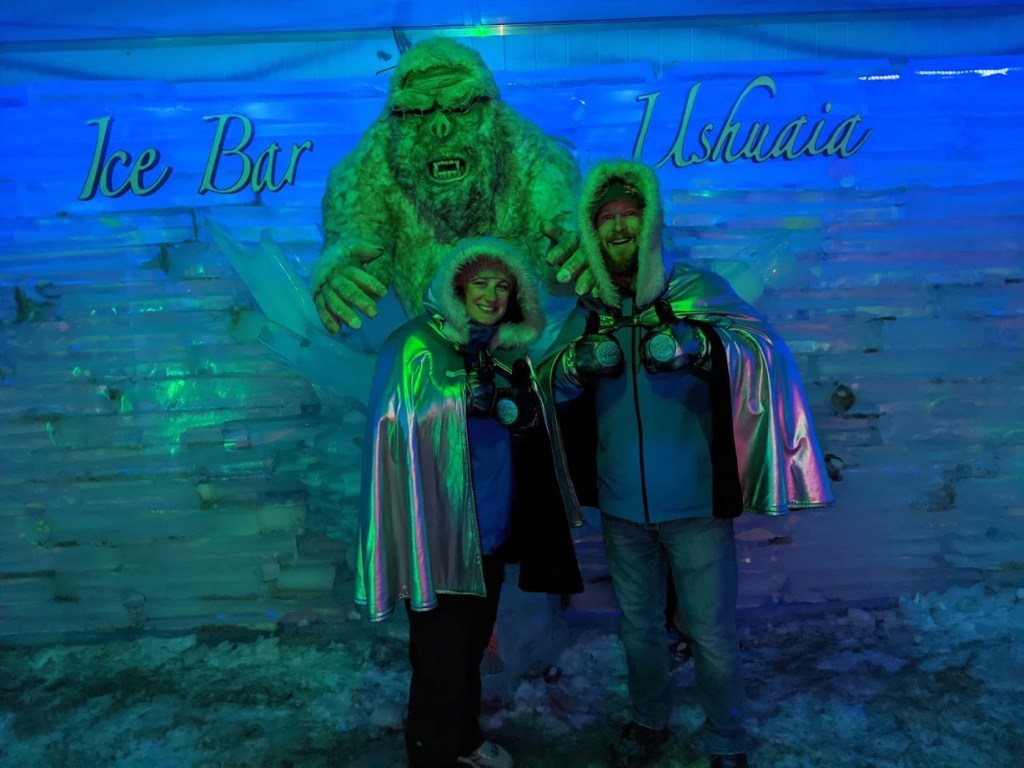
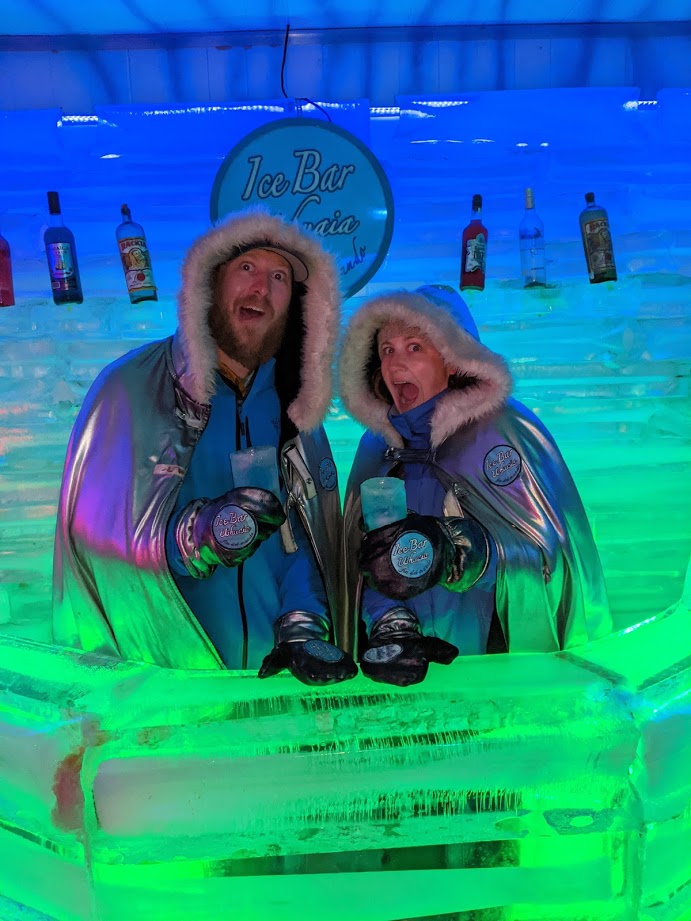
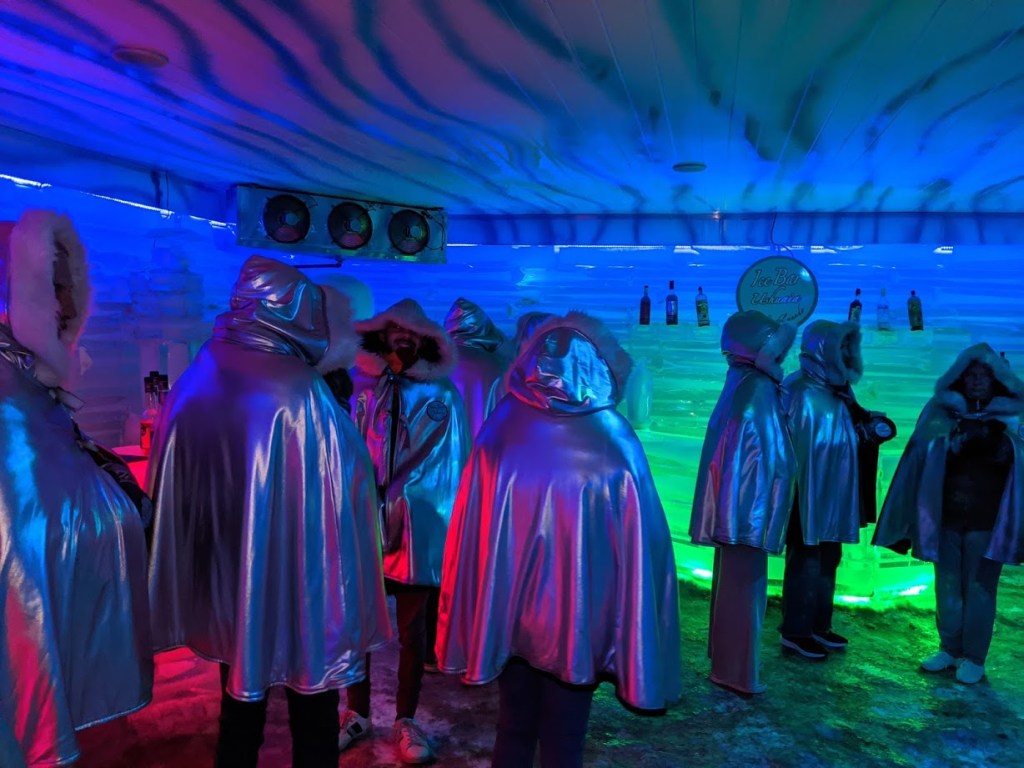
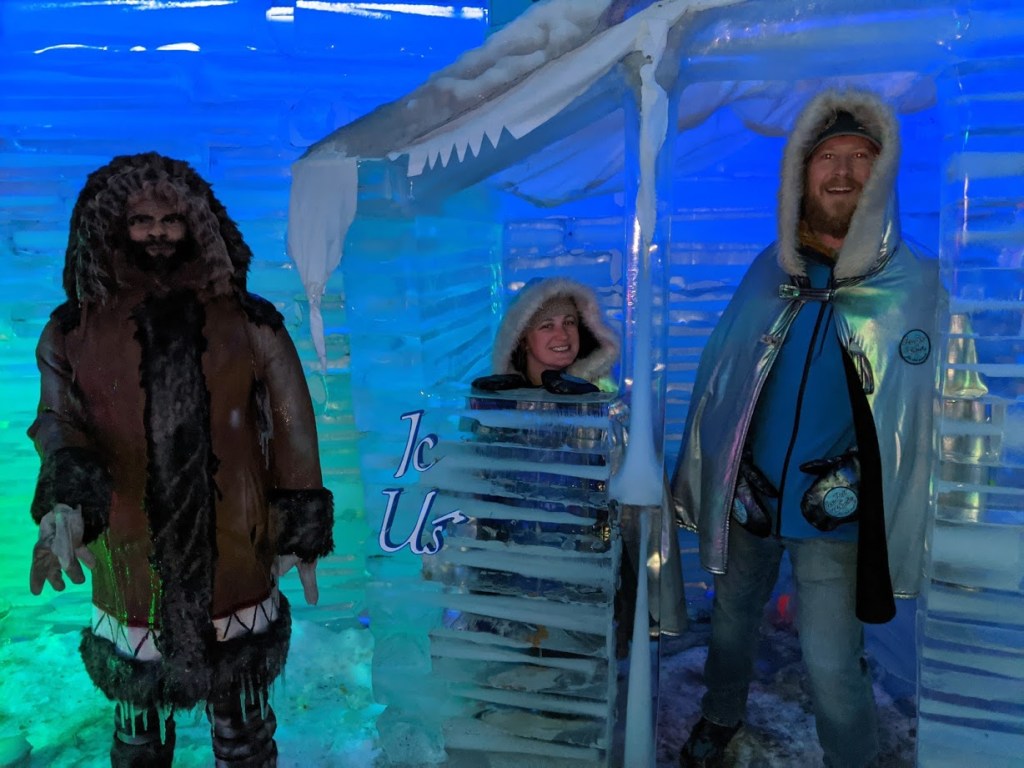
We stayed one more night in Ushuaia before catching the bus back north. It was Carnaval Monday and there was supposed to be a celebration downtown. Walking through the streets we found no such celebration…womp womp. Not to worry though, because we stumbled upon IceBar Ushuaia! It was a bar that had an entire room where everything was made of ice – the bar, the glasses and shot glasses, the seats, even the floor! Oh, and it was the balmy temperature off -14 degrees Celsius. The best part: It was all you could drink for as long as you could stand the cold! (or 30 min) We were fitted with mittens and cloaks and had a blast shooting whiskey, trying the house drinks and taking pictures. The bartender finished us off with a local favorite, dulce de leche liquor!

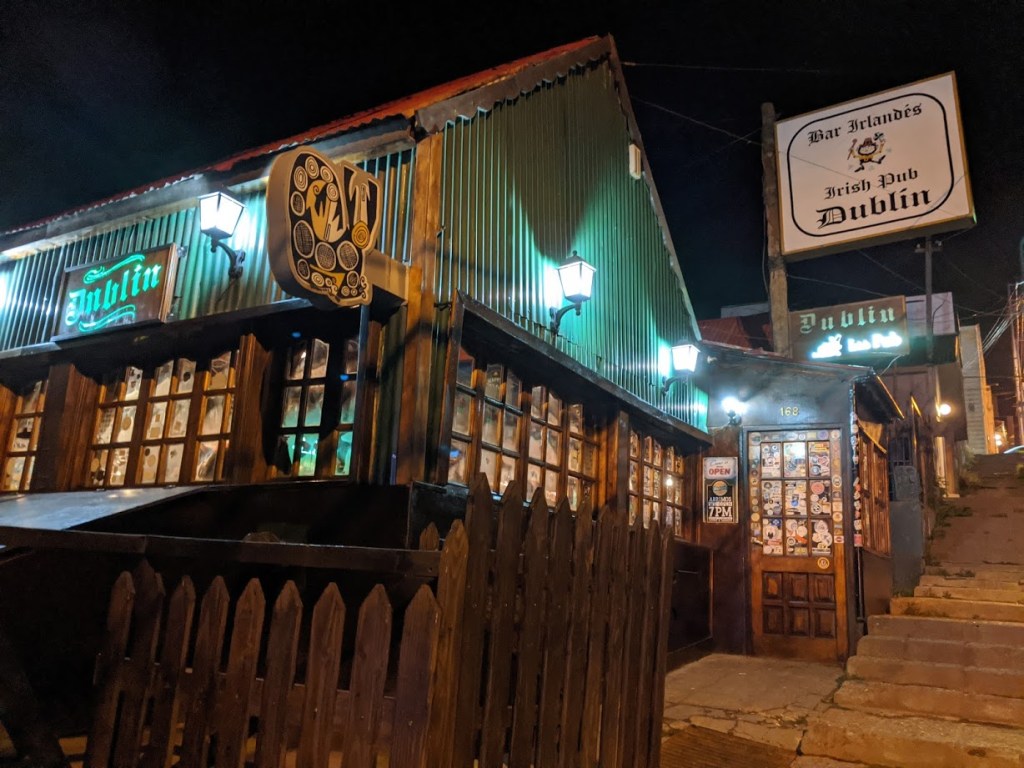
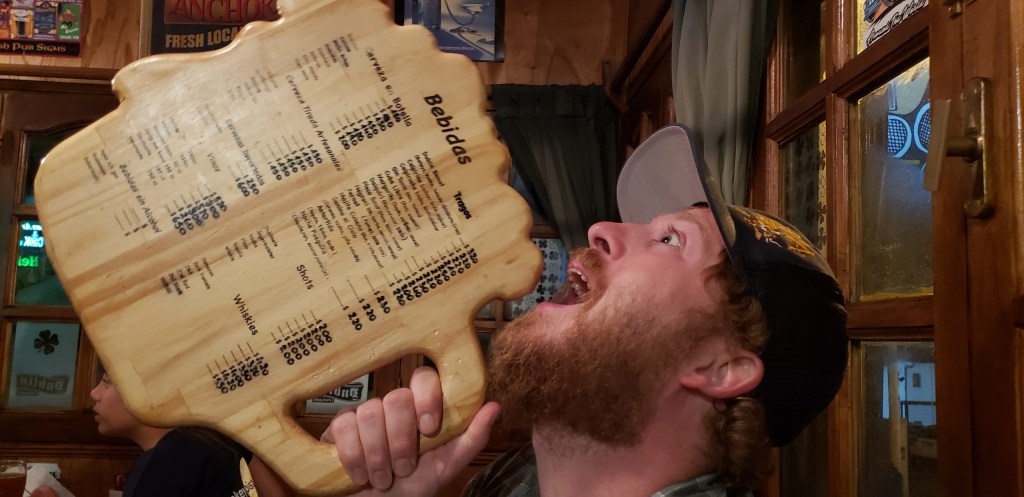
Last we went to the local Irish pub called Dublin, which we were told by several people it was not to be missed. Classic, rowdy and fun Irish bar – South American style with R2D2 to greet us at the door.

A memorable and heartwarming place, el fin del mundo (the end of the world). We recommend it to anyone in want of some isolation, one-of-a-kind interactions with wildlife, mountain scenery to swoon over, and (on the clear nights) starlit skies that will leave you gobsmacked and at a loss for words.

Punta Arenas: Magellan, Wind, & Raspberries

What better way to spend the week of Valentine’s Day than picking and eating fresh raspberries, gooseberries, and zarzaparillas? Not to mention the most delicious jams and marmalades you could imagine. Mmmm….


We had our first workaway experience in Punta Arenas, Chile. Workaway is a program/app where you can register to be connected with hosts in need of work help (similar to WWOOFing). In exchange for about 5 or 6 hours of daily work, the host provides a place to sleep and food for meals. It’s a win-win in our opinion – a great way to save money while travelling, and also to get to know the locale a little bit better! Our host’s name was Patricia Delgado Navarro, a local organic fruit farmer with greenhouses and crops on the western edge of Punta Arenas. Patricia is a bit of a genius when it comes to berries, fruit juices, marmalades, and plenty of other edible botany. She’s got her own small business called Amai Kipa – her face is the logo on all of her products.


Amai Kipa is not Spanish (yes, I tried to look it up on Google translate and was confused). It’s actually the language of one of the original native tribes of the Magellanes and Tierra del Fuego regions – the Yaghan. Famously, Ferdinand Magellan passed through the strait that now bears his name in 1520 and they saw constant fires burning along the shorelines. Hence, it became known to Europeans as Tierra del Fuego, or Land of Fire. Punta Arenas sits right on the Strait of Magellan on the Western side, and you can see the island of Tierra del Fuego across the way.


The mornings were usually dedicated to one key task – frambuesas! Aka raspberries.


Patricia has a VAST amount of raspberry bushes. She basically could be picking them every day because if she doesn’t, they get overripe, purple, and smushy. These are decent for marmalades, but not for the fresh fruit selling. We would all pick raspberries and fill the containers, and she would take them to sell and just keep needing more the next day. Apparently there is quite a demand for them – people love their raspberries! And we did too, enjoying snacking from the bushes as we worked. As far as taste goes, we thought these frambuesas seemed sweeter than the ones we buy at the grocery store in the US – not sure if this was a factor of a different varietal/kind of berry or just that they’re extra fresh. Either way, I think David and I will now get an extra little kick out of buying raspberries in the US in the future, remembering how we would come in for lunch each day with fingers and hands stained maroon. HA!


We stayed in a little guesthouse on the farm property that Patricia had for workawayers, a simple cabin with a bathroom, kitchen, wood stove in the living room, and bedrooms with bunk beds. It was lovely! And we weren’t the only workawayers – there are always people coming and going on their own timelines, so we made some new friends in our fellow cabinmates and workers. Katie from Santiago, Chile; Margaux from Bordeaux, France; Siska and Joachim from Brussels, Belgium! Lots of great shared meals, homemade desserts and tartas, and hot beverages. Not to mention life perspectives and conversation – always a plus. Hope to run into these faces sometime again along our elusive travel path.


Patricia speaks English, but she would often only speak to us in Spanish or wait for us to ask her a question in Spanish instead of English. It was a challenge! At times, I would get frustrated because I didn’t understand what she wanted us to do, or I would feel stupid because I forgot how to say something I had just learned the previous day. Overall, though, David and I both agreed that it was better this way because the mental struggle of trying to comprehend and form sentences is really the best way to build those necessary neuroconnections. Still nowhere close to fluent, but we think we’re getting smarter? My Spanish is often still mixed with French accidentally, so I jokingly keep saying that I speak “Franish.” Oy…ALL the languages in my head mixed up in a salad bowl of vowels, consonants, and accents.


Other tasks at our workaway included picking gooseberrries (grosellas), zarzaparillas, weeding out the strawberry quansets, packaging and putting the stickers on the packaging, starting planters with soil made from coconut fibers, boiling and cleaning marmalade jars, and cutting rhubarb. Patricia also found out that David has some carpentry skills, so he was side-tracked for a couple days building planter racks in a greenhouse.


Taste testing all the finished products was the best. Cool note: We got to try El Calafate for the first time! El Calafate is a berry that is native and endemic to this area of the world – it ONLY grows in Patagonia. It looks kind of like a huckleberry or juniper berry, and is tart but tasty. We had a fresh El Calafate juice Patricia had made one day with a bit of sugar and it was a great surprise treat.


We just happened to be there over a weekend where Amai Kipa was signed up to do a medieval fair at a nearby school, and we helped her “man the booth” for a night. It was awesome! Dragons, unicorns, fairies, elves, dwarfs, crystals, mythological stories with evil kings and dashing heroes – it is a fantasy-book-lover’s heaven. Part craft-fair, part Renaissance/madrigal music concert, and part Robin Hood theater show, I was psyched to find out that the whole thing was put on by an organization aptly named the Sociedad Tolkien Magallanes…basically a whole society that loves JRR Tolkien. Yaaaas, sign me up!

Definitely played LotR themes and GoT themes live. Bagpipes, flutes, violins, epicness.

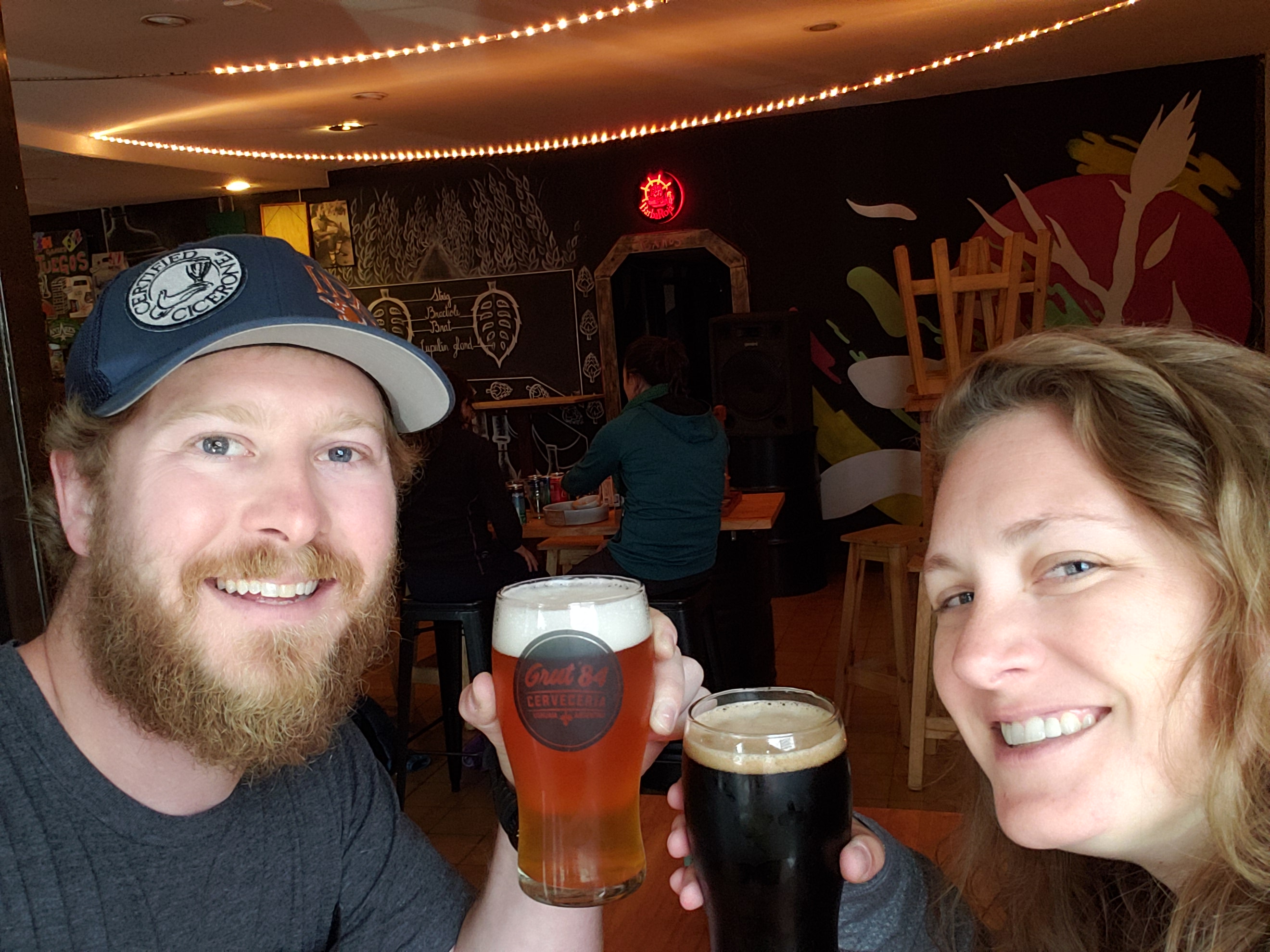
A few notes on the town itself: Punta Arenas is very spread out and there is a small downtown area with some shops, restaurants and bars. It is definitely not as touristy and built up as some other cities we’ve visited. We did go to a few local breweries and took a tour at Cerveceria Austral which is the largest craft brewery we have visited, supplying all of Chile with great packaged beers. We also visited a ship museum called Nao Victoria which had replicas to scale of Magellan’s ship and Darwin’s ship the Beagle. Very cool to climb around on the ships and read about the famous voyages!
There is a nice coastal walkway where the town has built up several parks (Costanera del Estrecho). And oh boy, it. Is. WINDY! We just became accustomed to the wind whistling around the outside of the cabin at night, and could basically lean against it on some days. Often, tour boats or entire day trips are cancelled because the wind is just too much. Part of life here. We didn’t mind it! It is a pleasant difference in our normal lives to have the salty sea smell on the breeze. Made us feel like sailors (almost!).

All in all we liked Punta Arenas but it does feel like a gateway town to go to Tierra del Fuego or north to Puerto Natales and Torres del Paine. If anything, that kind of adds to the charm as the people are very straightfoward, no-frill, and content with their identity.

We stumbled upon this cool restaurant that also turned out to be a nanobrewery with 5 kinds of packaged beer! Our amazing seafood sampler of a raw fish medley, spicy shrimp, garlic octopus, creamy scallops, and the piece de resistance: fried king crab chowder!

Puerto Madryn and the Peninsula Valdes

Hello again from further South and cooler climates! We spent four fun, eye-opening, and treasured days in the Chubut province of Argentina in a town called Puerto Madryn. This happy coastal city is nestled right next to the Peninsula Valdes, an Argentine National Park that is also a UNESCO World Heritage Site and a true gem of an ecosystem filled with all kinds of amazing animals, both marine and terrestrial. It is a truly special place where people can come to be close to a diverse amount of animals, many of which you wouldn’t see anywhere else in the world. A wildlife-lover’s heaven!


Puerto Madryn is filled with friendly Argentine people happy to have a conversation with you and proud to tell you about why this area of Argentina is so freakin’ cool. Primarily, it’s the marine life. Sea lions gallore, elephant seals, fur seals, Magellanic penguins, various types of oceanic dolphins, more fish and bird species than you can wrap your head around, and WHALES! So many species of whales are known to come to this area that the town restaurants, shops, bars, and businesses are covered with images of whale tails and iconic whale shapes. Some of the best whale sight-seeing tours can be found right here in Puerto Madryn in the Gulfo Nuevo and surrounding waters.


Their “flagship” whale, so-to-speak, is the Franca Austral – Southern Right Whale. Humpbacks and orcas too, among many others. We (sadly) did not see any whales in our time here on the coast, but the locals tell us that a lot of it can come down to luck. The weather, the time of year, the time of the tide, the wind, etc…all off this can come into play when trying to sightsee whales. Ah, well, it just means we’ll have to come back another time to do a full-blown whale boat tour. 😀


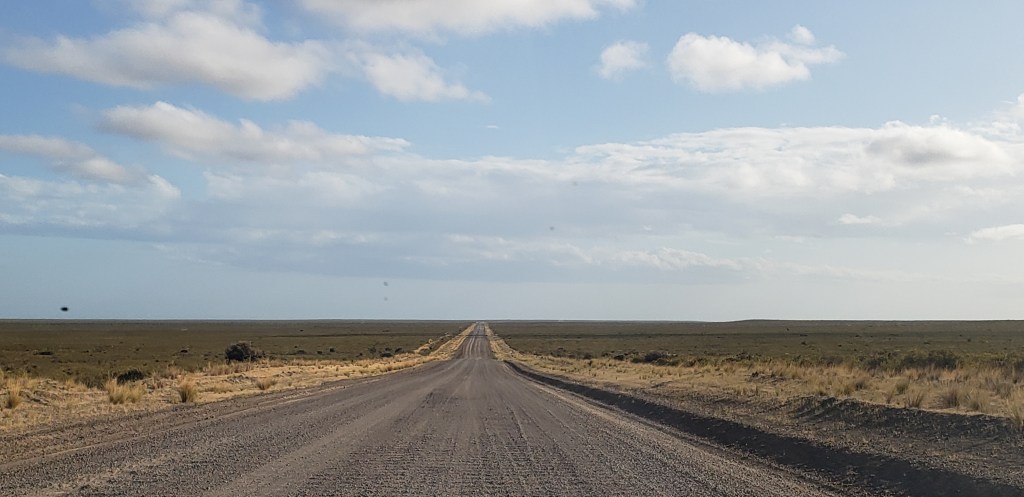
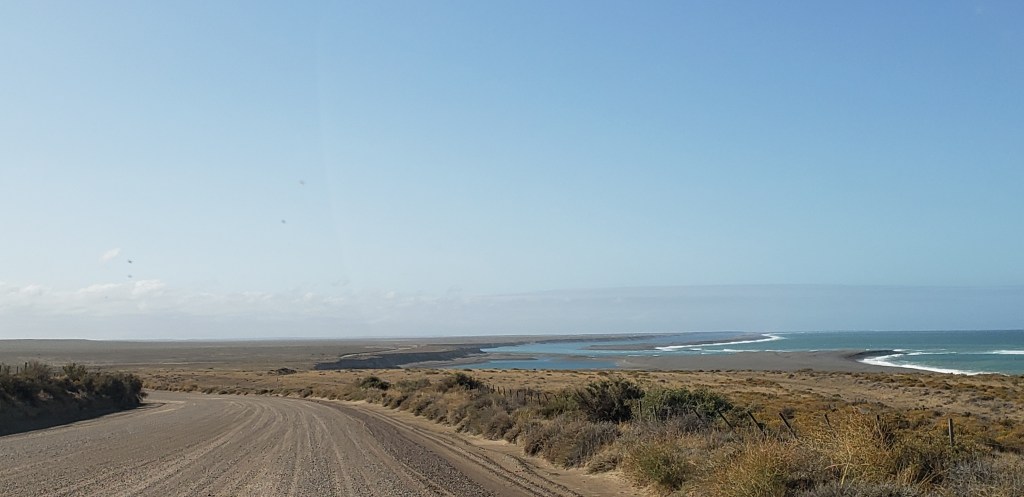
As it is, we rented a car and drove around the peninsula for a day. That thing is HUGE! It took us around 2 hours to get to the Northernmost point of the island, slower driving than normal because of gravel roads, and flat shrub-steppe in every direction as far as you can see. The thing that really gets you is just how wide and expansive it is. We would be driving for long stretches of time without radio signal, lost in our thoughts and without talking and feeling like the tiniest drop in a bucket of planet life.


I think it is a healthy and humbling feeling people should have more often. Like a combination of awe, timidity, and peace.

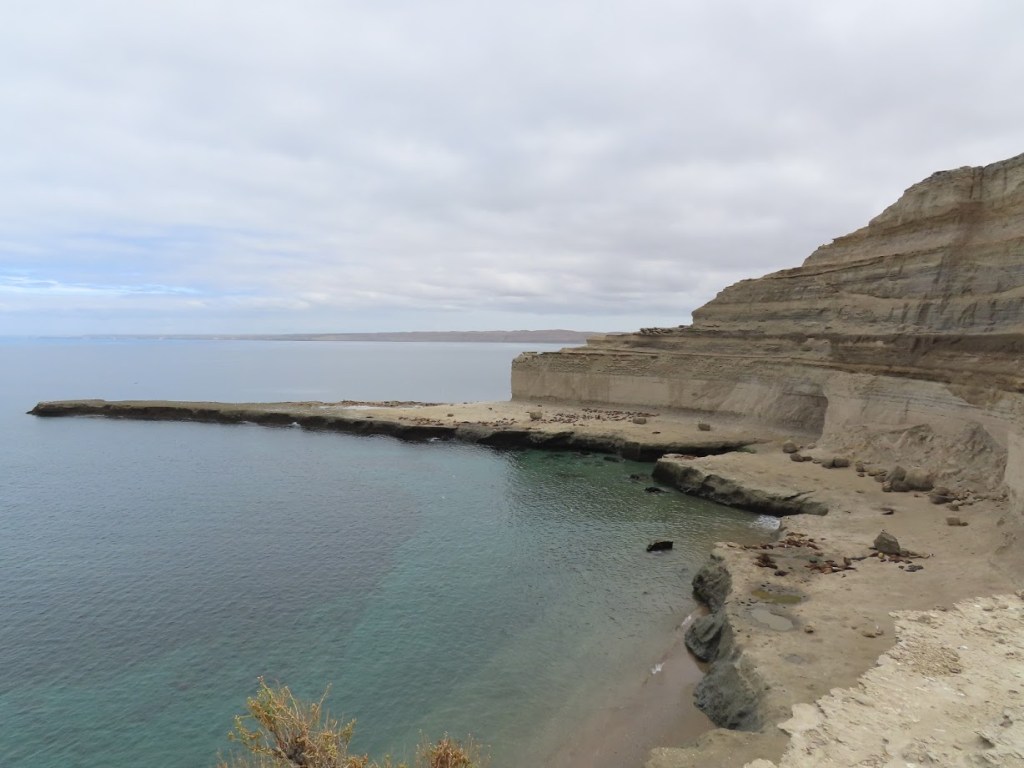
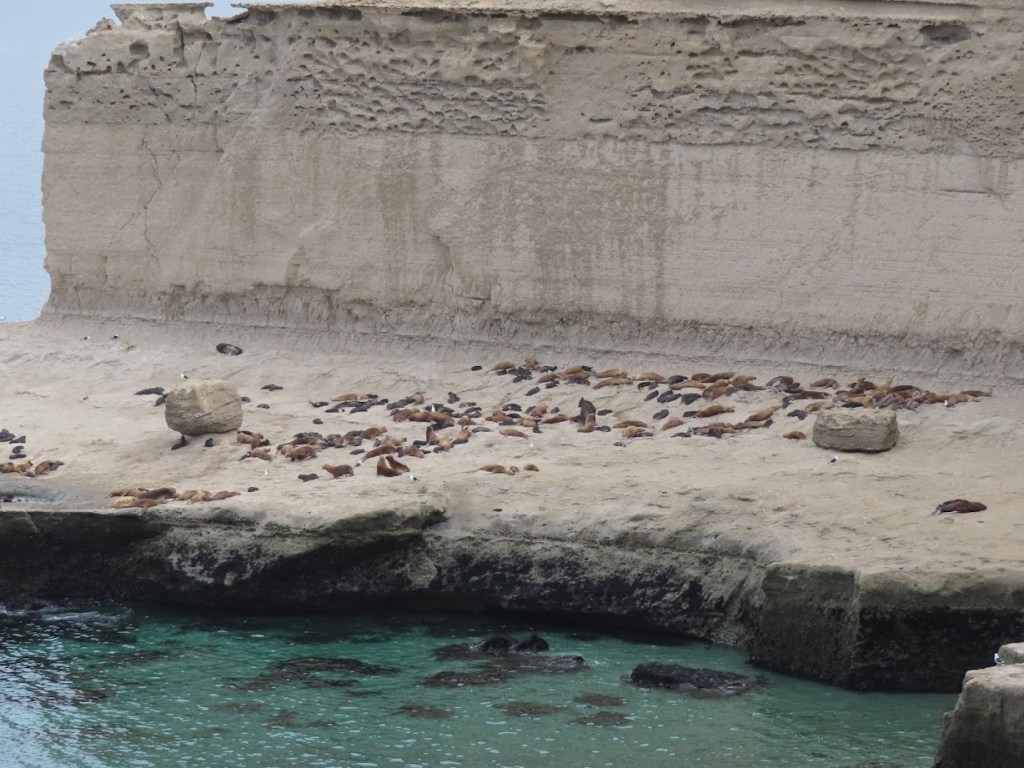
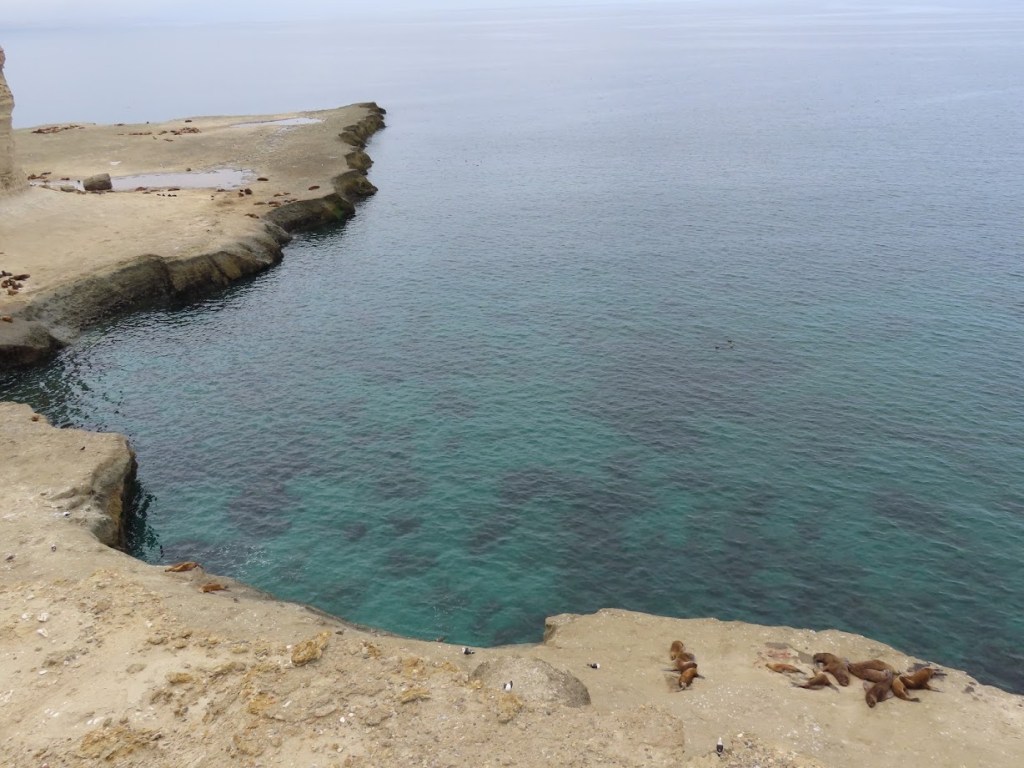
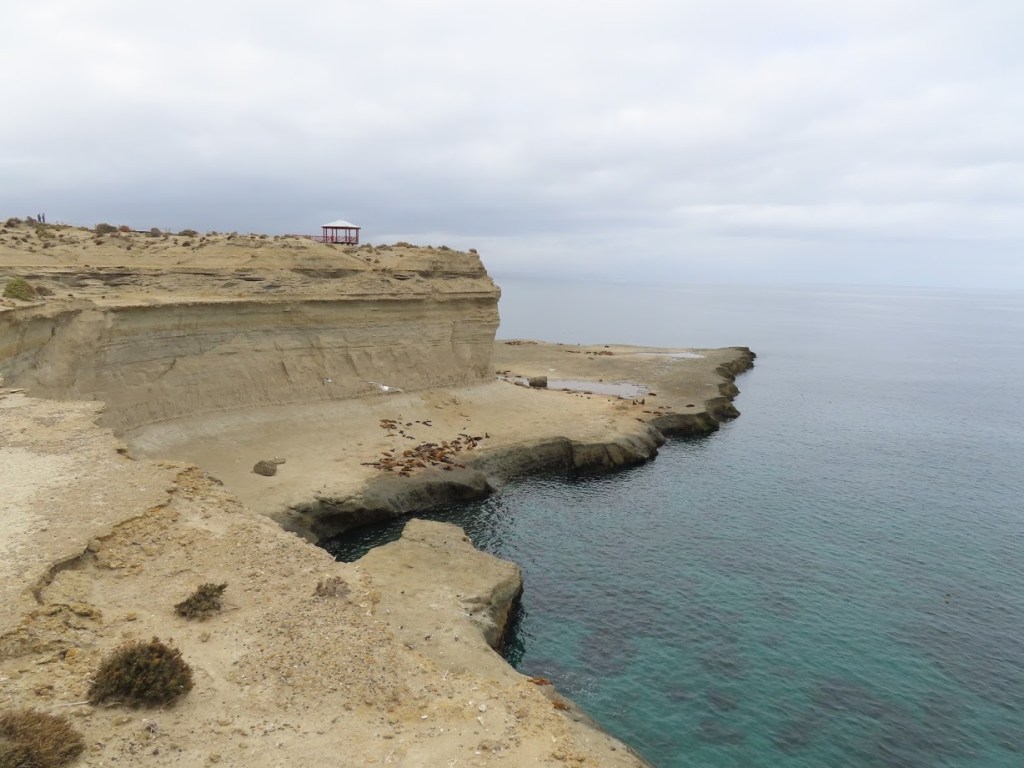
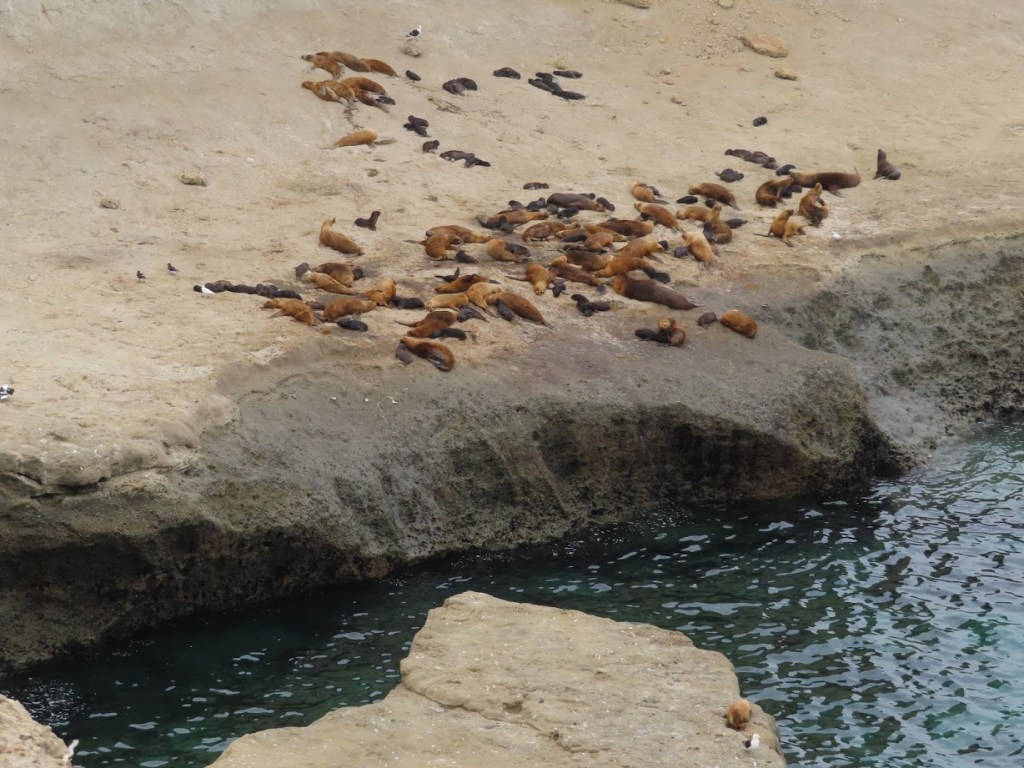
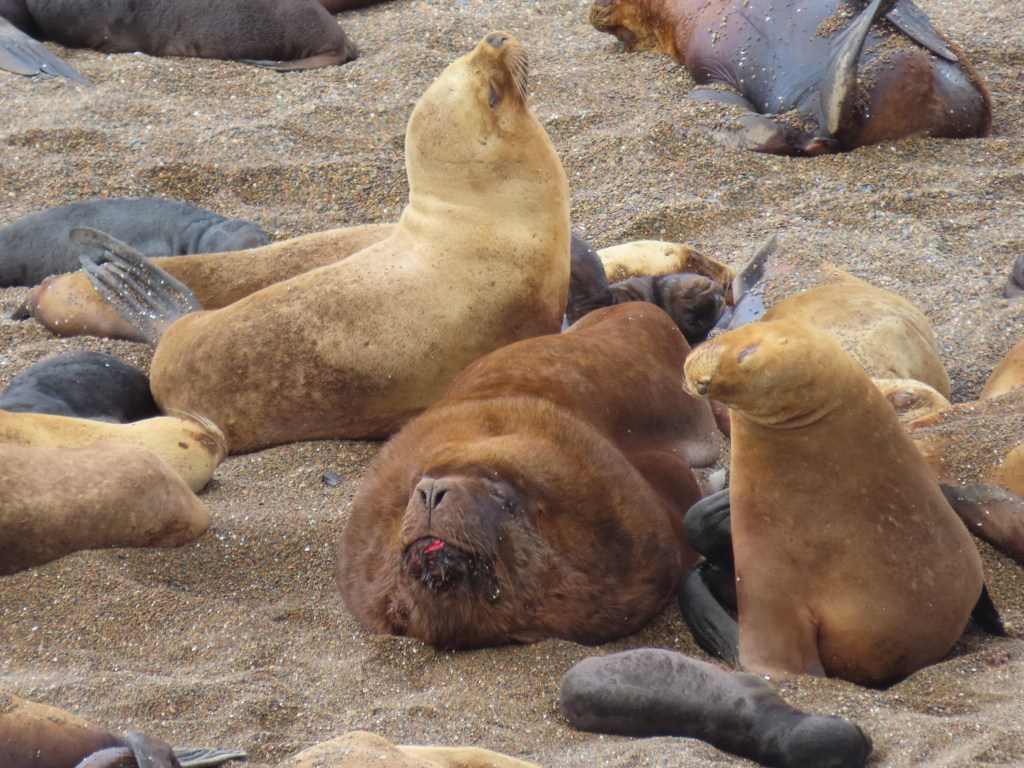
We made a short stop at Punto Pyramides on the Southwest side of the peninsula before making the trek north – this point was known to have a couple sea lion colonies. Very happy we did! Dramatic cliff dropoffs as backdrop for a couple different groups (called harems, lol) of lively sea lions. Love it.

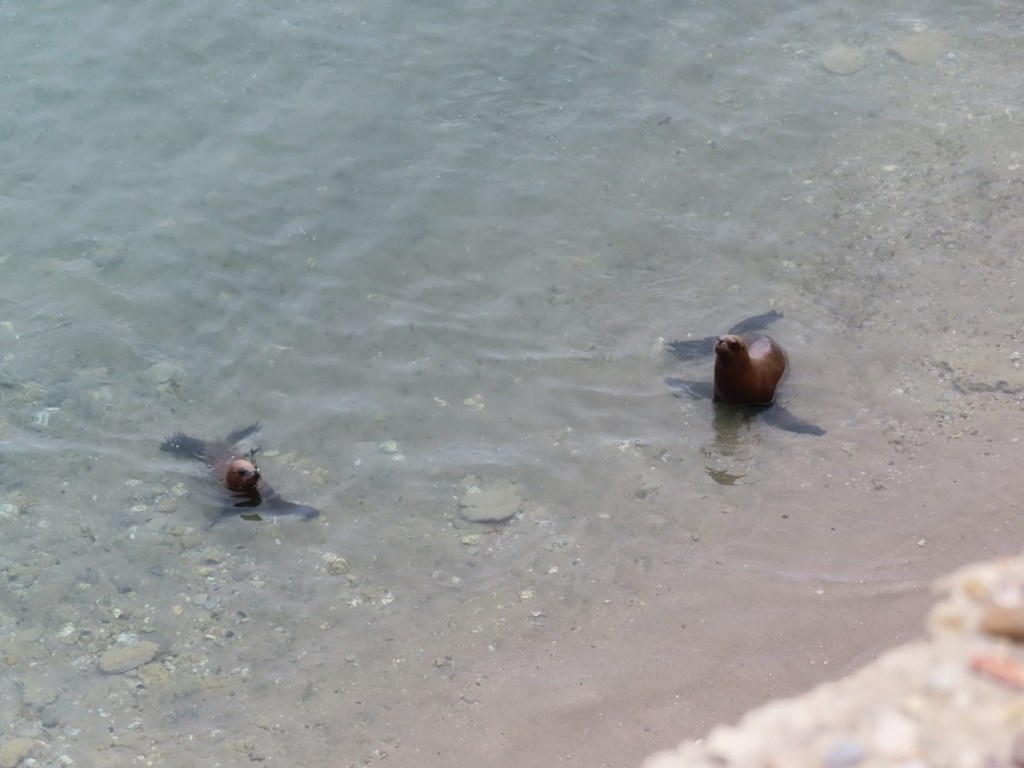
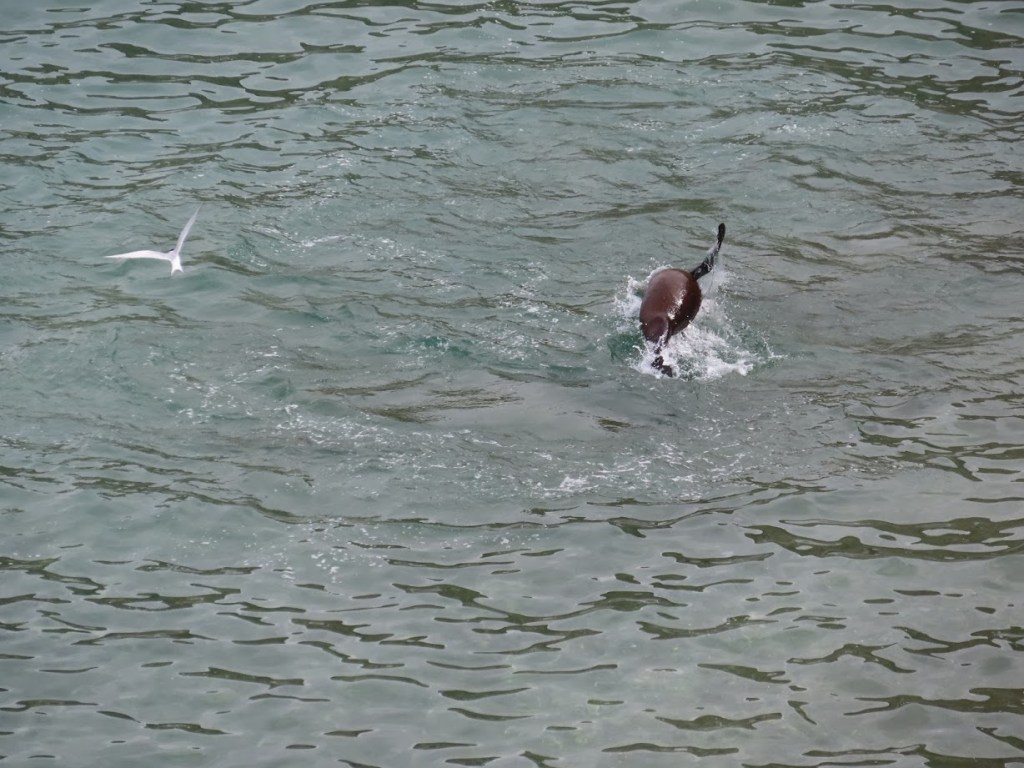
And David got a few amazing photos of a bunch of young ones playing around in the water!


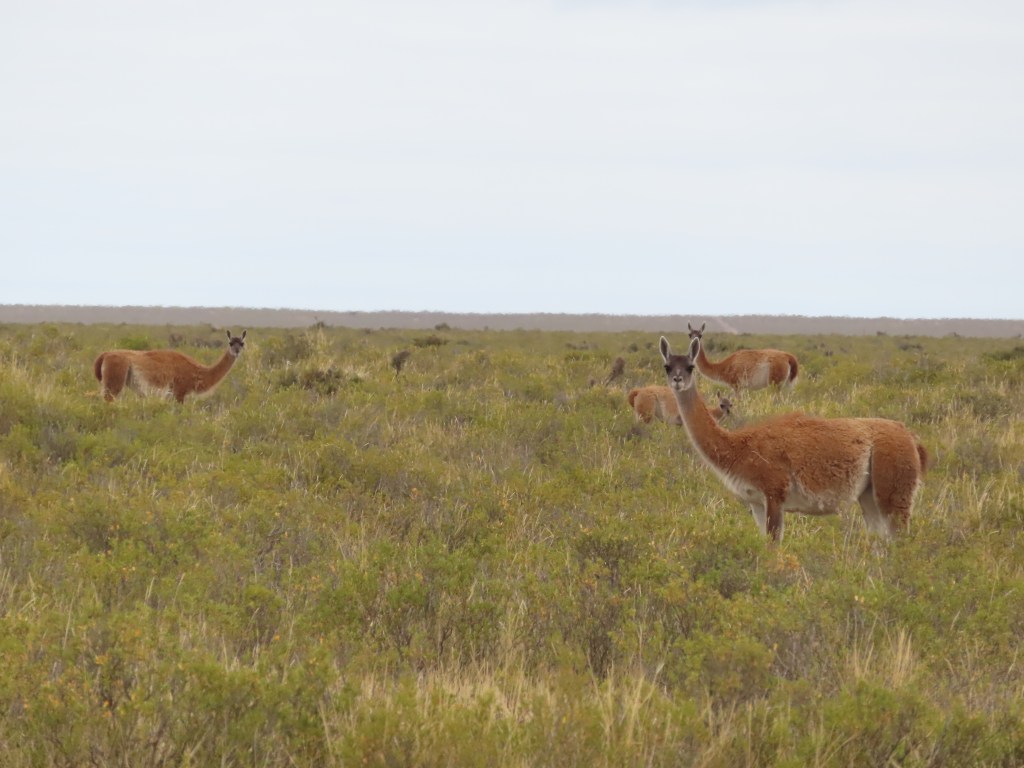
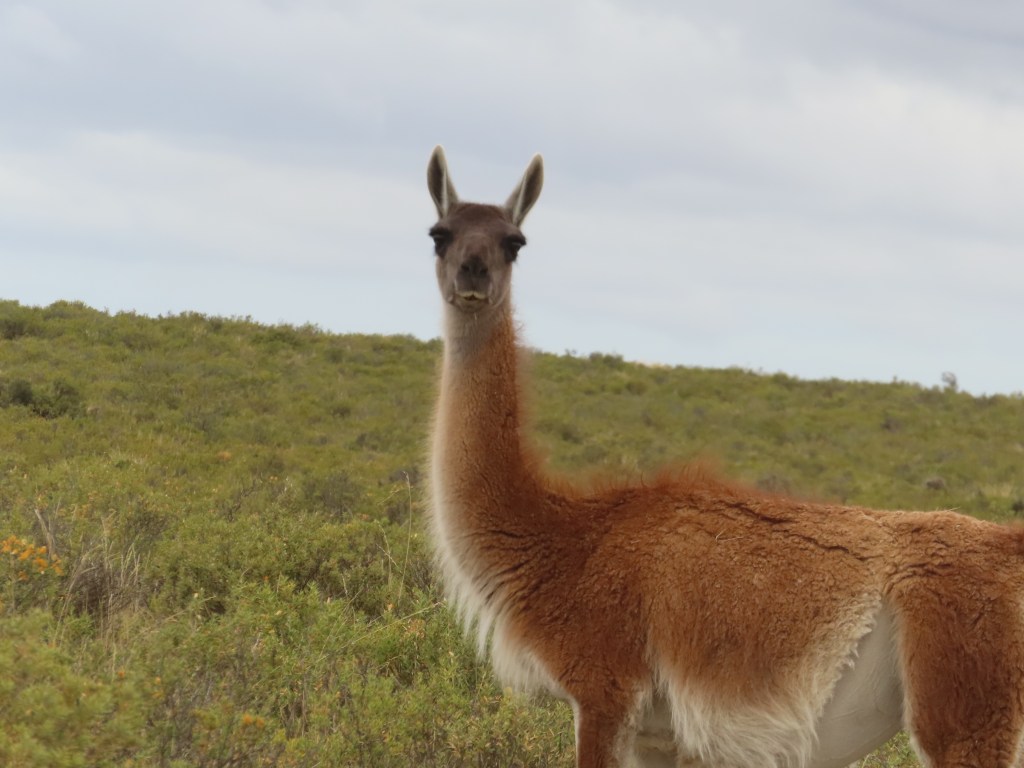
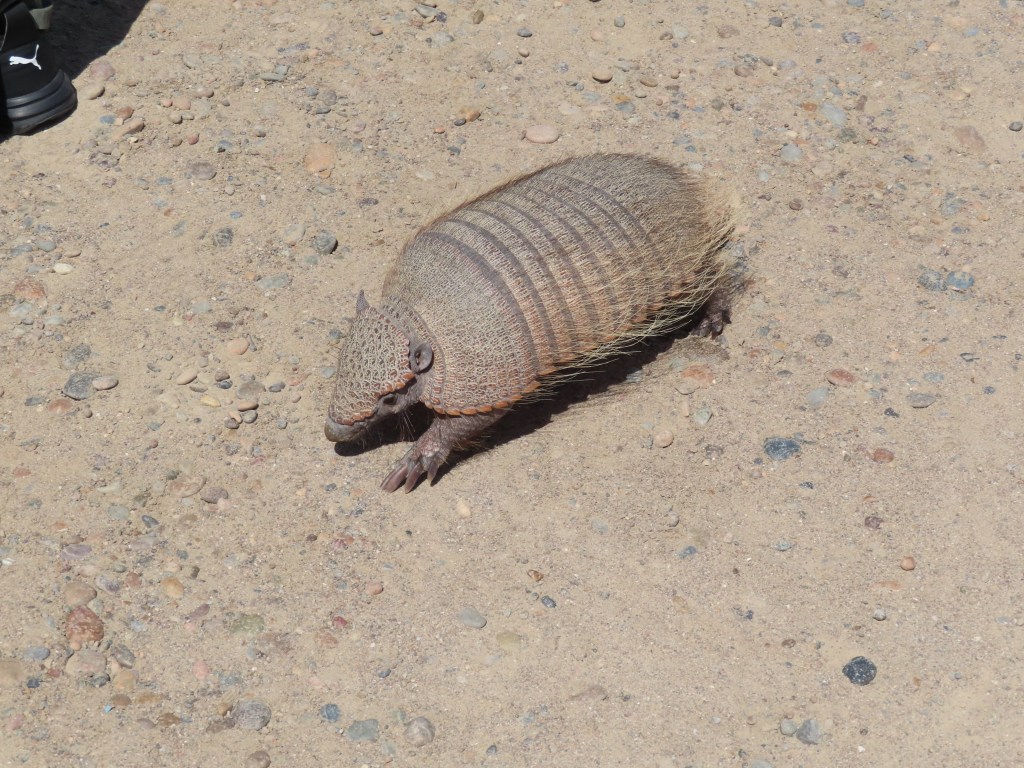
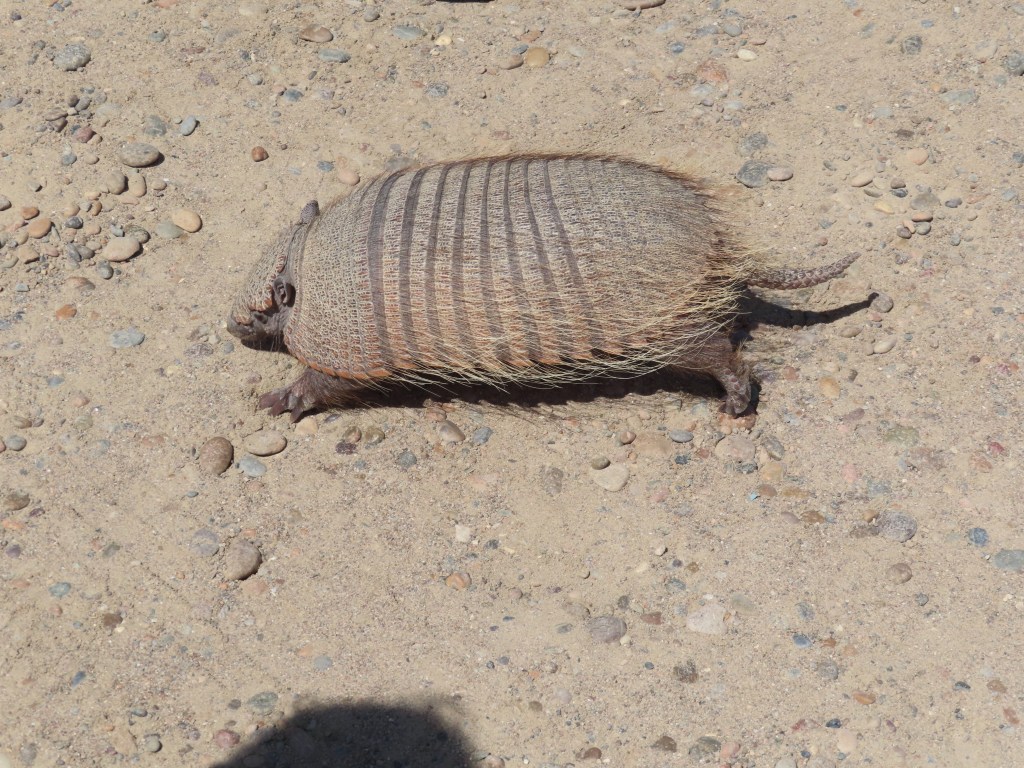
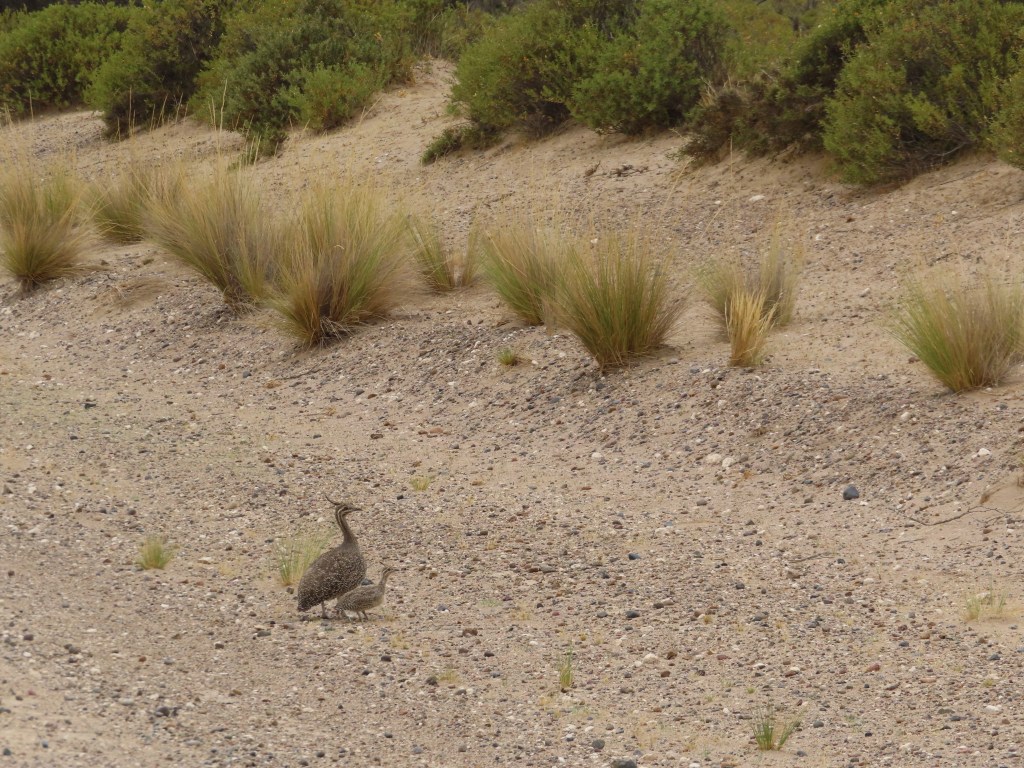
Then it was onward with our driving on the plains. We did, however, have plenty of land animals and birds to keep us company!


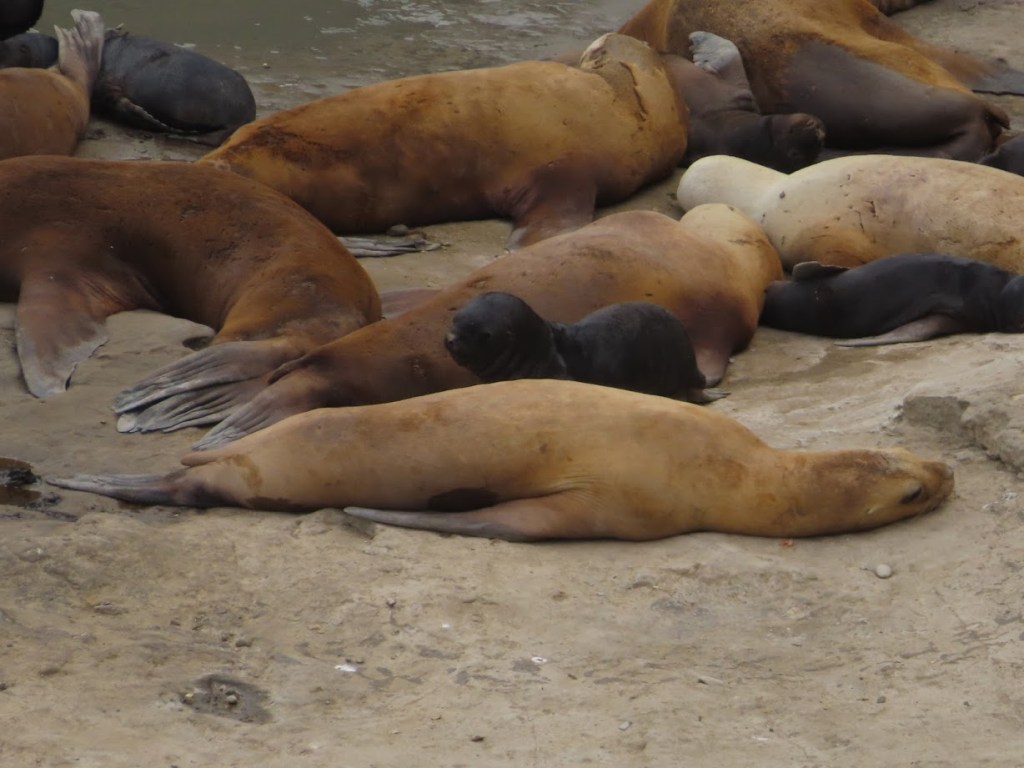
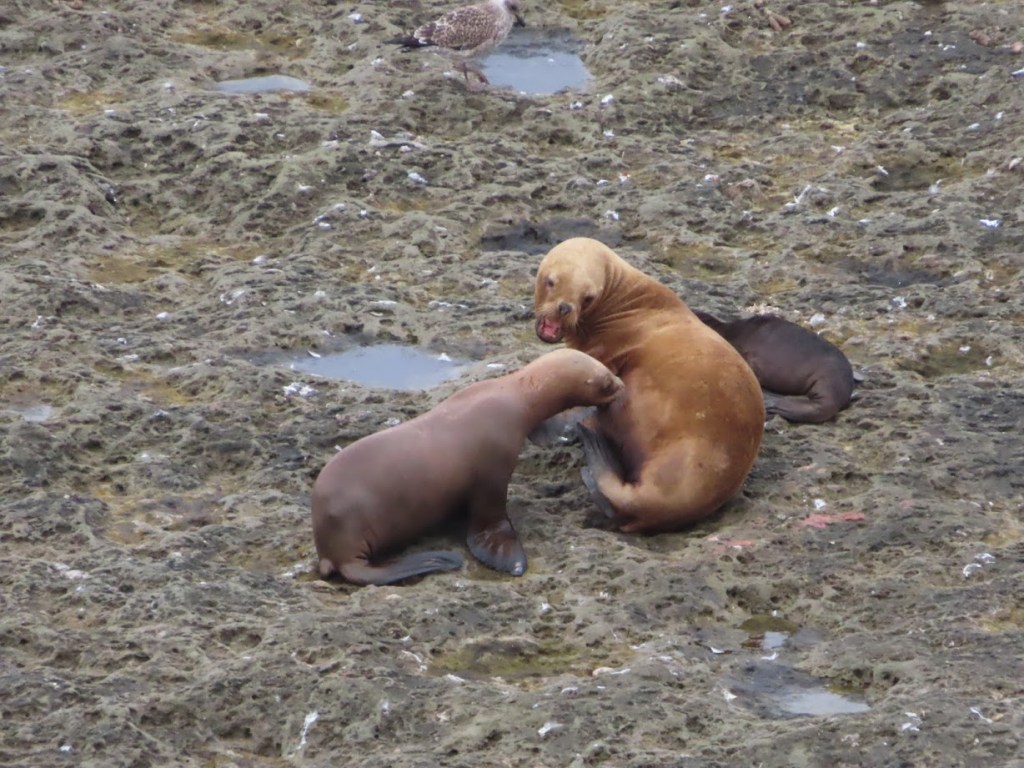
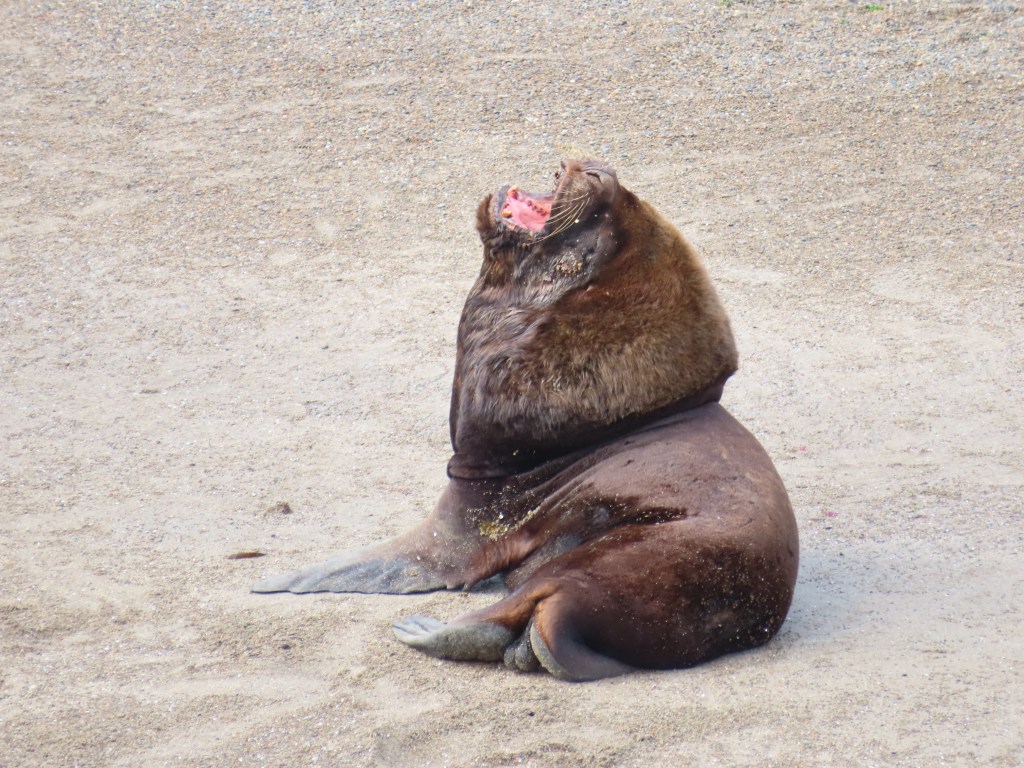
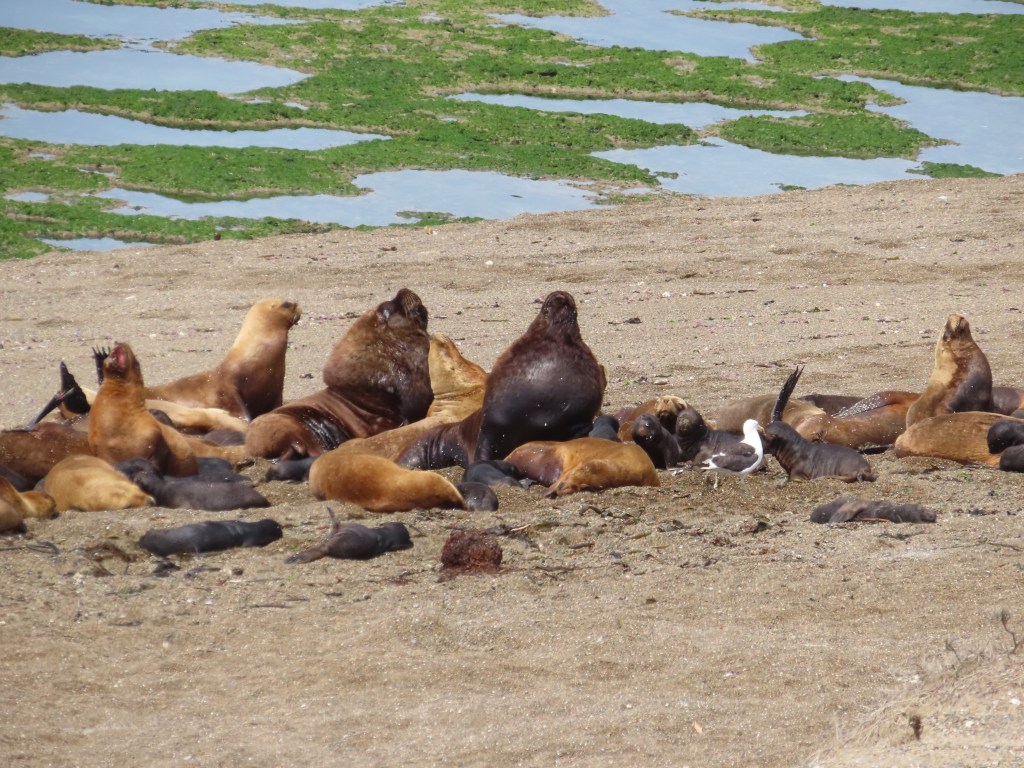
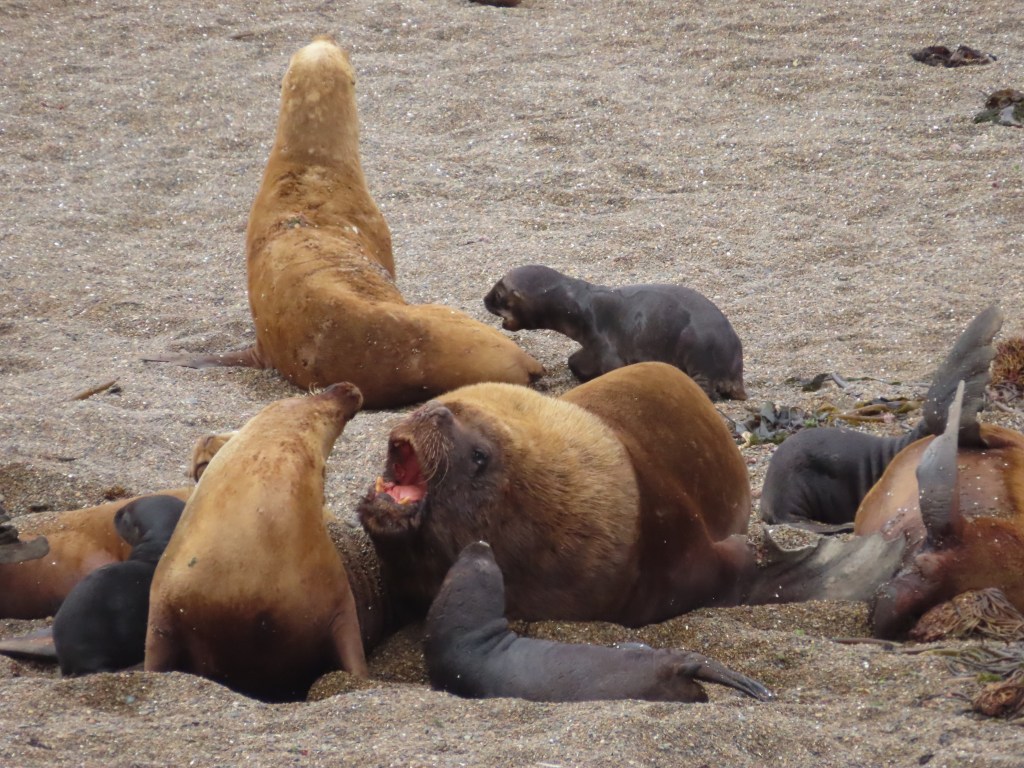
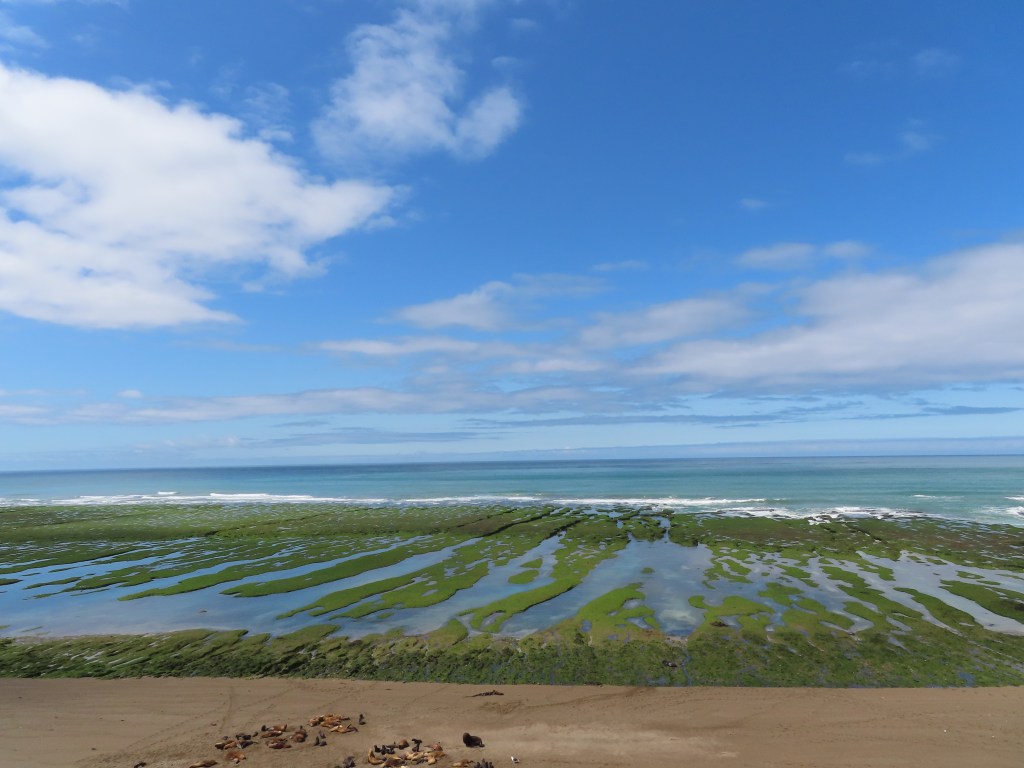
And Punta Norte…it was worth the wait and drive. This is the nothernmost part of the peninsula, a point of convergence for all the water out at sea and that coming off the Golfo San Matias. An isolated, remote point just FILLED with loud, gregarious sea lion harems, scattered elephant seals and fur seals, and an abundance of sea birds the likes of which I wouldn’t be able to identify if I tried. Probably better that way. The sounds the sea lions make are just out-of-this-world WEIRD! And hilarious.

The behavior of the sea lion harems was super intriguing. They would grunt, snort, howl, and belch (at least that’s what it sounded like) almost constantly. The males, indicative by their much larger size and their “lion’s manes,” fight each other for rights to a harem, which can consist of a few females or up to 20 females. The strongest and largest usually had the biggest harems, and they had a few battle scars from their prior fights with the “losing males.” Even as we watched, if a lone male would get too close to another’s female, the “big boy” (that’s what David and I kept calling the lead males) would emit a distinctively lower toned roar and rush at them. But here’s the kicker…the majority of the time it was just posturing. Before they collided, both the big boy and offending male would stop, stick their heads straight up in the air, and just sit like that. As if they were like “…it’s cool. It’s cool. But look at me, I’m sitting up straighter than you!” “No, I’M sitting the straightest!”


Again, I felt lucky to be present to bear witness to such a happy place where marine beasts live freely. You can’t help but come away with a smile.


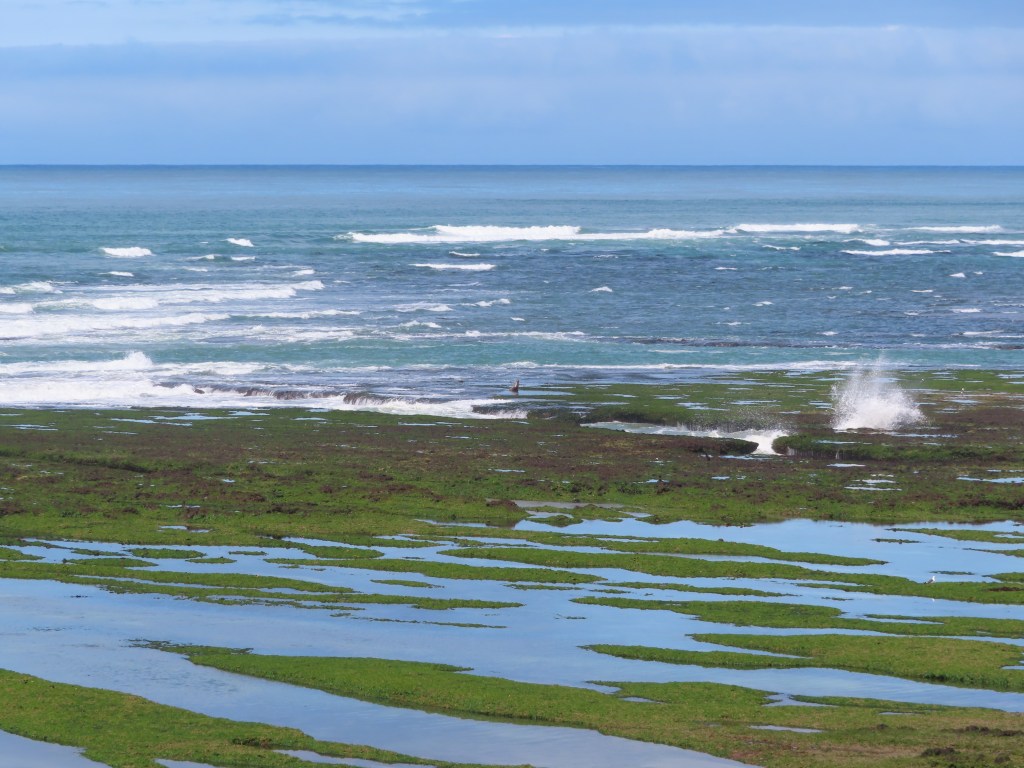
And the lagoon/point itself is just as inviting with its splendid color and soothing wave crashing.
At other times of the year, Punta Norte of the Peninsula Valdes houses many whales. We found it hard to pull ourselves away from the scenes and sounds, but we only had the car rental for one day and there was still so much to see! Note to other travellers: Maybe do this peninsula over a few days, staying at Puerto Pyramides (the solo town within the park). That way, you can take your time to do and see more, you don’t have to keep paying the entrance fee each day, and it’s closer to where you are trying to explore.

Punta Norte, Peninsula Valdes


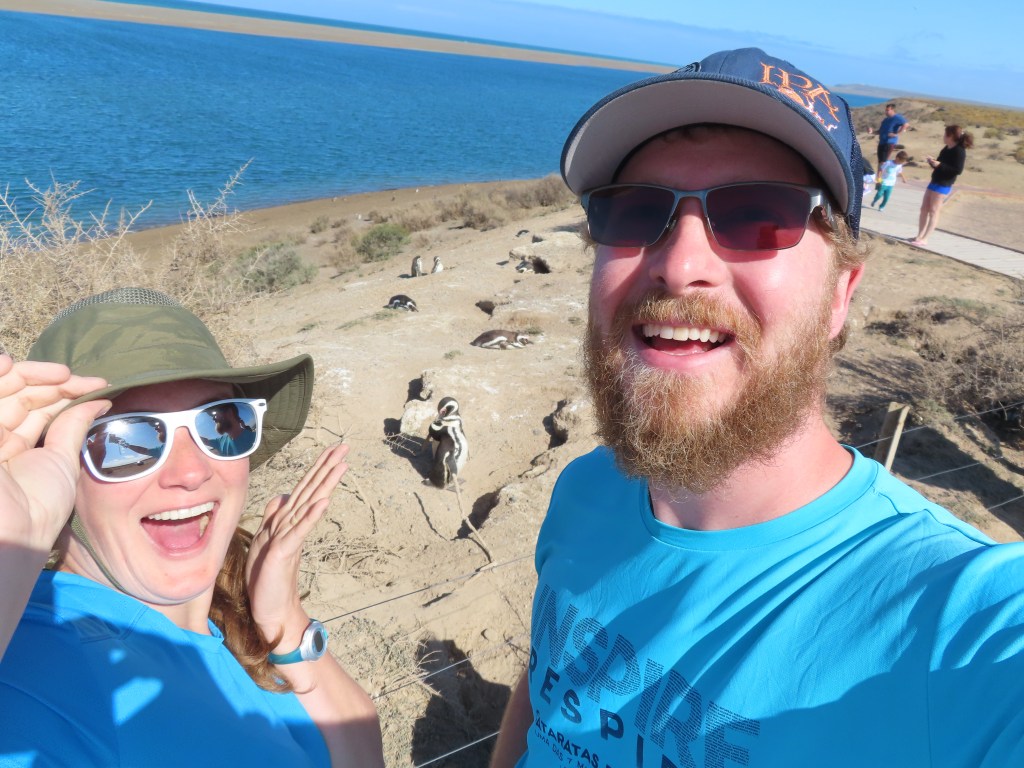
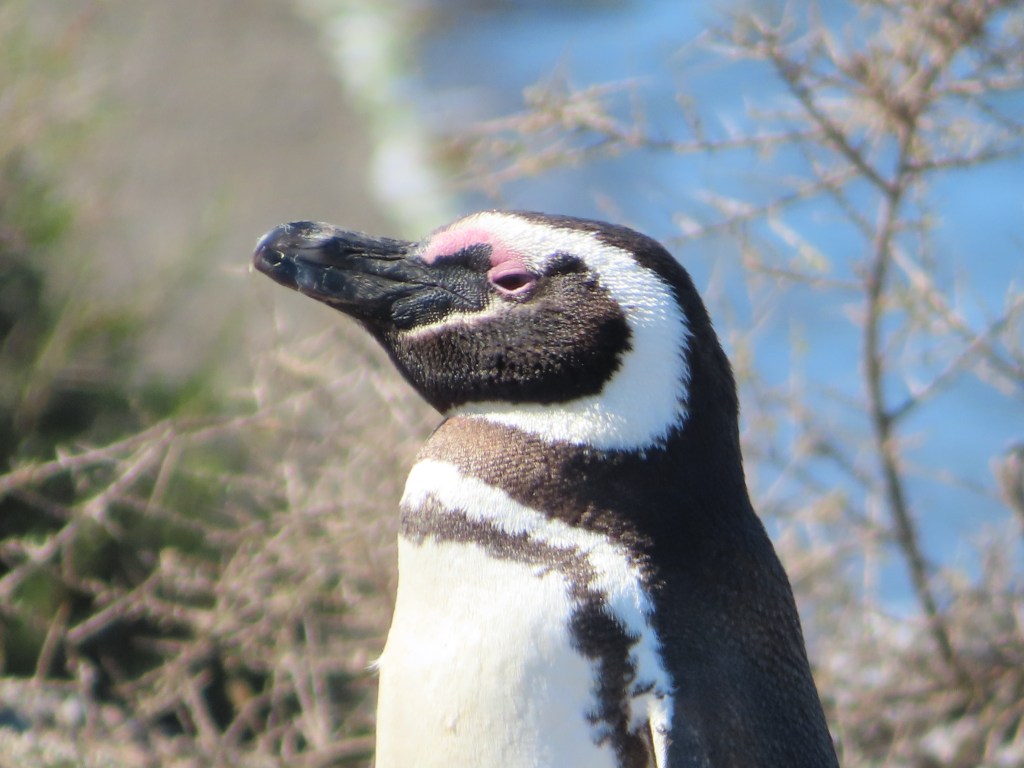
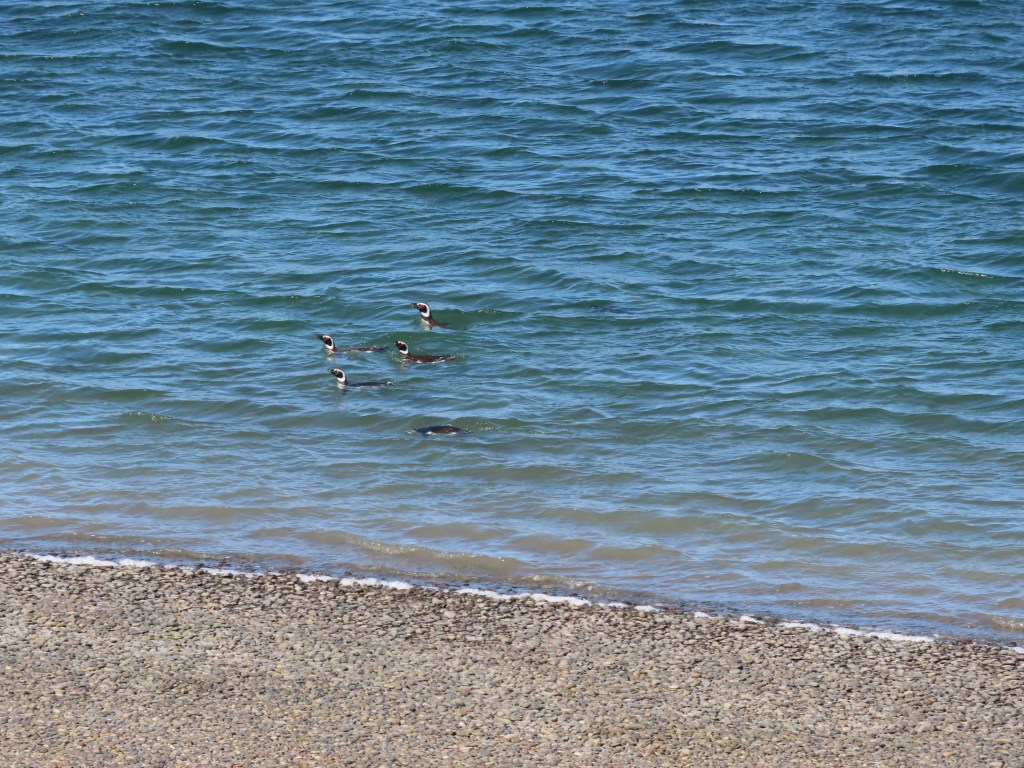
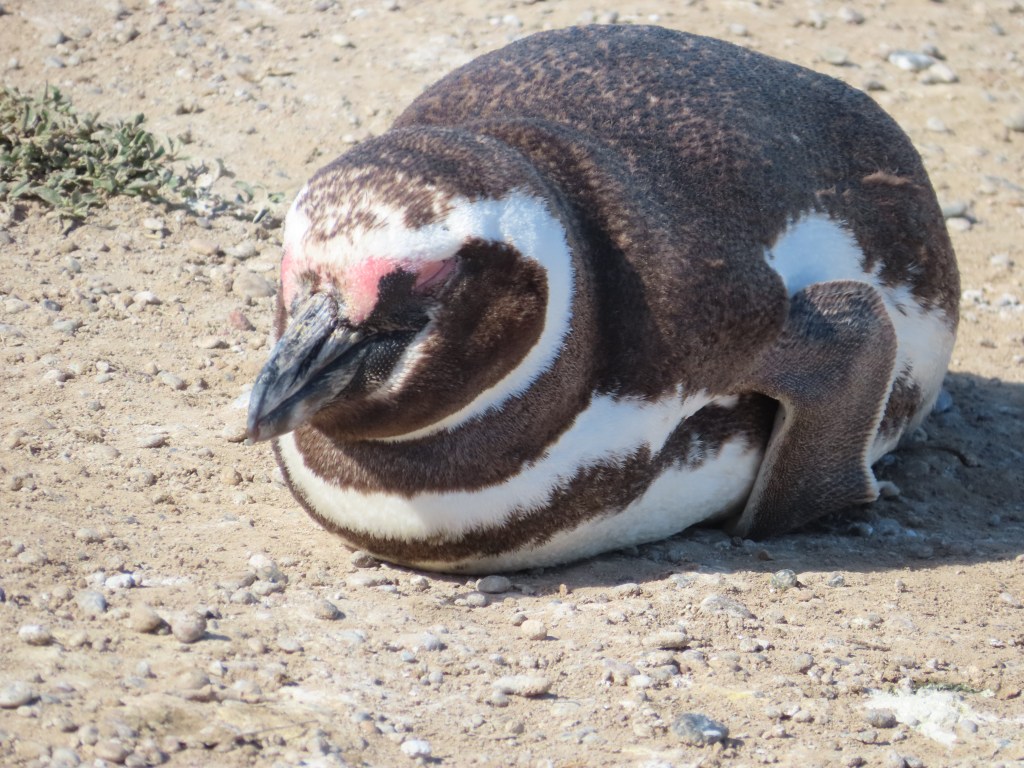
After Punta Norte…our first experience with PENGUINS!! Oh my gosh, me gusta los penguinos<3 Driving South along the coast of the Peninsula Valdes, there are a bunch of cliffside “residences” of the Magellanic pengins, who burrow in tunnels of the edges of the cliffs. It was the coolest damn thing to park the car, walk over, and be within a few arm’s lengths.


OMG!


The penguinos are so used to humans being around, they just go about their busines. It’s nice, though, because it’s just common courtesy that no one reaches out to pet them or cause any type of harm. Just observe in their natural habitat, not disrupt. I sat for a while and just watched a couple (at least I think it was a couple) cleaning each other and just being content in the life of that moment. Makes you think different about things. :{D A while ago, part of me thought I’d never see penguins in the wild. I am glad now that I have. And this the first of many, I hope, if luck and the Earth hold steady.

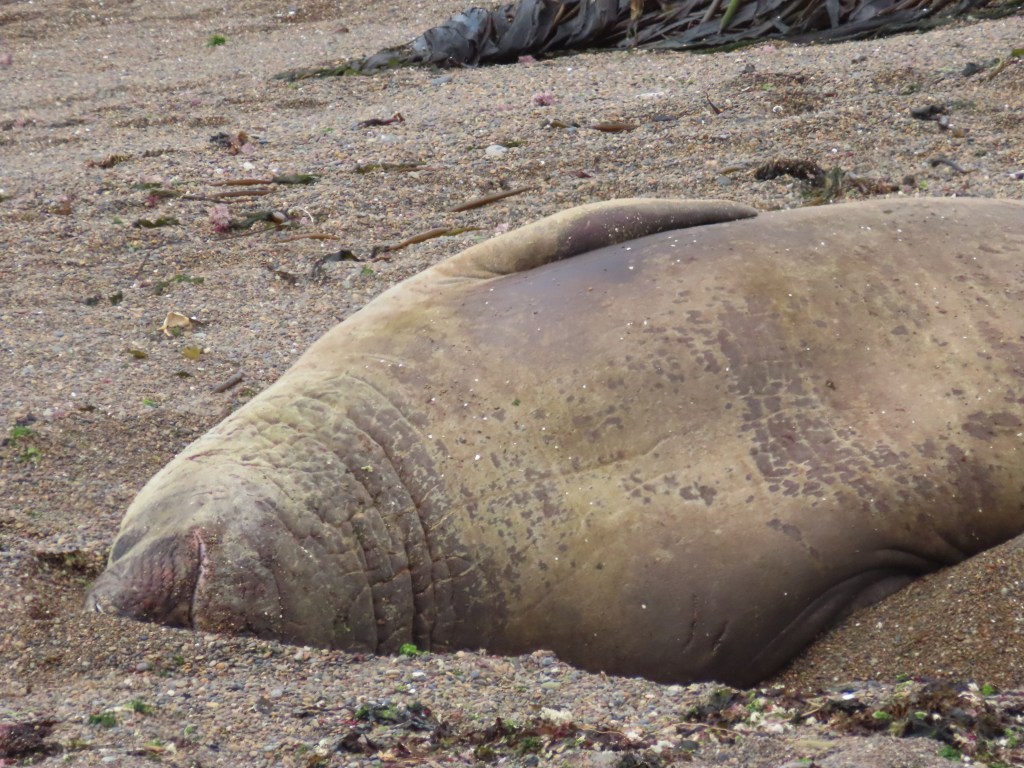
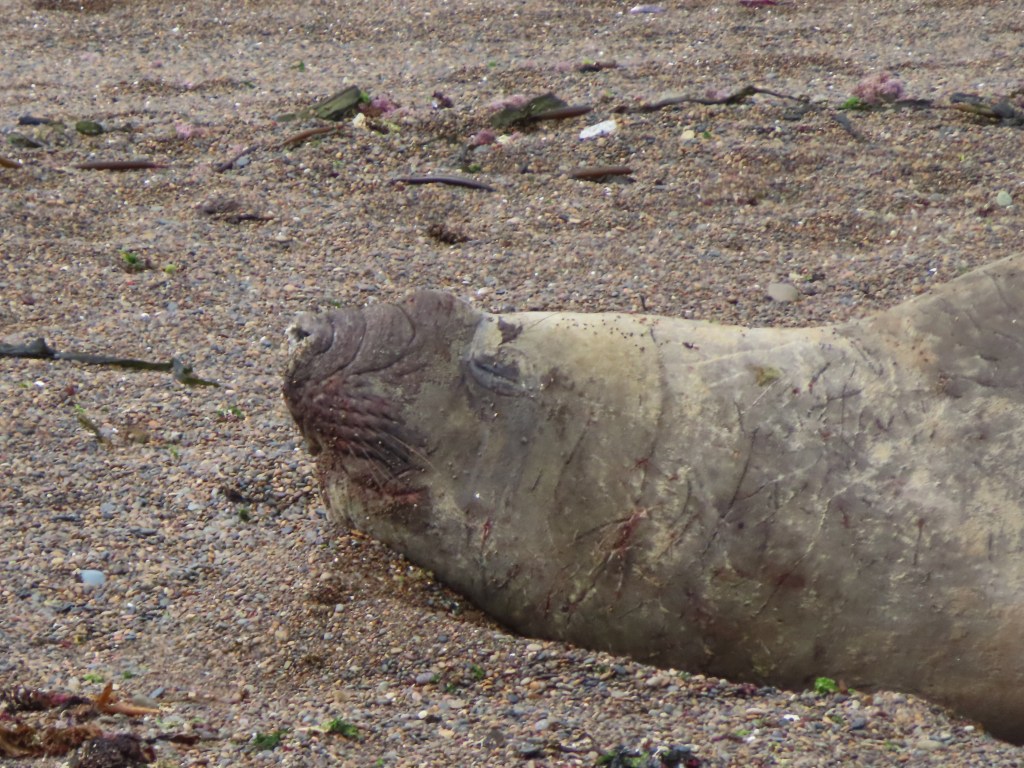
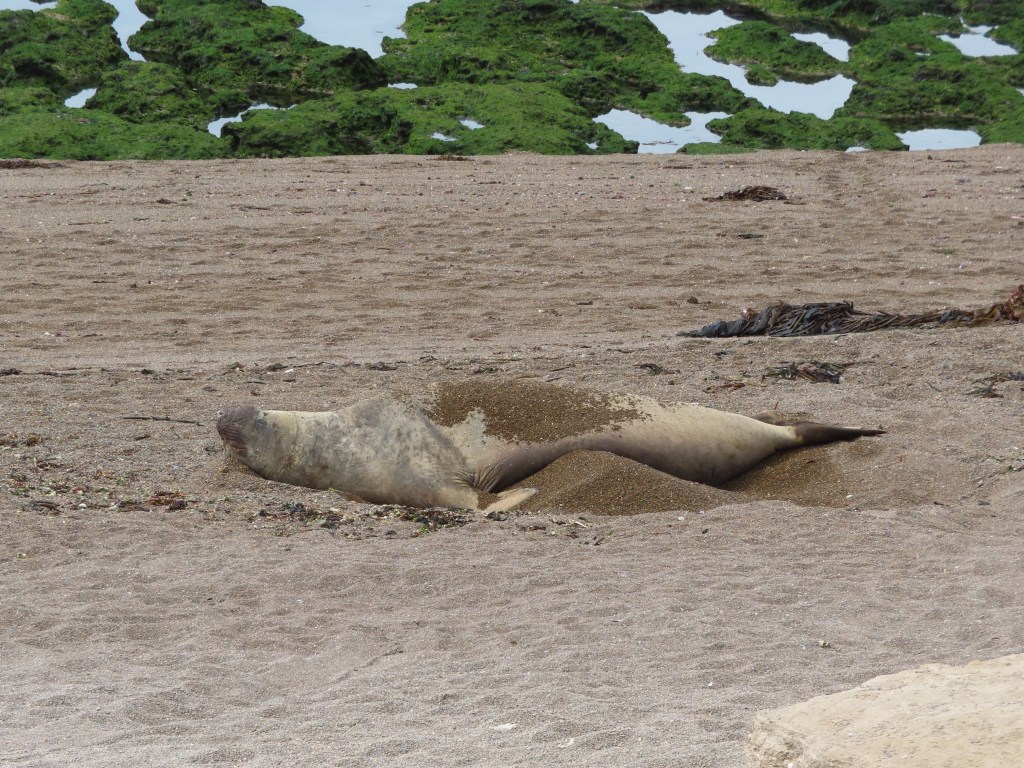
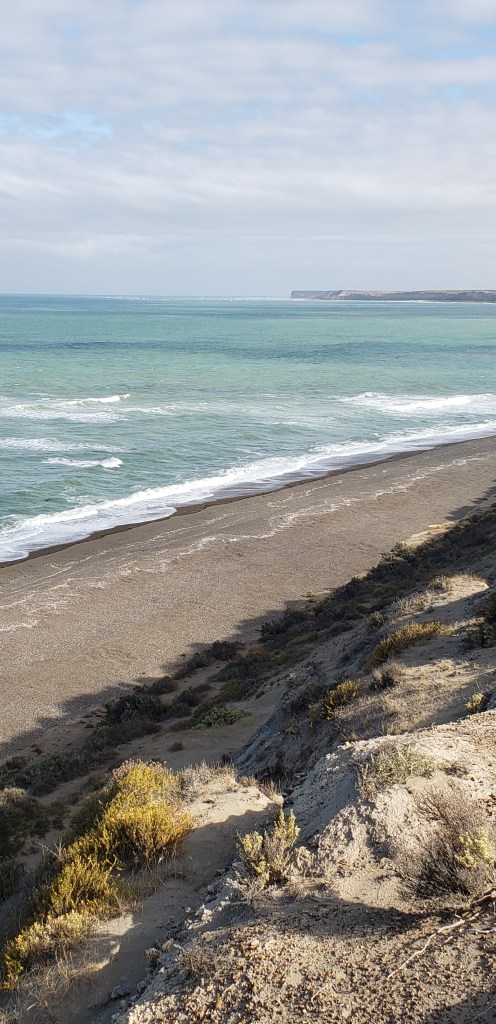
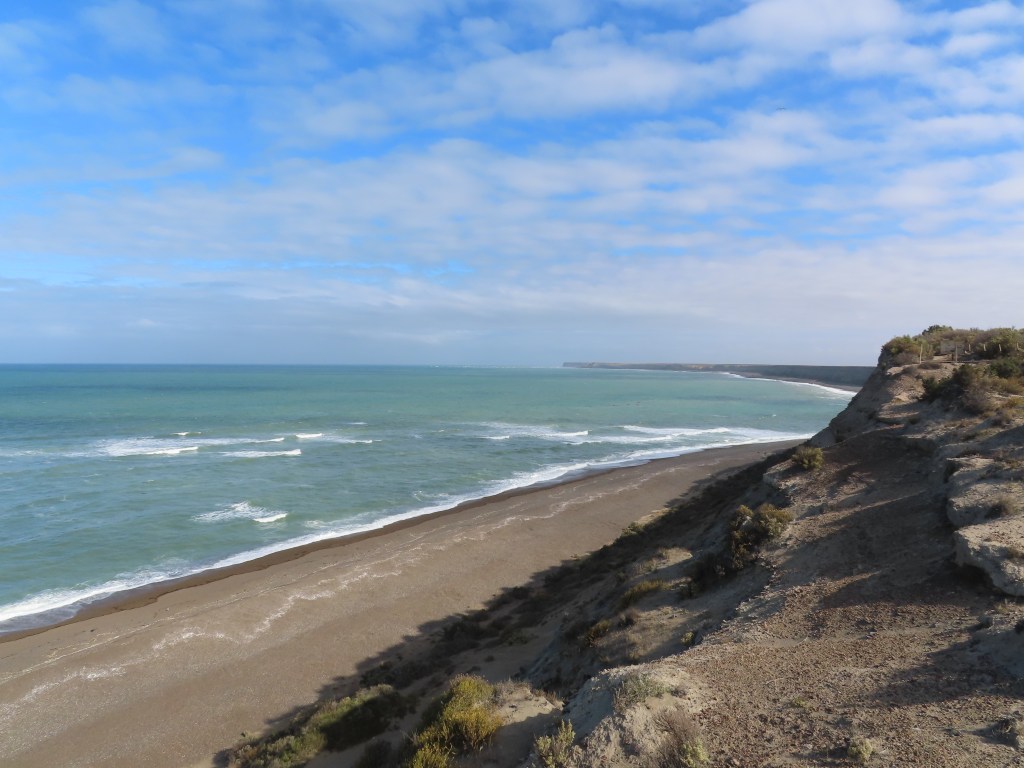
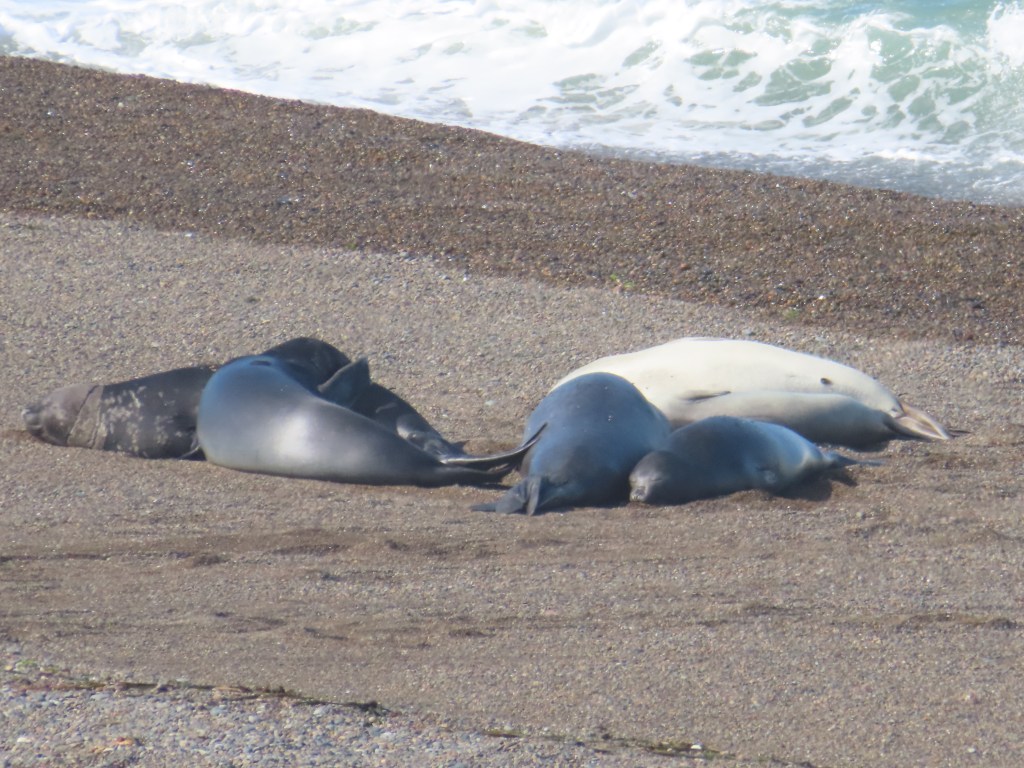
About the middle of the peninsula on the coast was Caleta Valdes, a nice spot with some trails through the coastal dunes and delightful beach flowers all over. We saw the highest concentration of elephant seals at this point! I think our day at the Valdes Peninsula consisted of a lot less spoken words than normal. A lot of listening, a lot of just taking it in. Breathing.


Inevitably, the sun began to get lower in the sky and we had to head back into town. Not to say the town wasn’t great in itself – but it’s hard to tear yourself away from the wonder of…wildness, I guess.


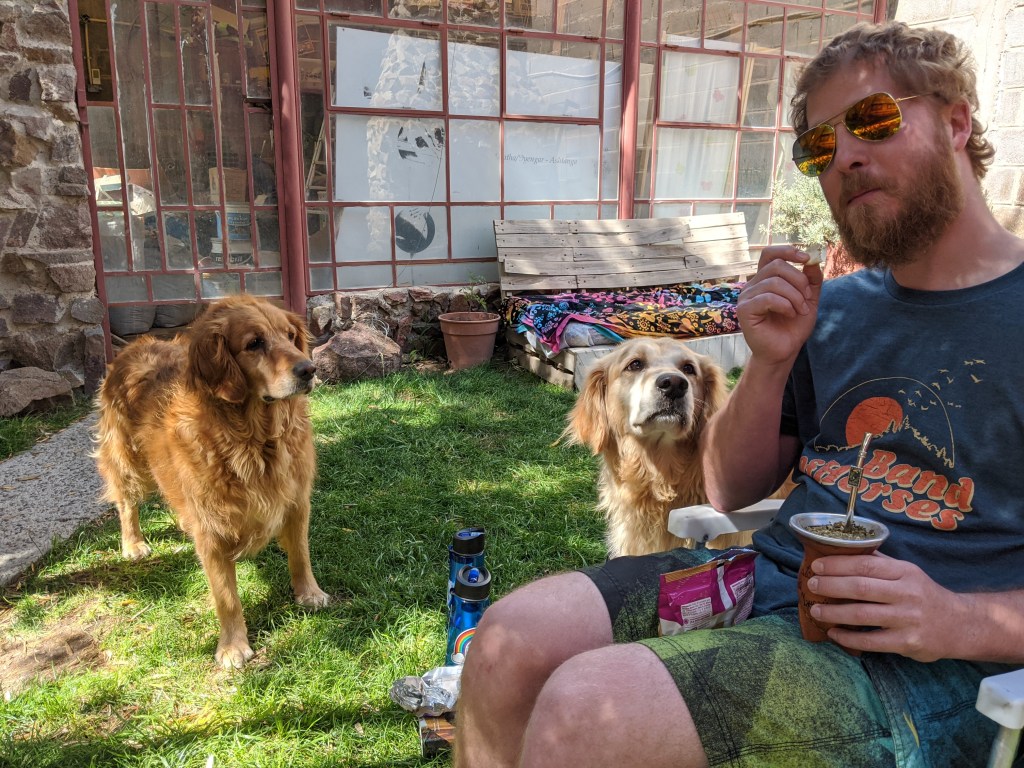
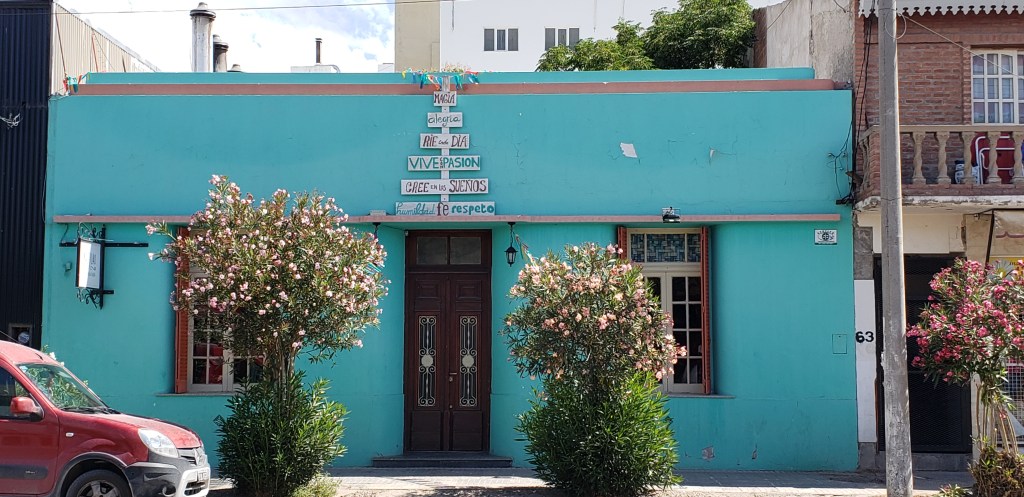
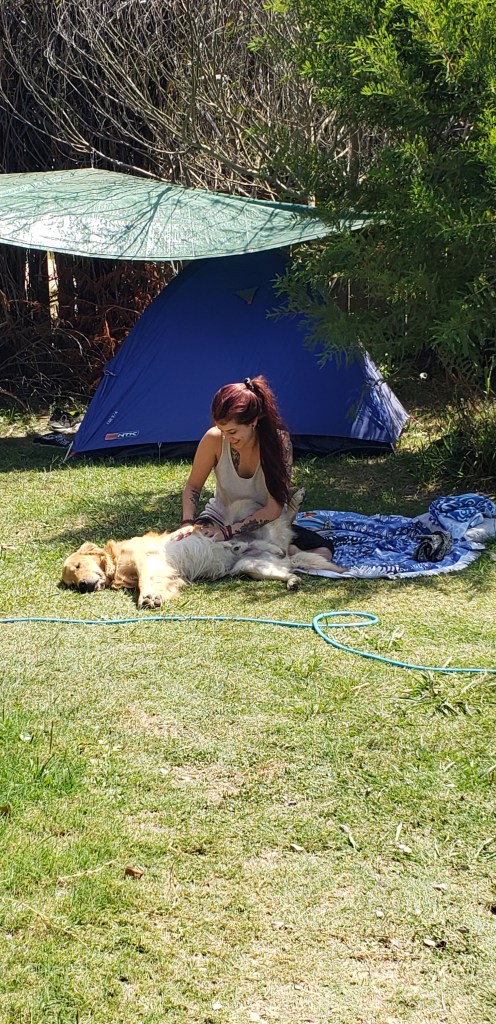
We stayed a few nights in the spare room in a family-run yoga studio called Crisalida. Great backyard for reading in the shade-dappled sunlight, with friendly golden retrievers wanting all your attention.


The other few nights were at the airbnb of a delightful host named Julia who is a science teacher at a local school as well as a fellow seasoned traveller herself! Thanks for everything, Julia, we appreciated your flexibility and bright, inviting home more than you know 🙂


It’s great meeting other adventurers/backpackers, hearing their stories, and knowing we are building a new network of friends and support all over this crazy, unpredictable continent. Surprises every day (seriously). Better Spanish every day. And the dry, cool weather of the South is a welcome and familiar small joy.

Cerveza Artesanal – the South American Craft Beer

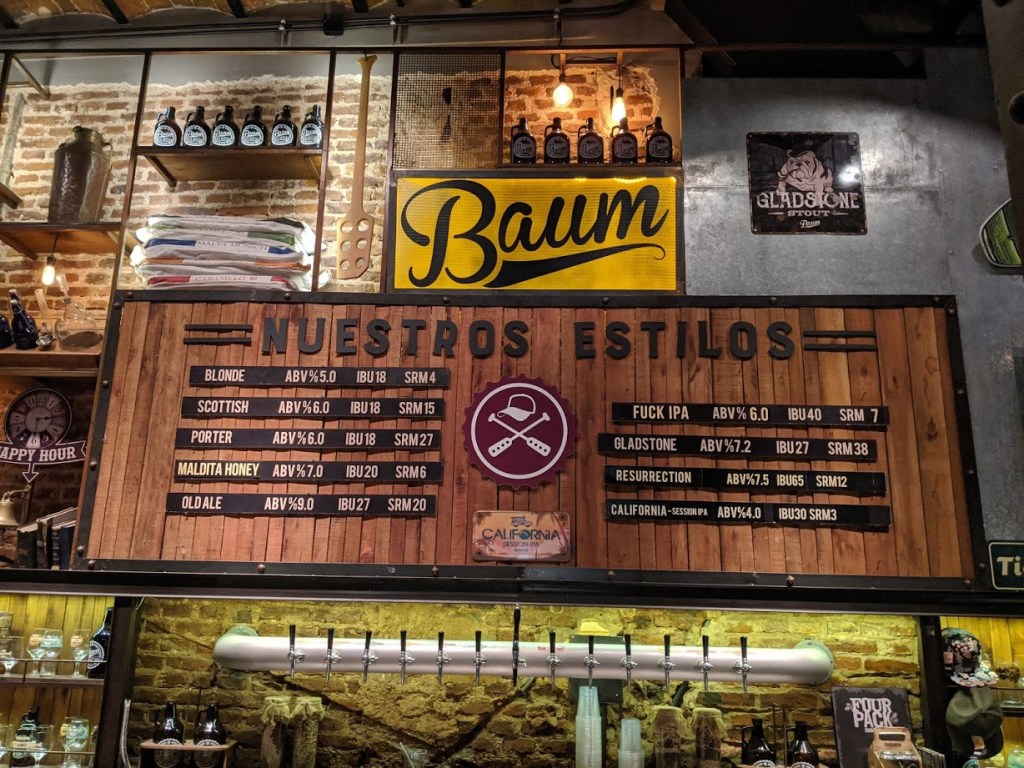
Cervesa Baum, San Telmo in Buenos Aires – Originally from Mar del Plata, AR

We have been traveling in South America for 36 days now and have experienced a totally different beer scene from what we are used to in Colorado. We have visited 15 actual producing breweries and a couple handfuls of craft beer bars and I am at 85 unique beers on Untappd. It has been a struggle to figure out if a place you are drinking at is their own beer, or if they are owned by someone else, OR if they call themselves a brewery or brewpub but don’t actually make any of the beers they sell. Before I get too far into it though, I will give a brief background of craft beer.

Most importantly, craft beer is innovative, distinctive, and independent, all while being very supportive of local communities. Breweries are defined by the Brewers Association of America, which is the trade group that represents these 7,000 + craft breweries in the US. They subdivide them based on production size and cap a brewery at 6 million barrels of beer made in a year to still be considered craft. Anyone bigger than that is considered a macrobrewery or industrial beer. Anheuser-Busch InBev is the largest brewing company in the world followed by Heineken.

The other thing you must realize is that even in the US, beer markets are very different across the country. States like Colorado, California, and Oregon have some of the biggest and most competitive markets leading the nation in the number of craft breweries. But really, you could go just about anywhere in the US and find a little local brewery. In South America, the craft beer movement is still somewhat in its infancy and the market here is very much dominated by industrial brands – mostly InBev. Bars and restaurants all carry their sudo craft brands like Patagonia Cerveza so you have to do some research to sniff out those establishments selling a local cerveza artesanal.

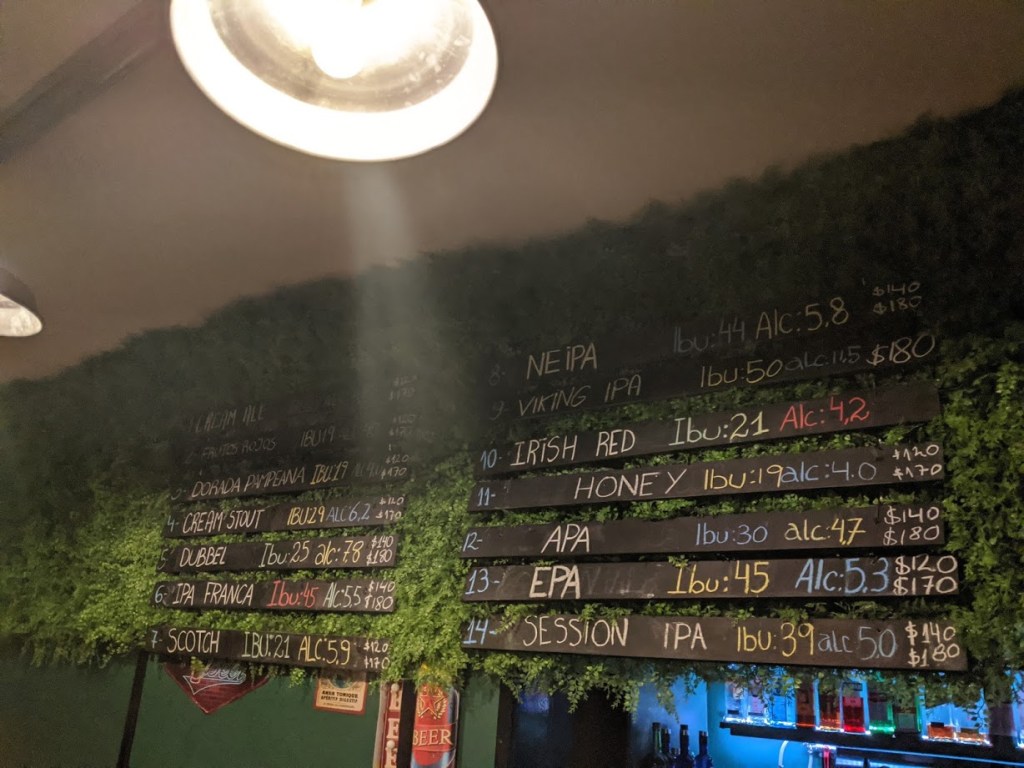
Cerveza Artesanal breweries here, like many microbreweries around the world, are copying the American Craft beer scene and it’s favorite styles such as the IPA. Some of the breweries I have walked into in Europe and South America might as well have been located on College Ave in Fort Collins, except it’s all in another language! Other styles you will find are Honey ale, Scottish ale, American Pale Ale, a distinct type of Golden ale called Dorado, Red Ale, Blonde Ale, Porter, and New England IPAs. Since hoppy beers are the best selling styles, they are everywhere and we have had some pretty tasty ones. There have even been some decent craft lagers, although unfortunately the macrobrews win this category for their crisp, drinkable lagers that rule the market.

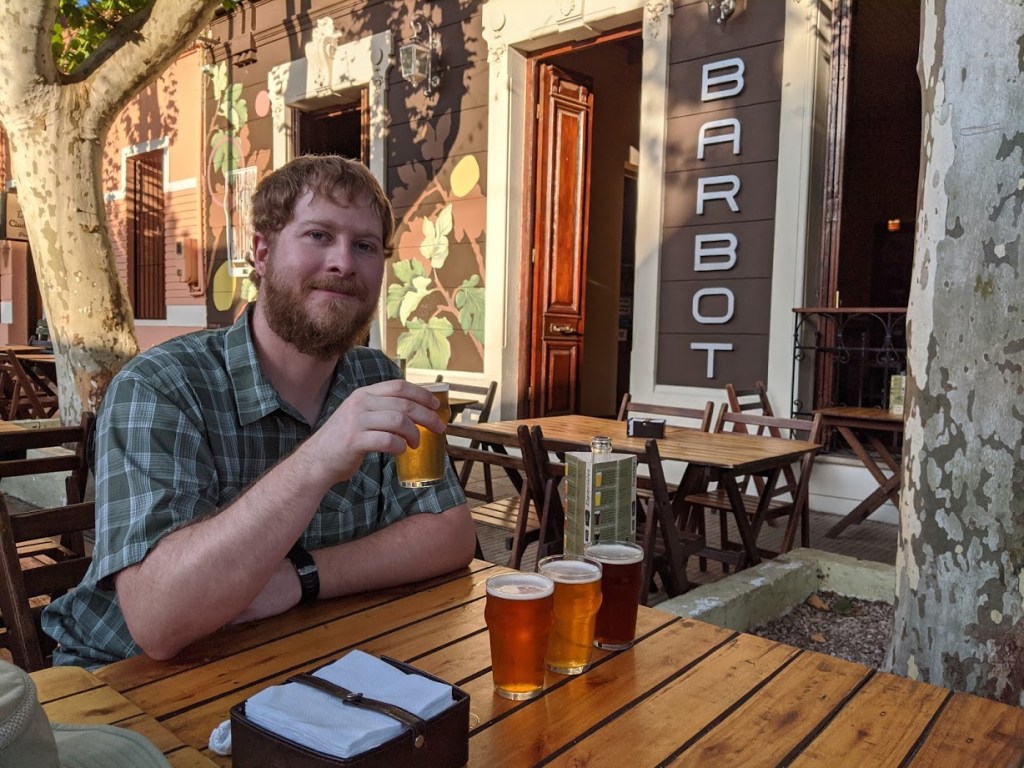
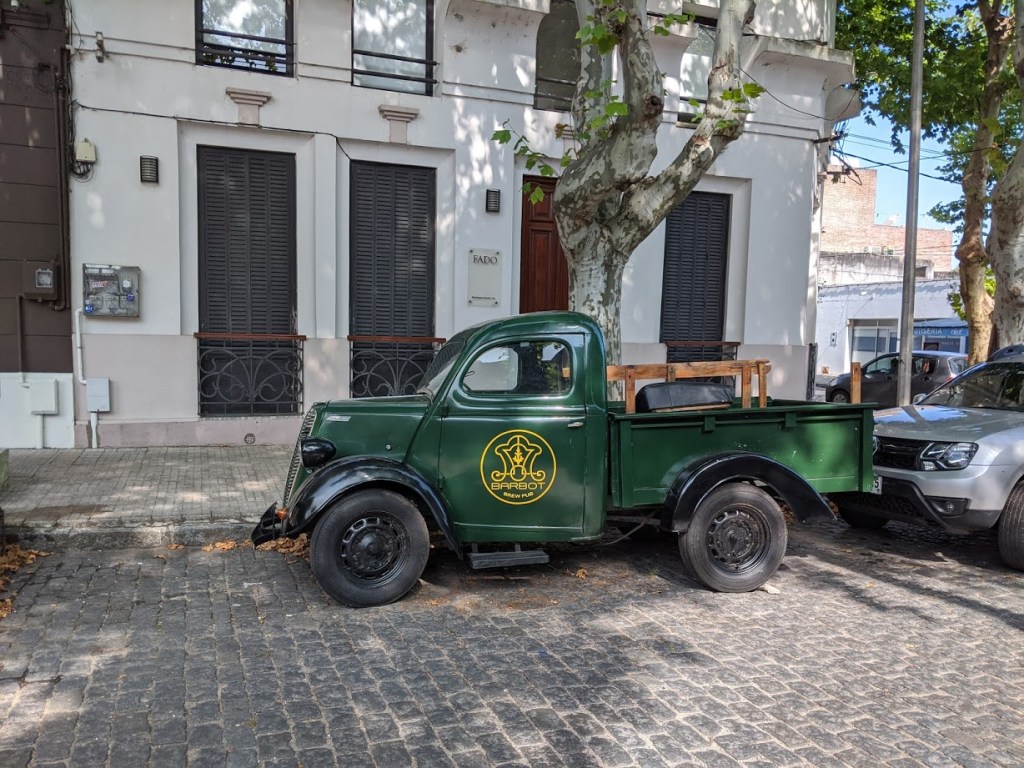
Barbot Cerveceria Artesanal – Colonia Del Sacramento, UR

Cerveza Artesanal breweries (Cervecerias) are small for the most part, usually just selling out of their taproom. Like I said, it is hard to determine what the place you are walking into really is. Terms such as brewery, brewpub, brewing company, cerveceria, or simply cerveza artesanal could be on the front of the bar and it could be a brewery or just a beer bar. Also, it has been near impossible to find any package beers here that are not owned by AB-InBev or Heineken. And if you do figure out that you are in a brewery, go to Untappd to figure out who makes it and where, but sometimes you won’t find out until later that the brewery you were just at is actually owned by InBev… this has happened to us a few times.

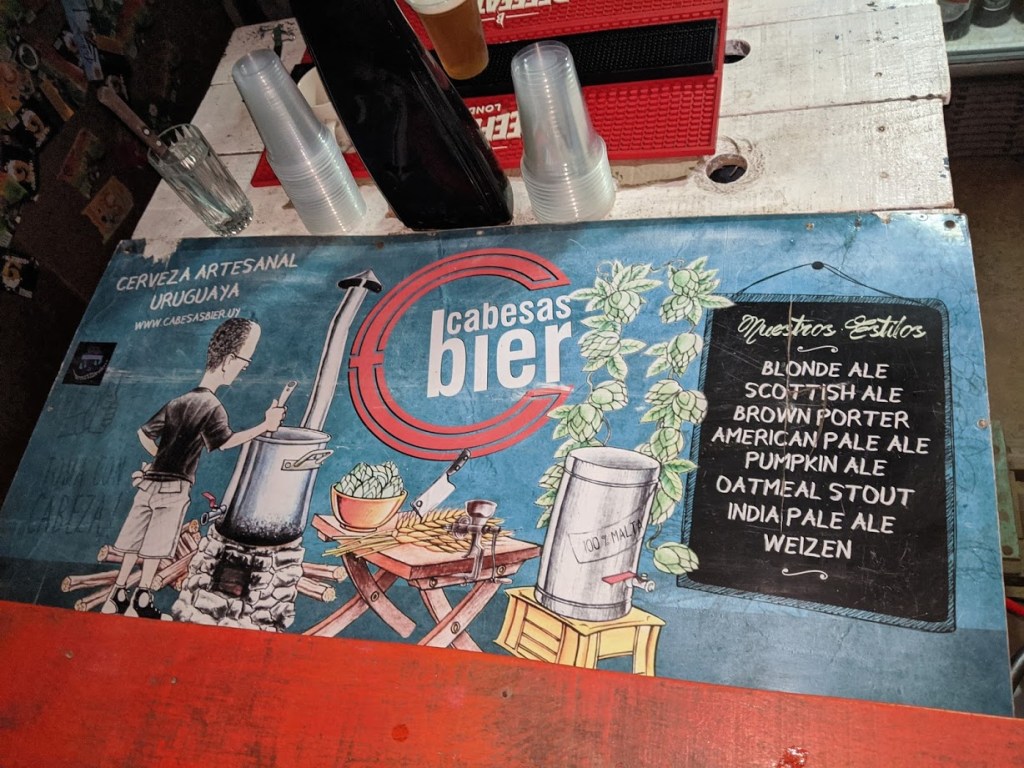
Cabesas bier brewery cooler at a local craft beer bar in Punta del Diablo, UR called the Jamboree. This place was sweet because it’s right on the beach and is only open from 12 AM – 7 AM!

Most places we drink beer, we try to always order a flight: 4-5 small pours of different beers – or at least half pints so we can try more unique beers. In SA beer flights at breweries are called a degustation and usually include every beer they have on tap. If the brewery has a lot of beers, then you may get as many as 8 beers at a time! Sometimes we come across a bad beer but the overall quality we have experienced has been pretty decent! I have had some of my favorite Scottish ales, Honey ales, and even some very unique & lovely IPAs.

Cerveseria Antares in La Plata, AR

Just like craft breweries in the US, breweries here are usually cleaner with their draught lines and glassware. There are definitively places that I will only order package products from and have to rinse the glass myself. The good thing is I have yet to see a bar here put their glassware in the freezer! This is my personal pet peeve since it leaves the glass distugusting and creates chill haze in the beer. Also, free peanuts are served with beer at almost every bar, sometimes spicy. The peanuts do their job and leave you needing more beer.

Berlina Cerveza Artesanal in La Plata, AR originally from San Carlos de Bariloche, AR

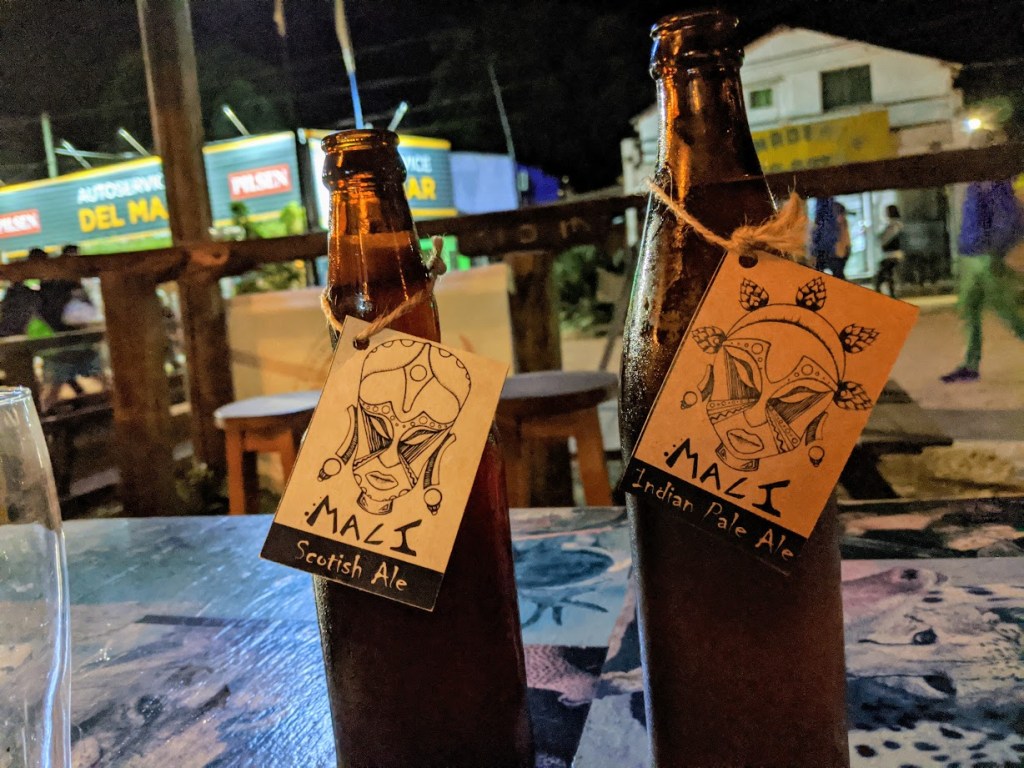
Below is my favorite IPA we have had yet! It’s called Mali IPA from Mali brewing co. in Castillos, UR. The unique hop flavor hit me like Mountain Dew Baja Blast. I know, but it’s the first thing that comes to mind is when I think about that beer. Sweet and fruity at only 5.5%, it was swimming with citrusy melon flavor. I ordered another bottle!

We had it at a local restaurant in Barra de Valizas, UR with shark and steak crepes!

So far we have been very satisfied with the beer here and we are excited to see what we find here in Patagonia! We have yet to see any sours or barrel aging that is considered artesanal. I will continue to update everyone about our beer encounters and what we have learned as we discover more tasty suds! ~ ¡Salud!

Baum degustation

Buena Vida: The Uruguayan Way of Life

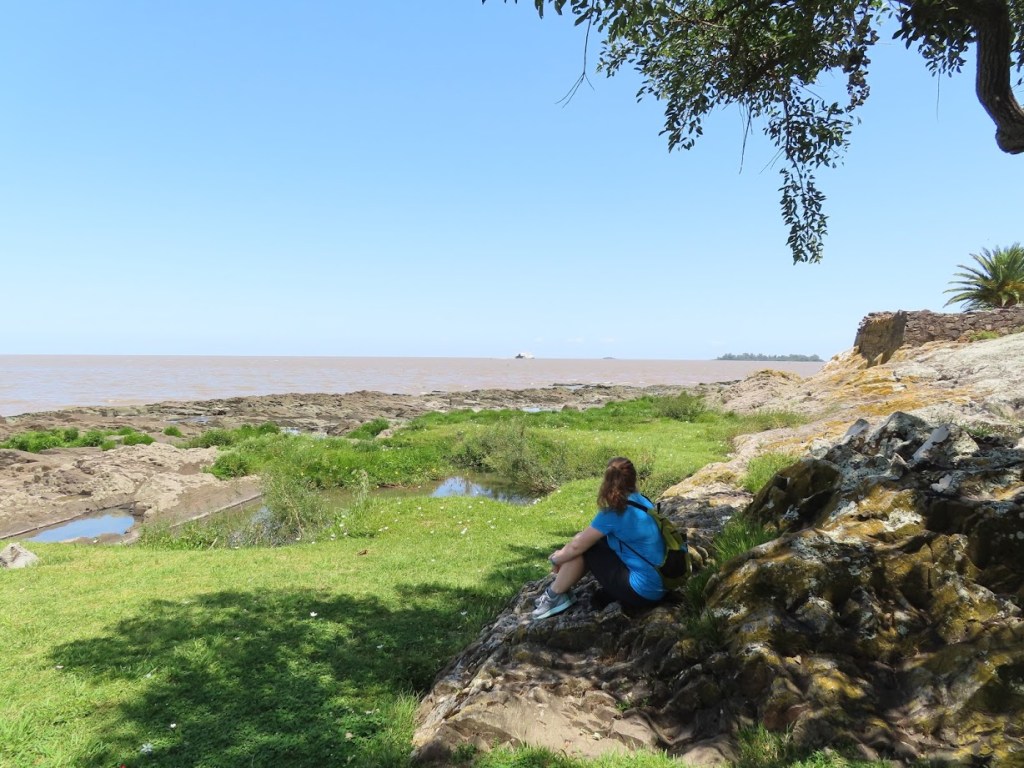
Colonia del Sacramento. The Rio de la Plata is technically a river, so it is appears brown due to the huge amount of sediment it’s carrying!

Here’s the thing about people in Uruguay…they do what they want, when they want to do it, and at their own pace. It’s crazy! There’s no way you can rush them or tell them otherwise. It is, in more ways than one, quite refreshing and inspiring. We come from a country that is a world of so much hurry, rush, and unending to-do lists…and I am just as guilty as the next person! (Probably even more so than the average American). Whether it be through your profession, your sense of personal accountability, your family duties, your commitment to a cause you value, or whatever – the American lifestyle hungers for productivity. We feel that our time has to be used productively from the time we wake up to the time we got to sleep, most of the time exhausted after a day of errands, list-checking, and taking care of all the shit we need to take care of to call ourselves a functioning member of society. Maybe a drink or two at the end of the night to get the worries or work stress of the day off our mind.

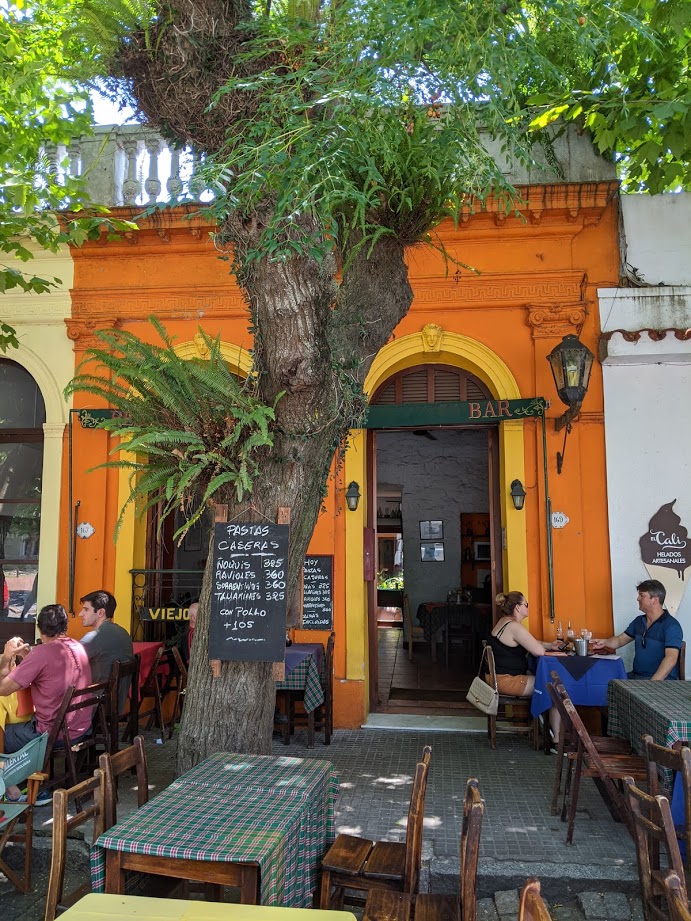
Viejo Barrio restaurant in Colonia del Sacramento – our favorite milanesas in Uruguay

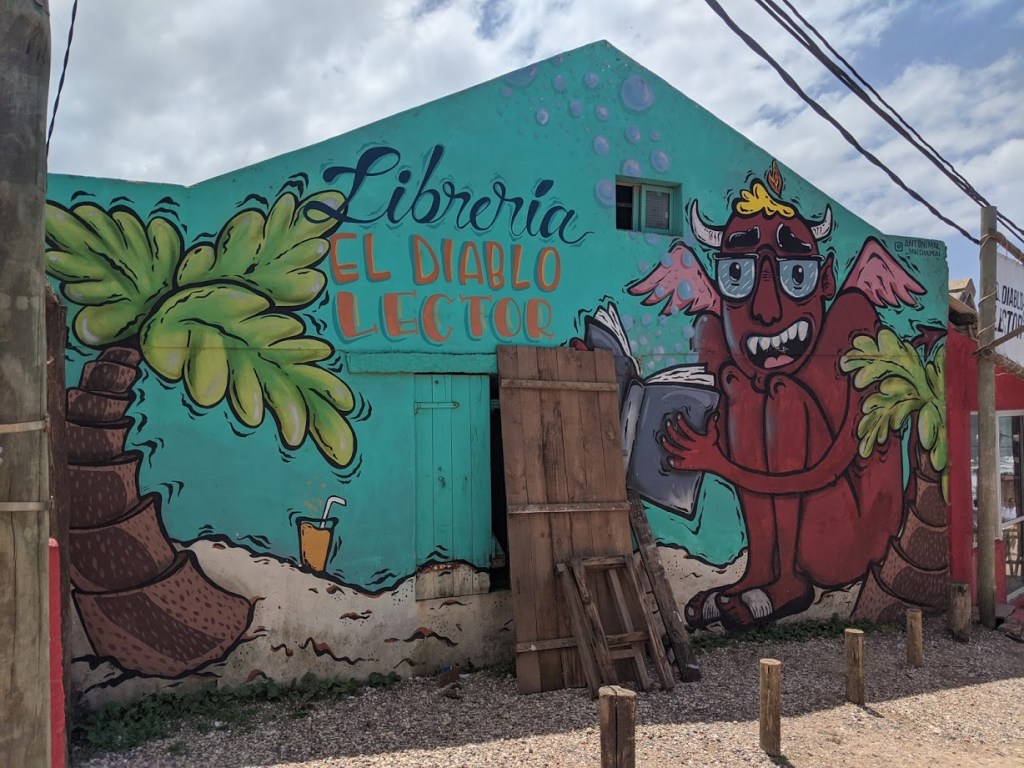
In Uruguay…this kind of mentality is basically nonexistent. Folks are inclined to take an extra hour on their lunch siesta even if it means thier shop doesn’t open when it’s supposed to. Or maybe just sit in their hammock all day napping and reading. It’s safe to say that you’ll find a lot of the locals somewhere on the beach with mate or a cervesa, and then out again after dark for the prevalent nightlife of clubs and bars. Granted, we were there during their summer holiday, but I get the strong feeling that this permeates everyday life. Bob Marley music and hippie vibes abound through the sandy, unpaved roads.

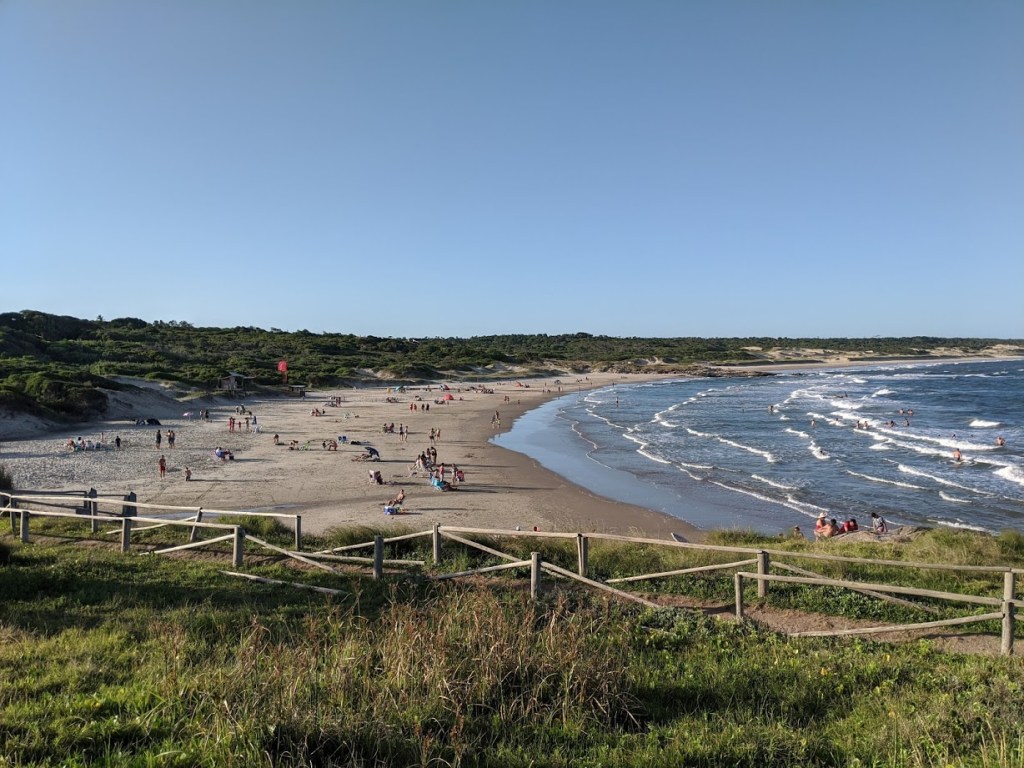
Sunset at Playa de la Moza in Santa Teresa National Park

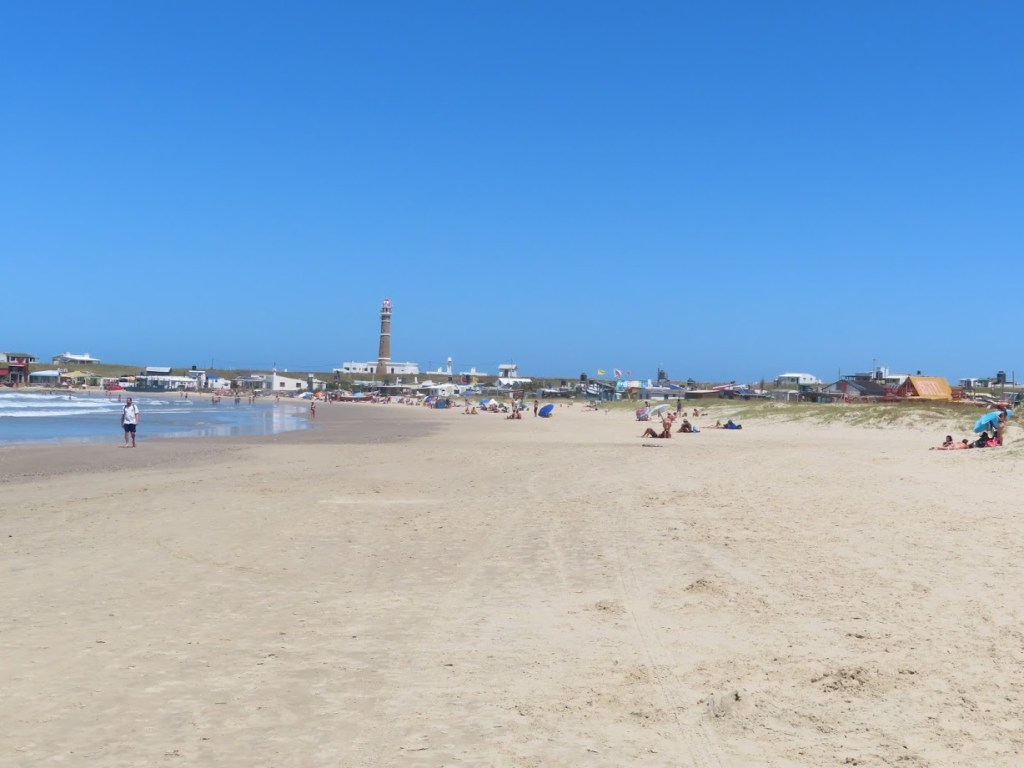
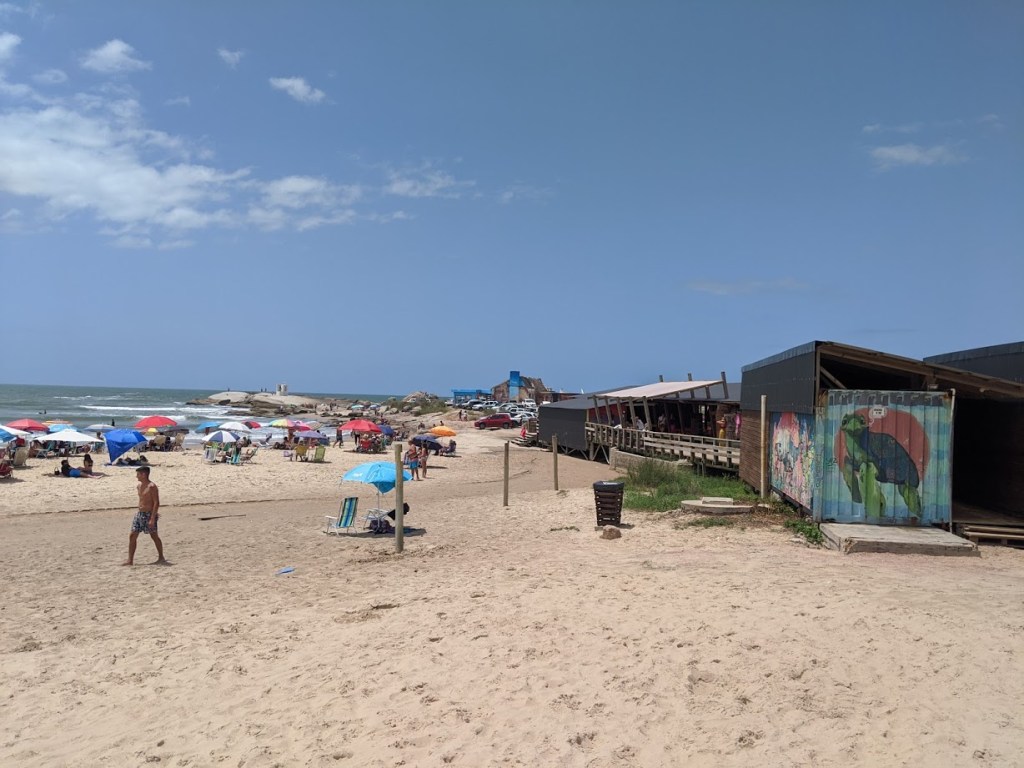
We were introduced to the phrase Buena Vida, literally translated as “good life”. However, it stands for more than that. It’s an idea. Buena vida is the culture and a way of thinking. Our travels took us East along the coast, beginning in Colonia del Sacramento, then stopping in 4 different beach towns: La Paloma, Barra de Valizas, Cabo Polonio, and Punta del Diablo.

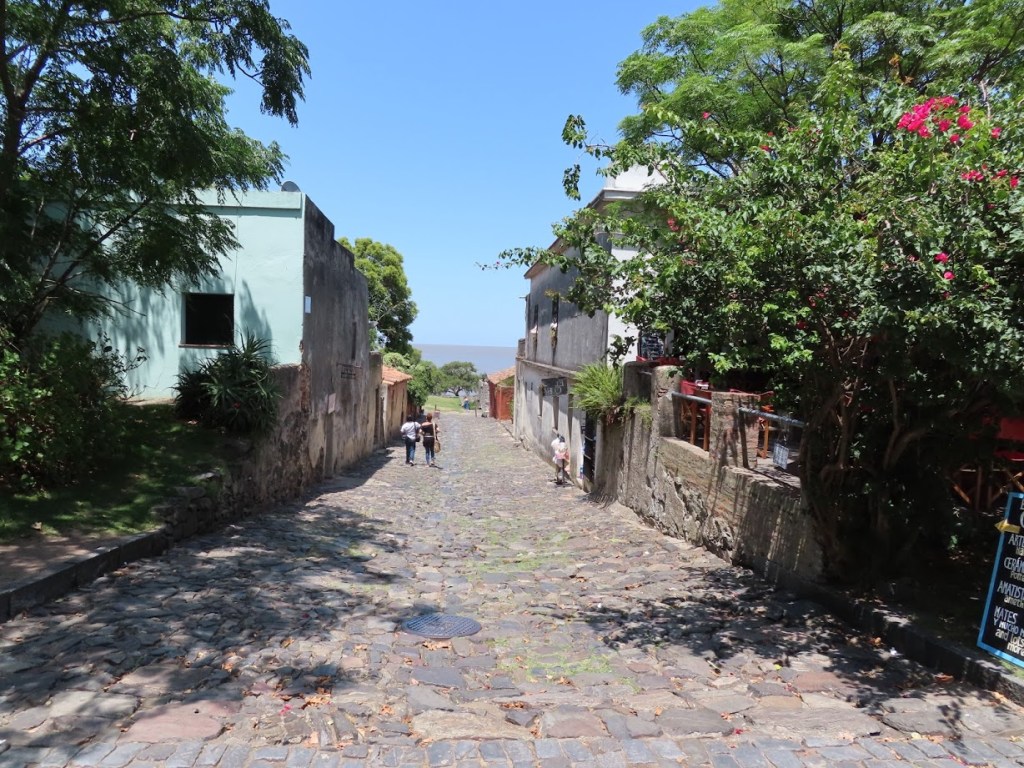
Calle de los Suspiros – The Street of Sighs. Many legends about this street

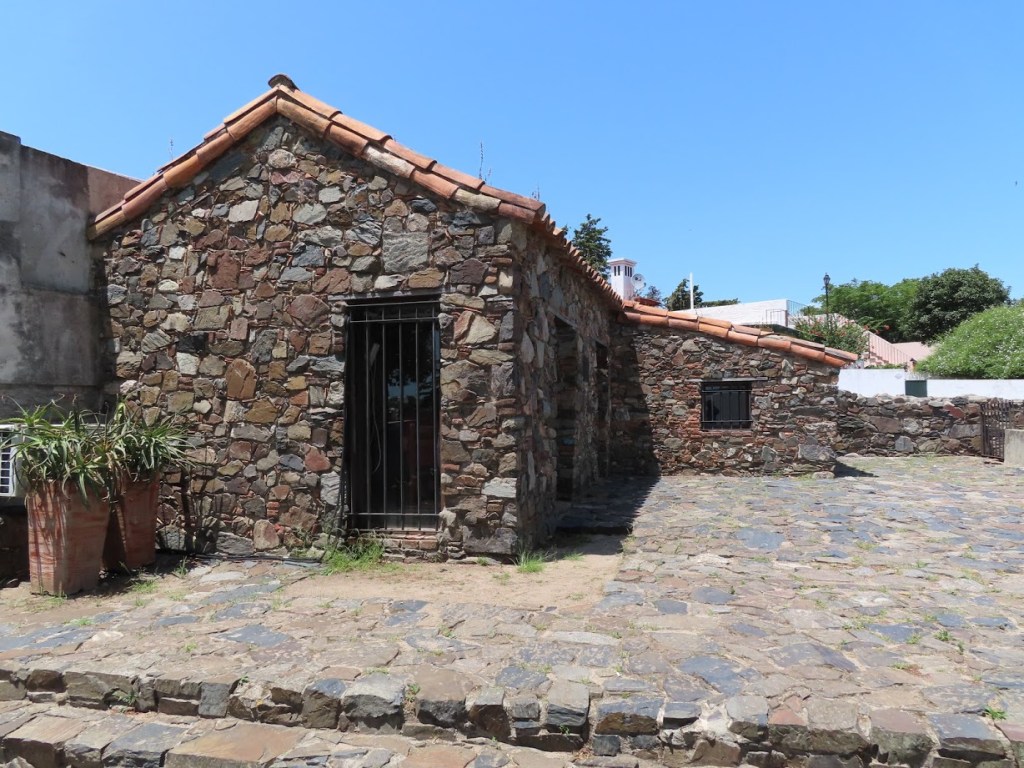
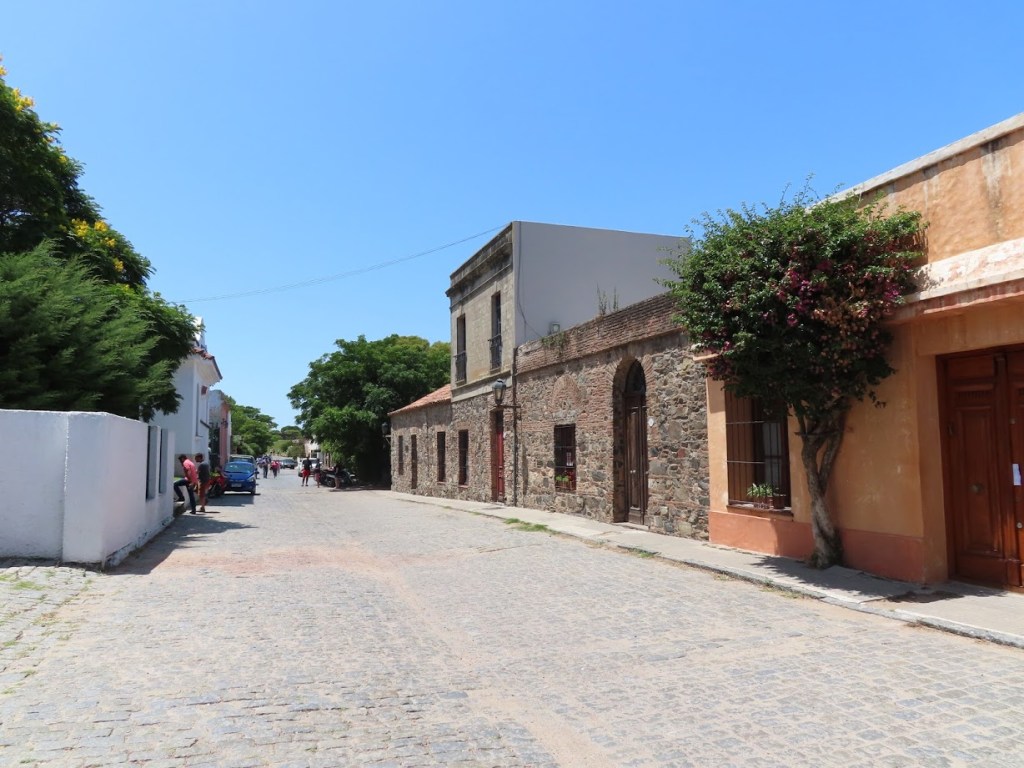
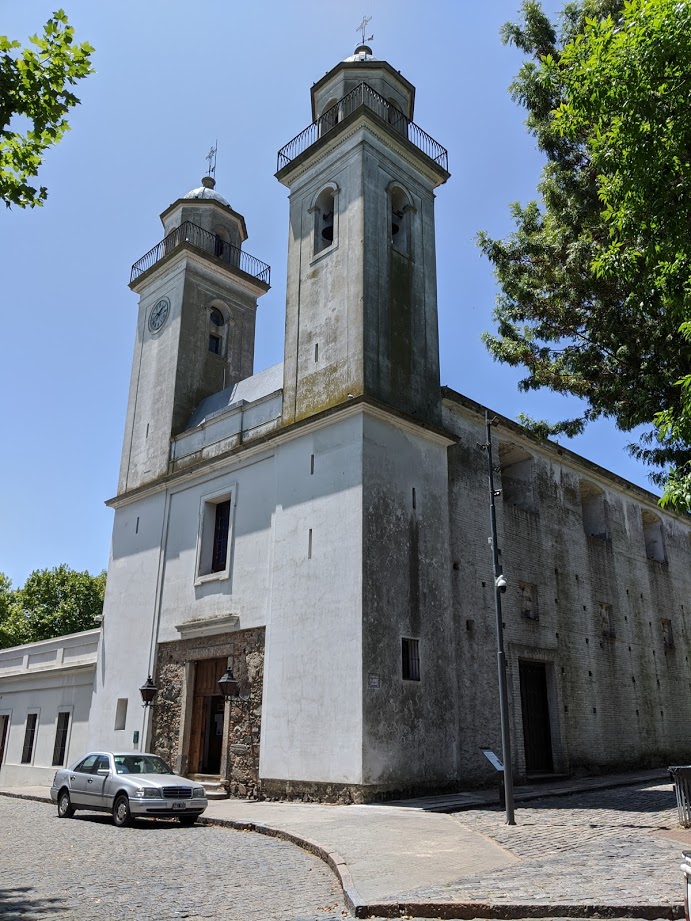
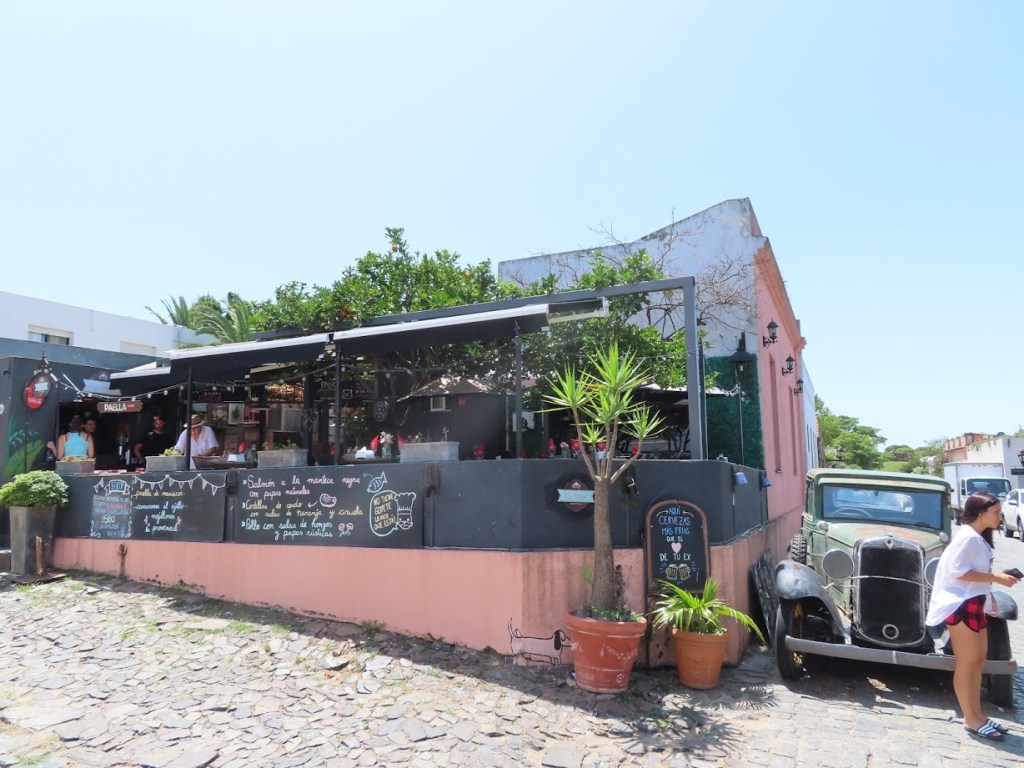
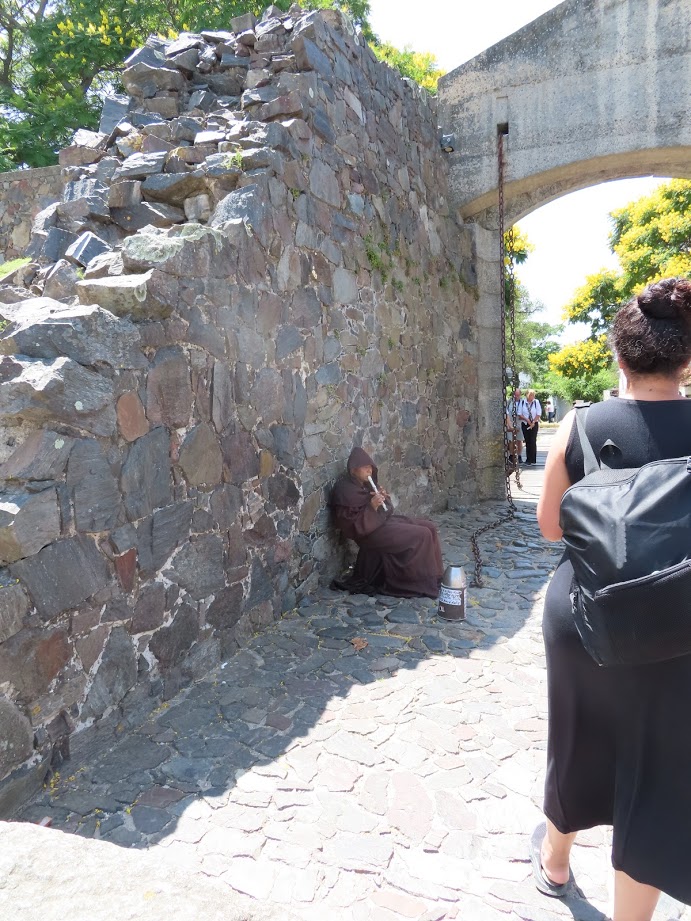
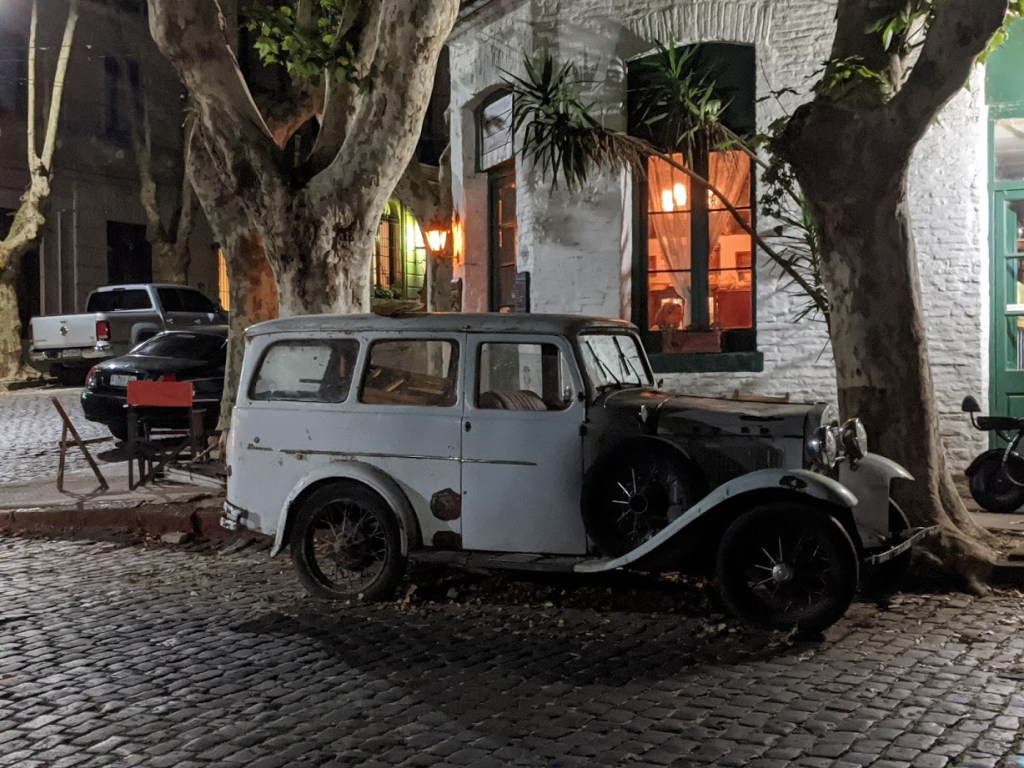
Colonia Del Sacramento is a 1700’s era port town on the coast north of Montevideo in the mouth of the Rio de la Plata. The old historic area is somewhat of a peninsula encompassed by decaying walls of the fort from long ago. Cobblestone streets with colorful buildings, trees, and a lighthouse make it feel as though you have walked through a wormhole to a time centuries past.


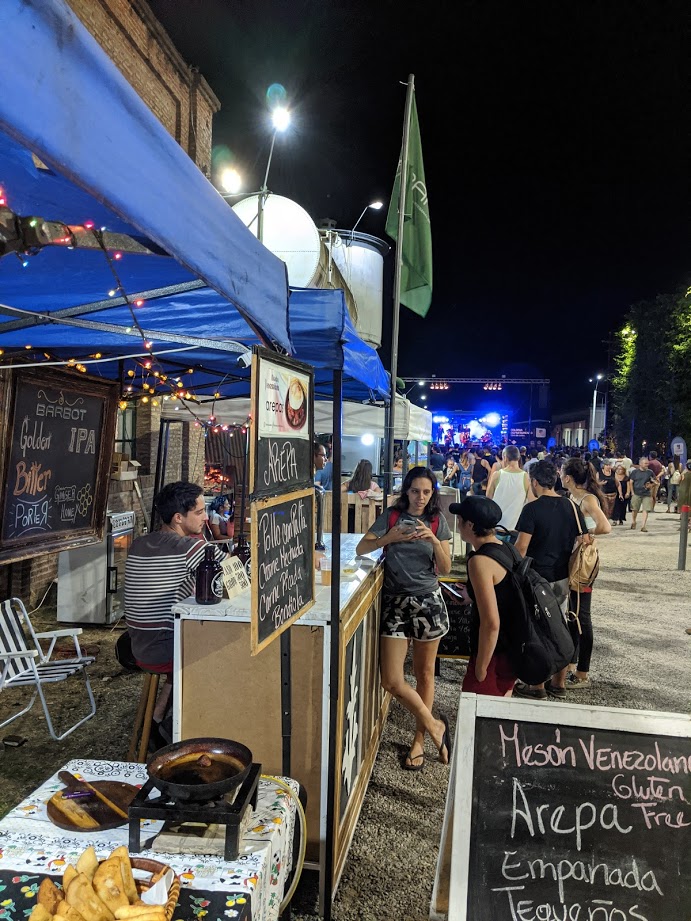
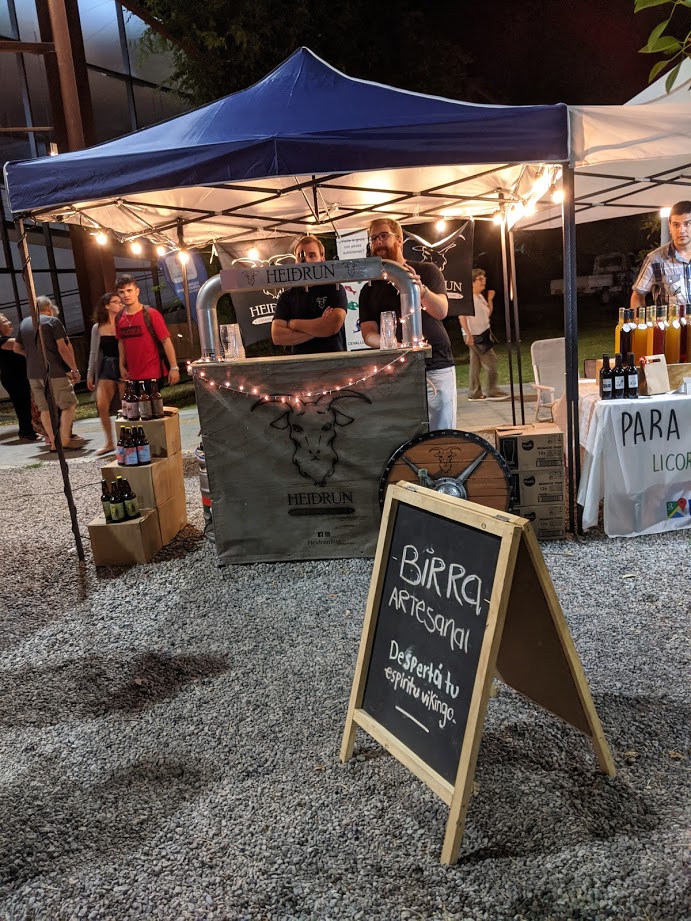
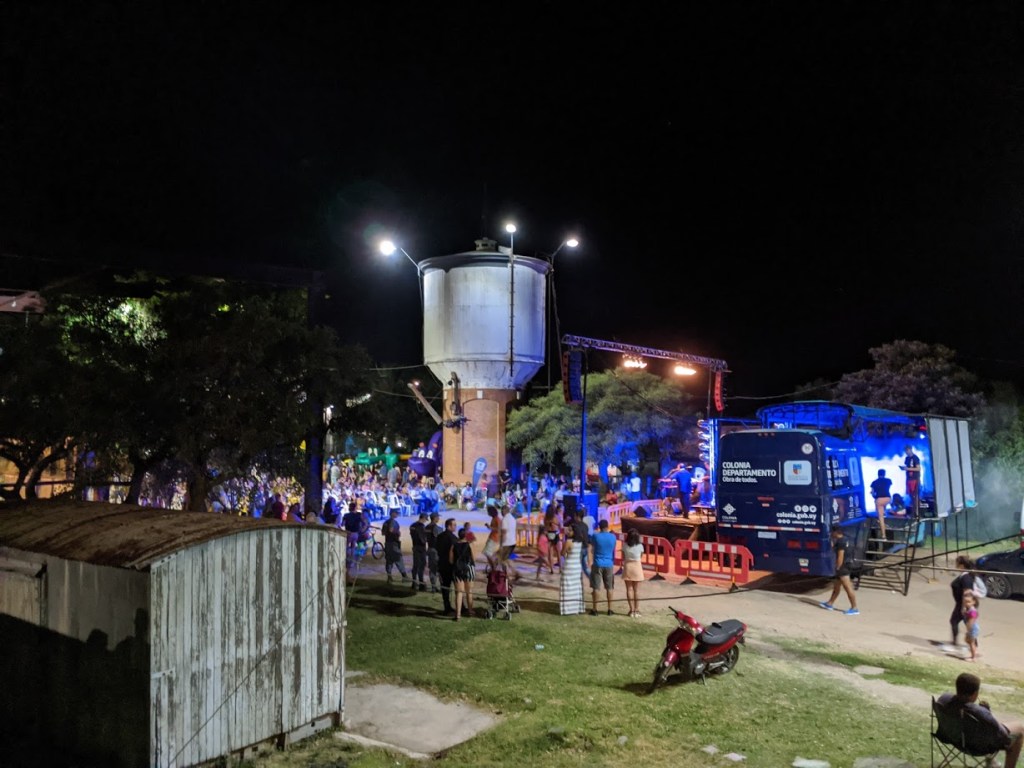
On our last night in Colonia, we heard music on our way home and wandered toward it…and were rewarded with a giant festival! We weren’t quite sure what it was for, but it was open to the public, there was live music, dancing, and great little side booths of homemade snacks. SO fun – David and I keep calling it our night at the “Taste of Colonia.”

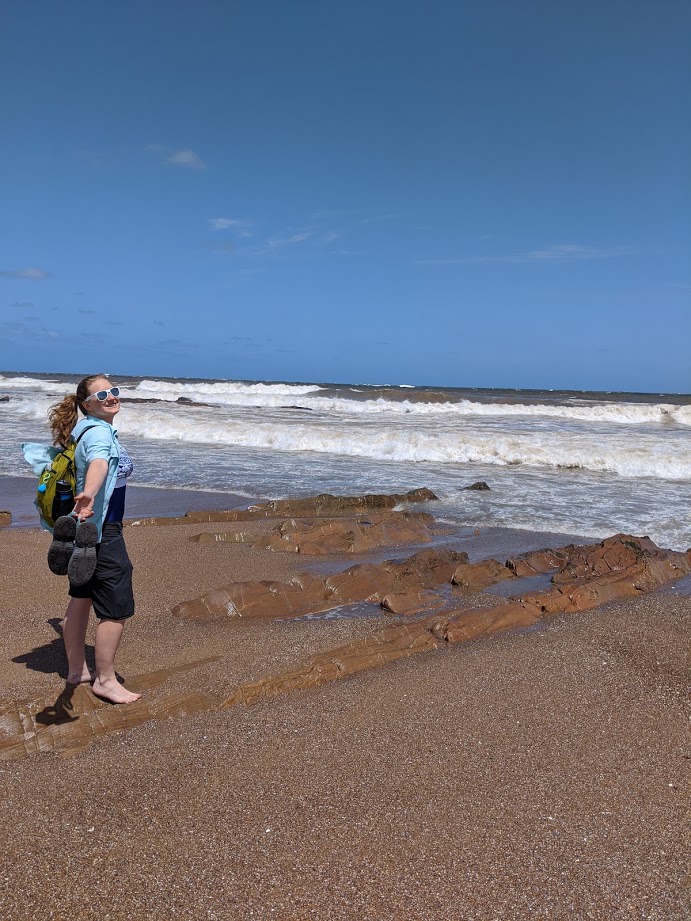
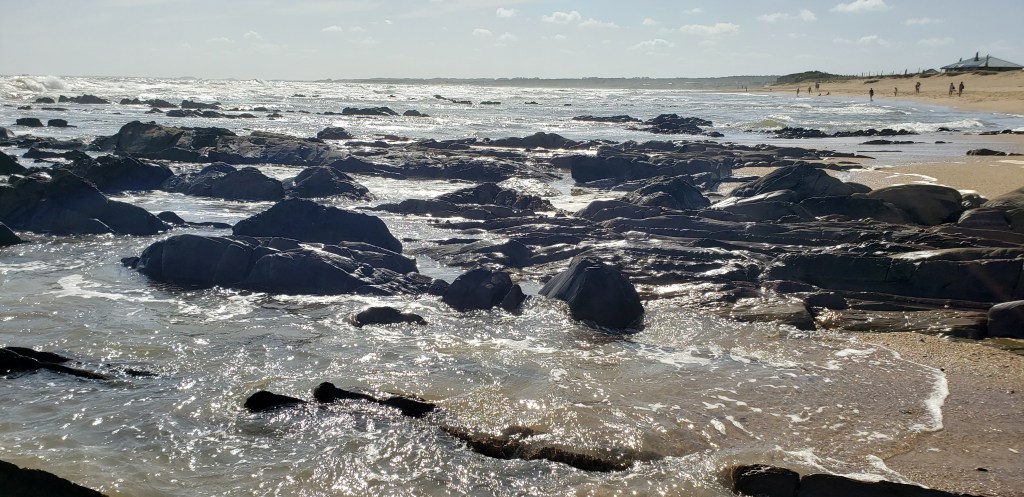
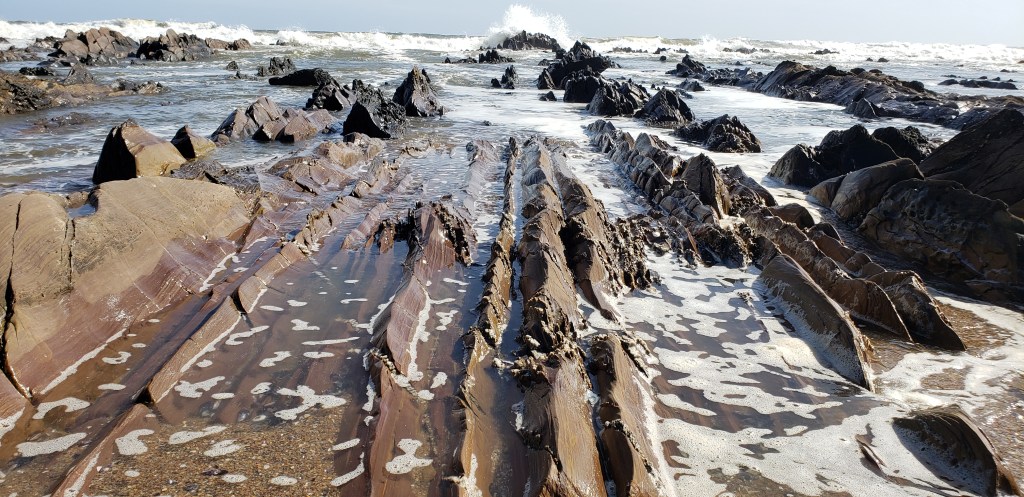
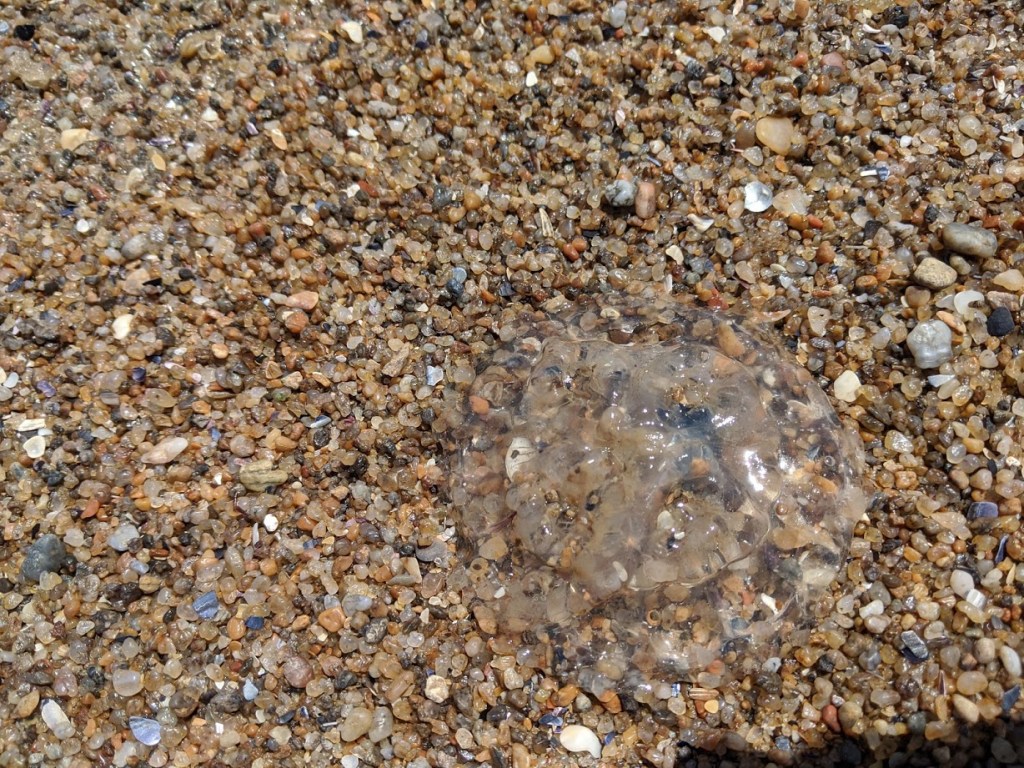
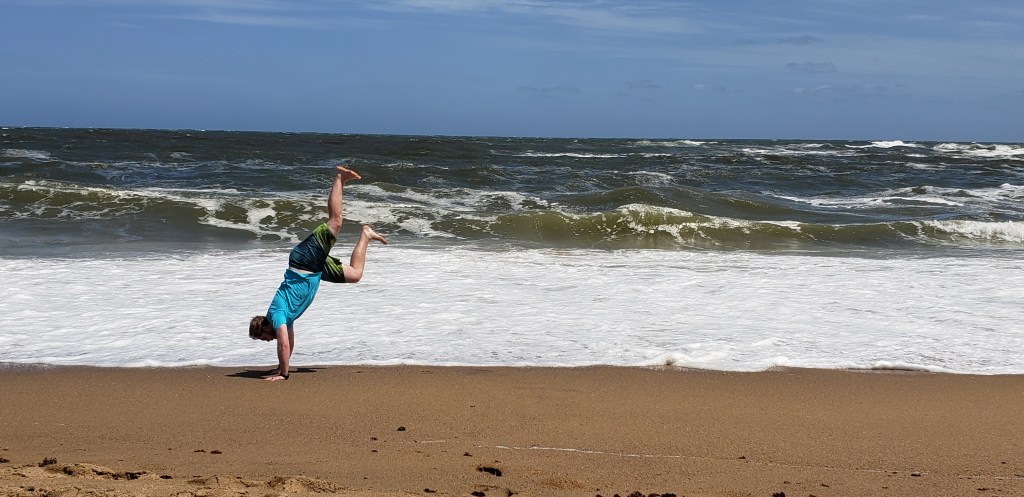
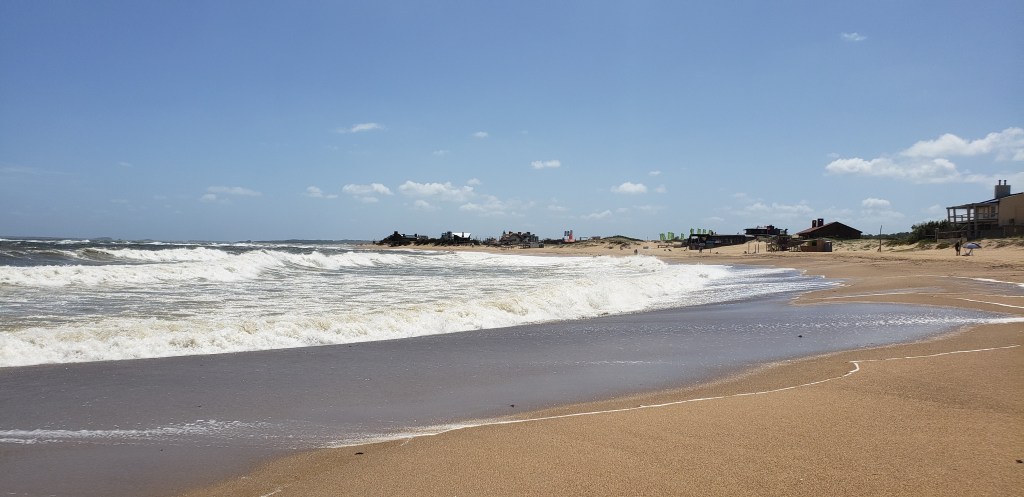
Next stop was La Paloma! While our stay there was short, it was our first real day at the beach and was quite memorable. For one thing, the beach at La Paloma has pretty volatile waves that churn up the sand a lot, so it’s harder to walk down because your feet sink so much as you walk! We thought we were going to walk a lot further than we actually did…clearly underestimated the Ocean 😀 The granules of sand were more coarse, and the waves were just enormous! A nice afternoon and lunch listening to the crash of the waves, walking carefully through the jagged, knife-like rock edges, and inhaling the salty spray.

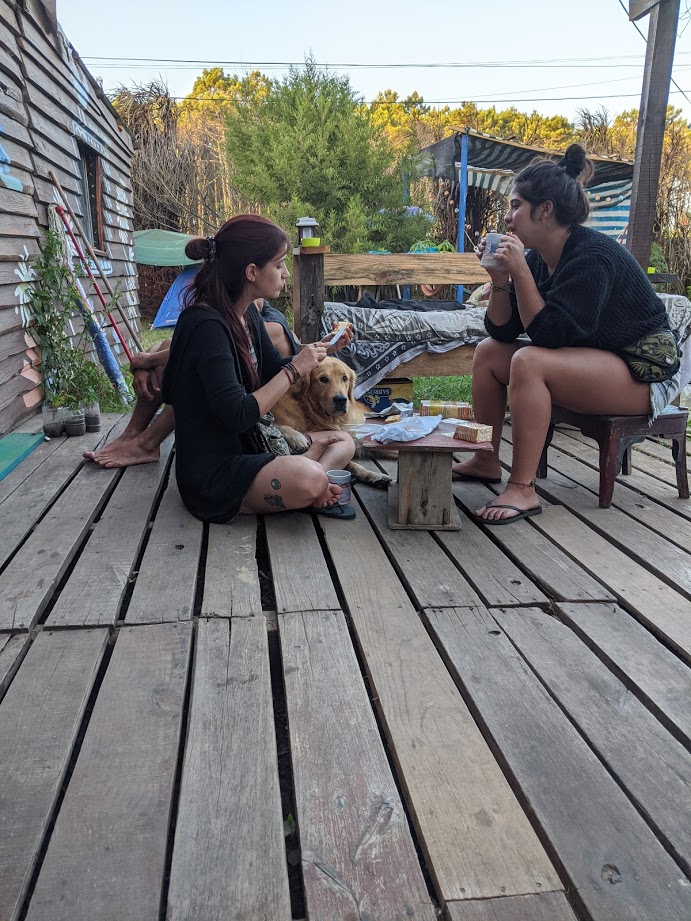
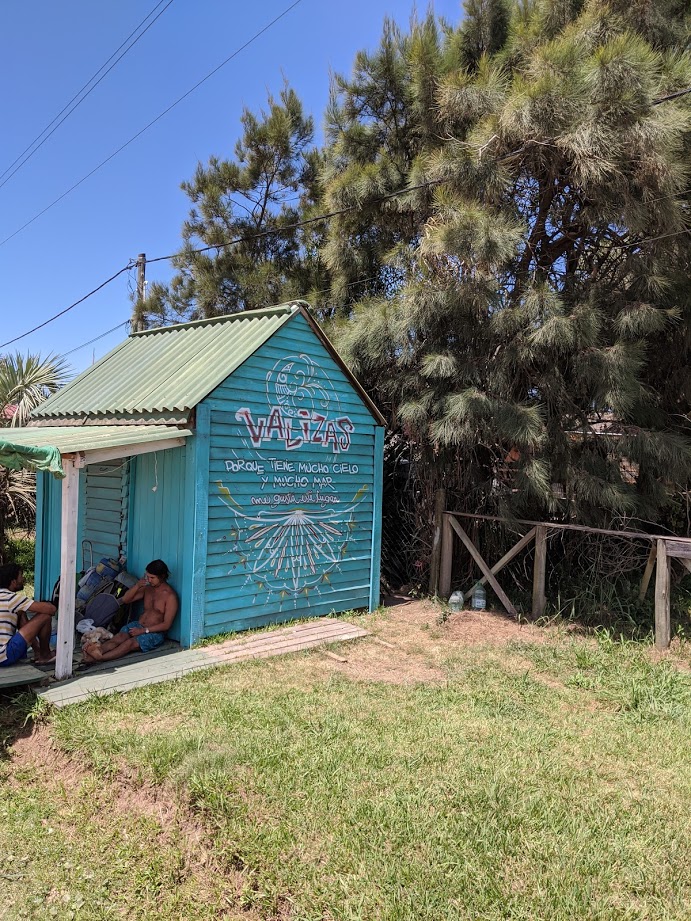
Onward then to Barra de Valizas! This is a really special place. It’s one of those towns where the sixties are still alive. Just take a look at the pictures of where we stayed…

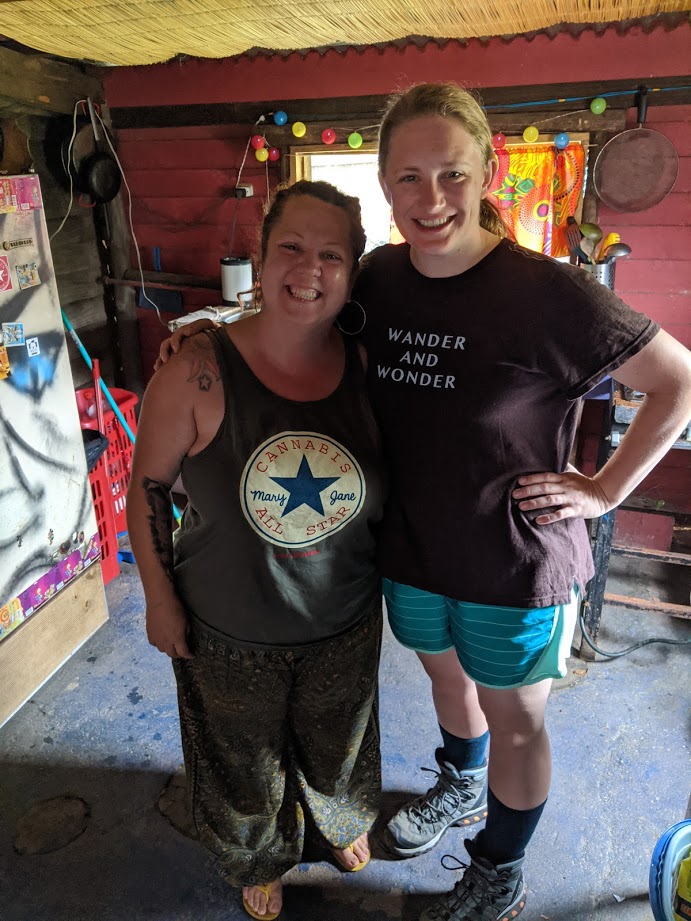
Valizas was an interesting experience for us because we stayed in a shared space in a kind of cabin/cabana. There were about 5 or 6 other people staying there, in various bunks, lofts, and some camping in the yard. We stayed in a bunk bed.

There are benefits and drawbacks to staying in a shared space. While you make a bunch of new friends who want to share drinks, travel stories, and have spontaneous music jam sessions with you….there is also very little privacy, a dirty and often-occupied bathroom, and the cabana is not sealed from the outdoors. Needless to say, I woke up one morning and had been bitten up by mosquitos on my face and all over my hand that was outside my sleeping bag, and a different day when it rained my sleeping bag got soaked from a roof leak. So yeah, you kind of just have to deal with whatever hand you’re dealt, doesn’t matter if you want to or not, oh well! Not the end of the world, just exposure to outside your usual comfort zone of steady amenities and protection from elements. But lot of really cool, amazing people with great outlooks and ideas on how best to live a life – I think anyone could take a leaf out of their books and gain from it.

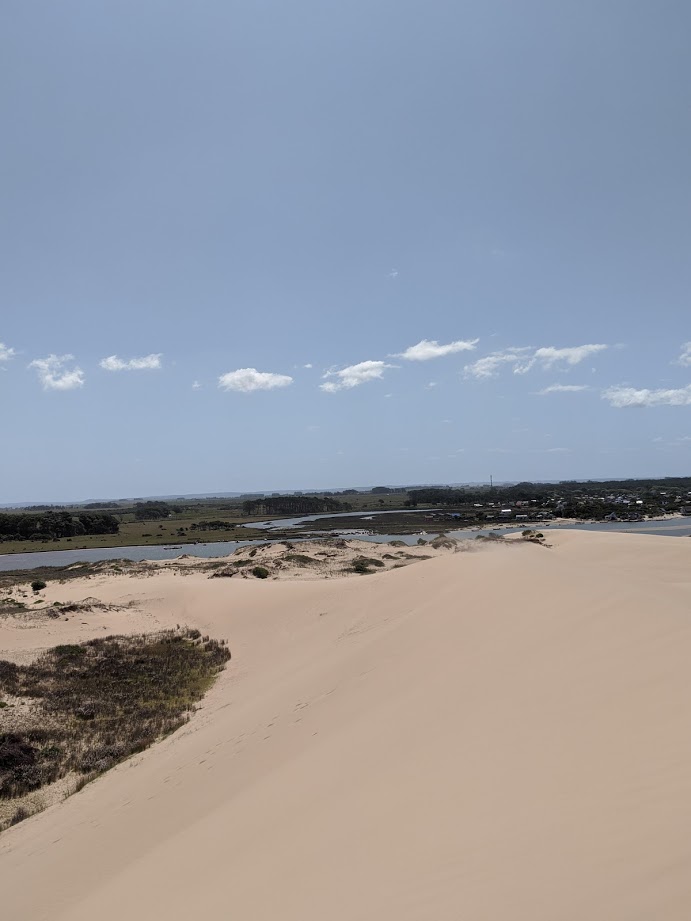
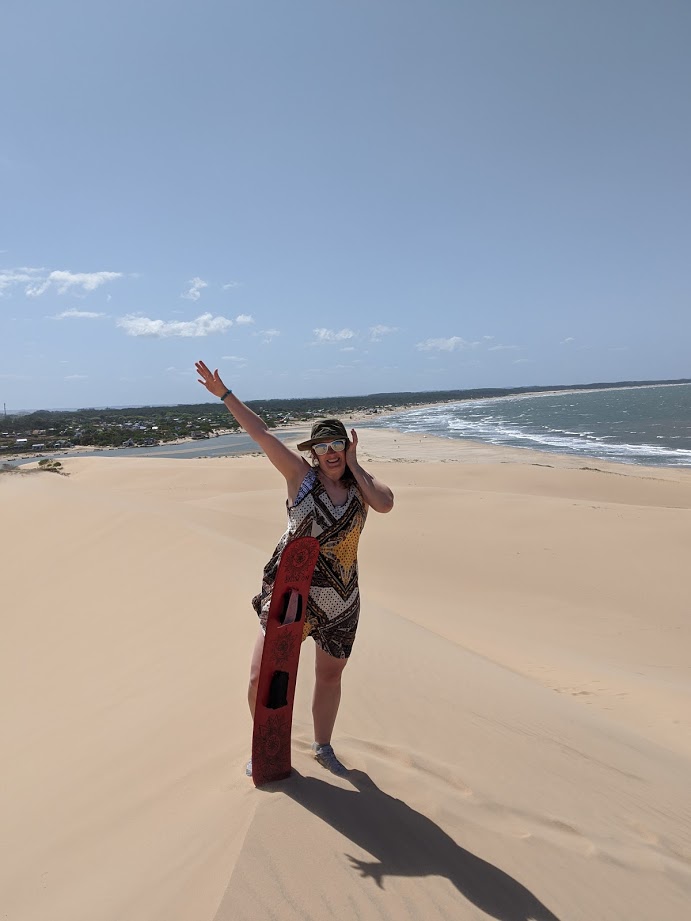
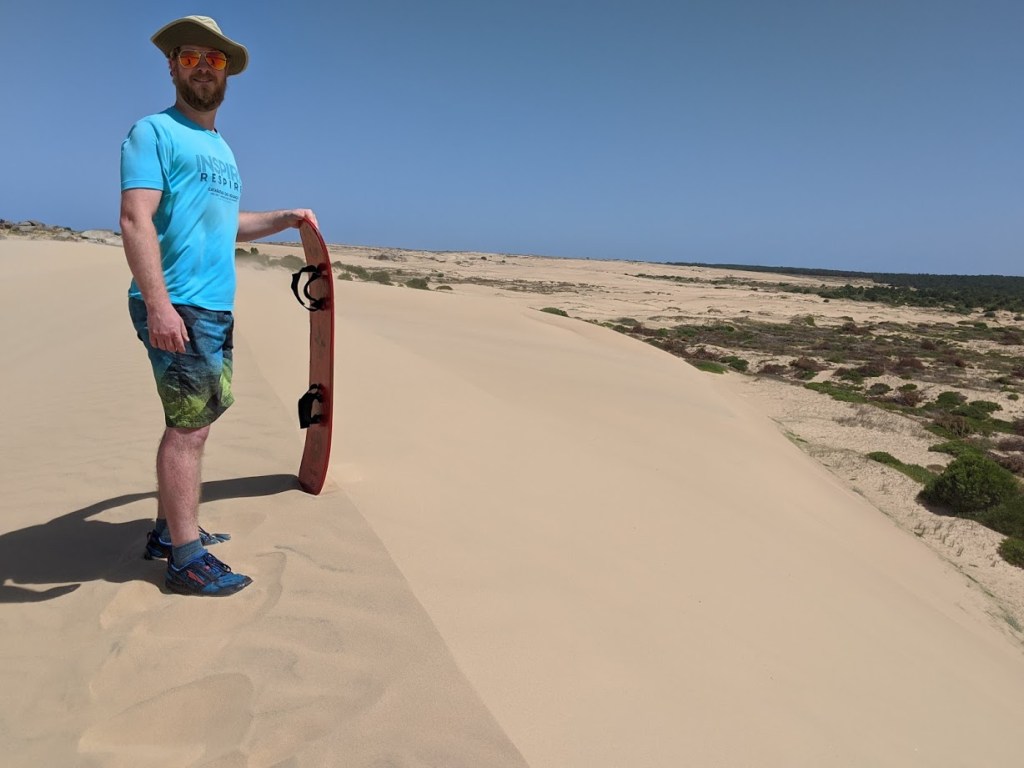
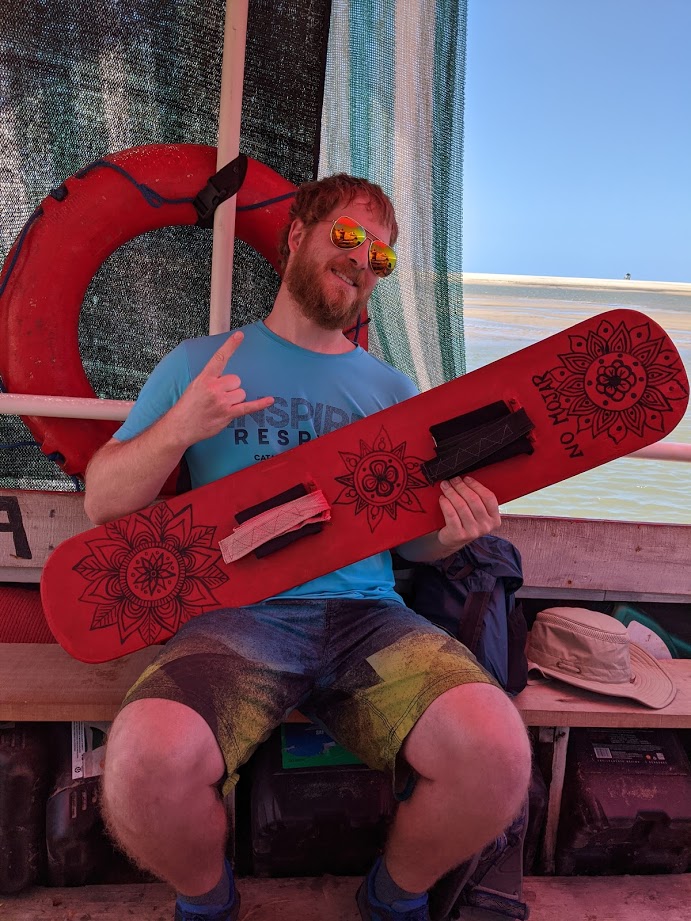
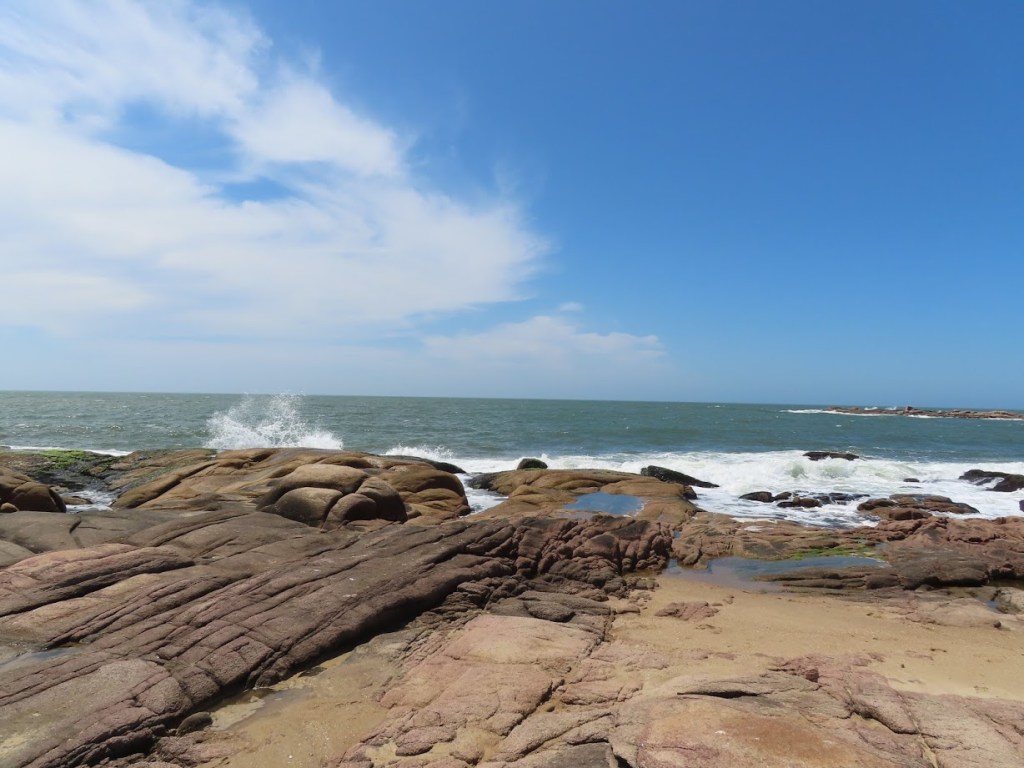
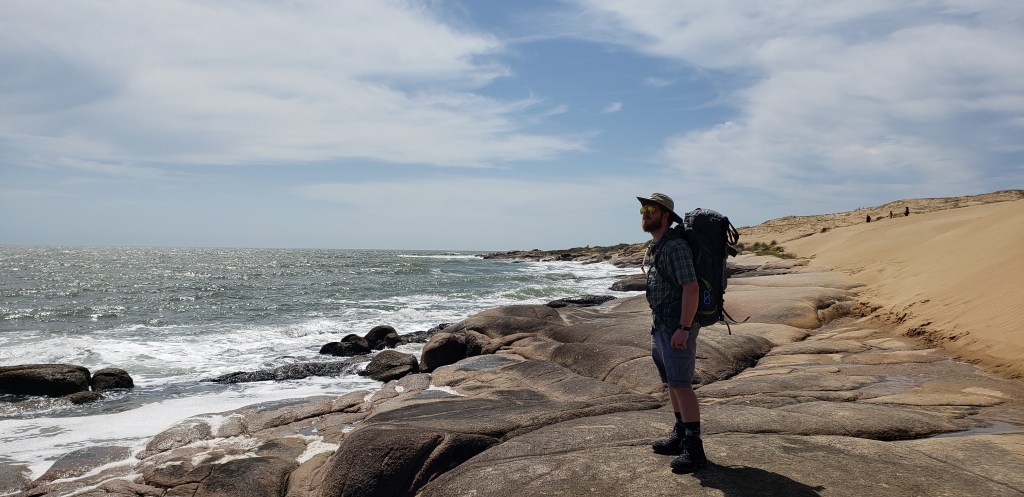
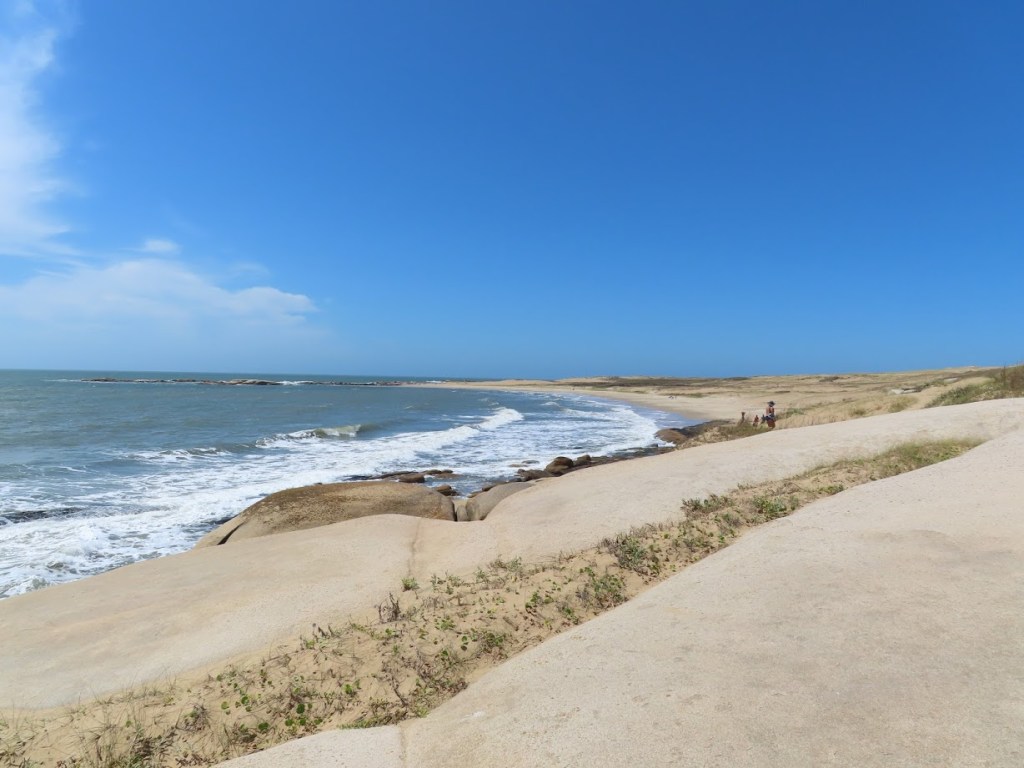
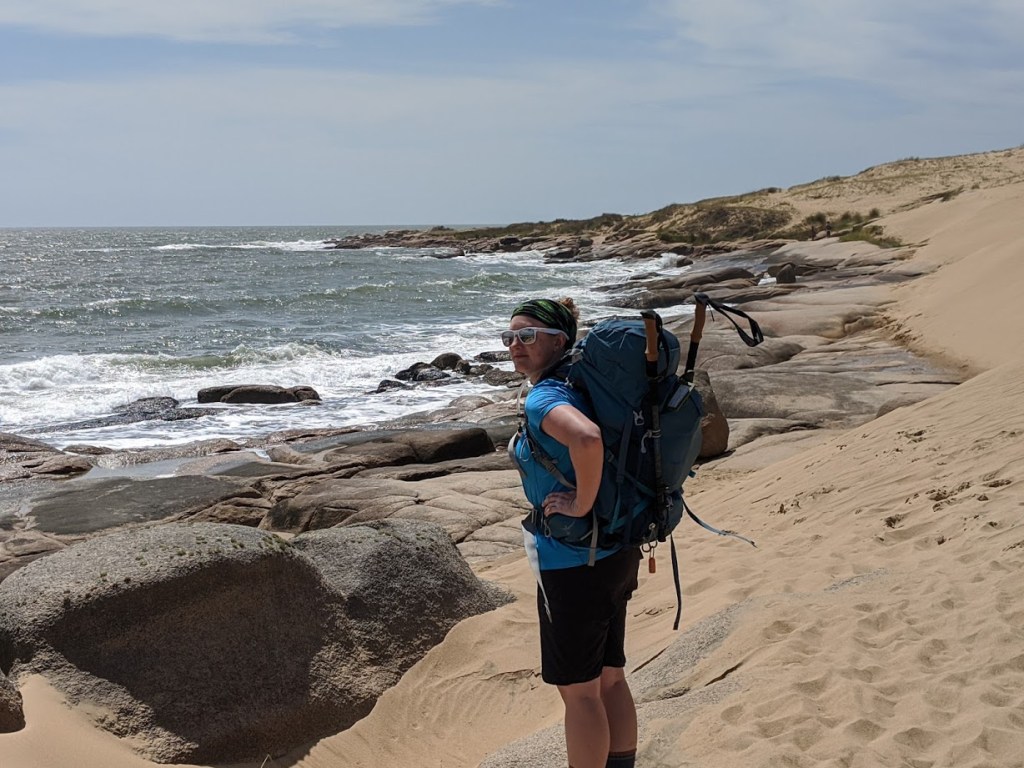
Oh, and some pictures of our activities there: Beach hangs, our first attempt at sandboarding the dunes, and a wonderful day hike along the beach from Valizas to Cabo Polonio!

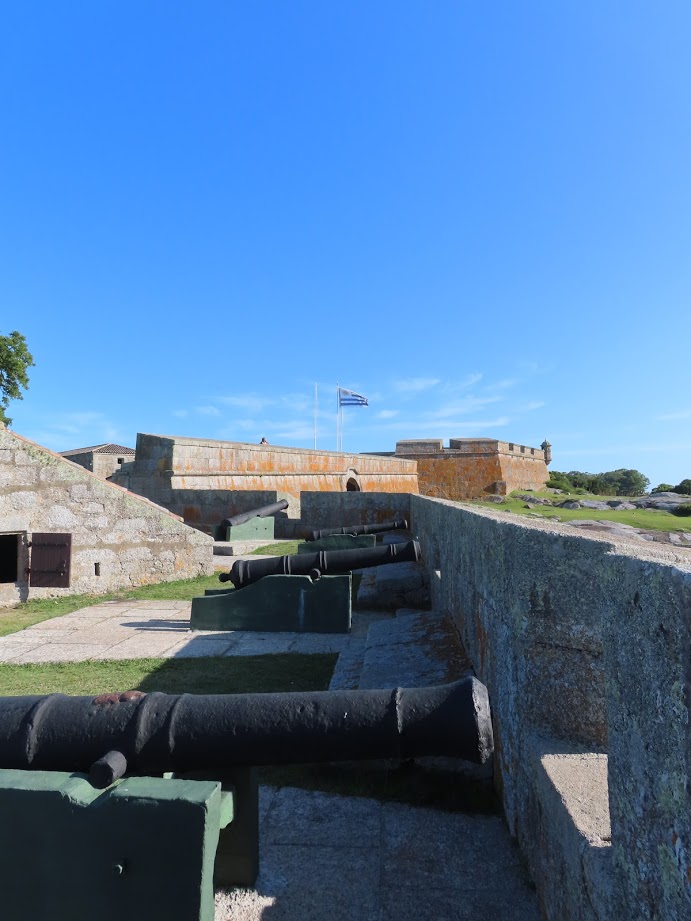
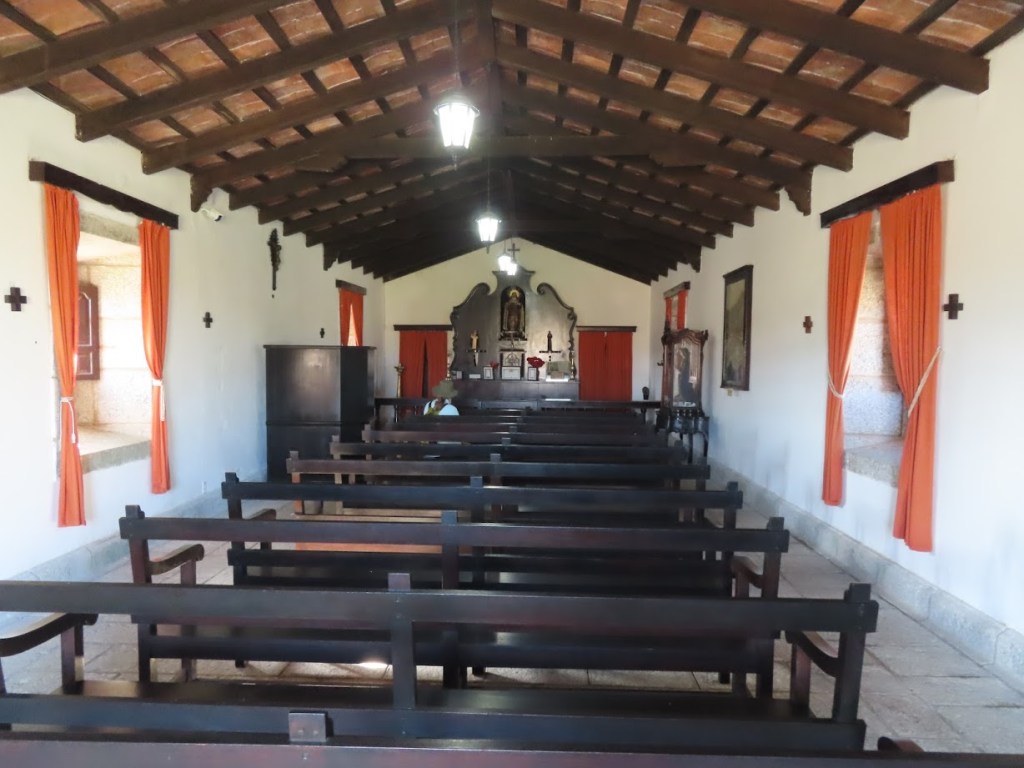
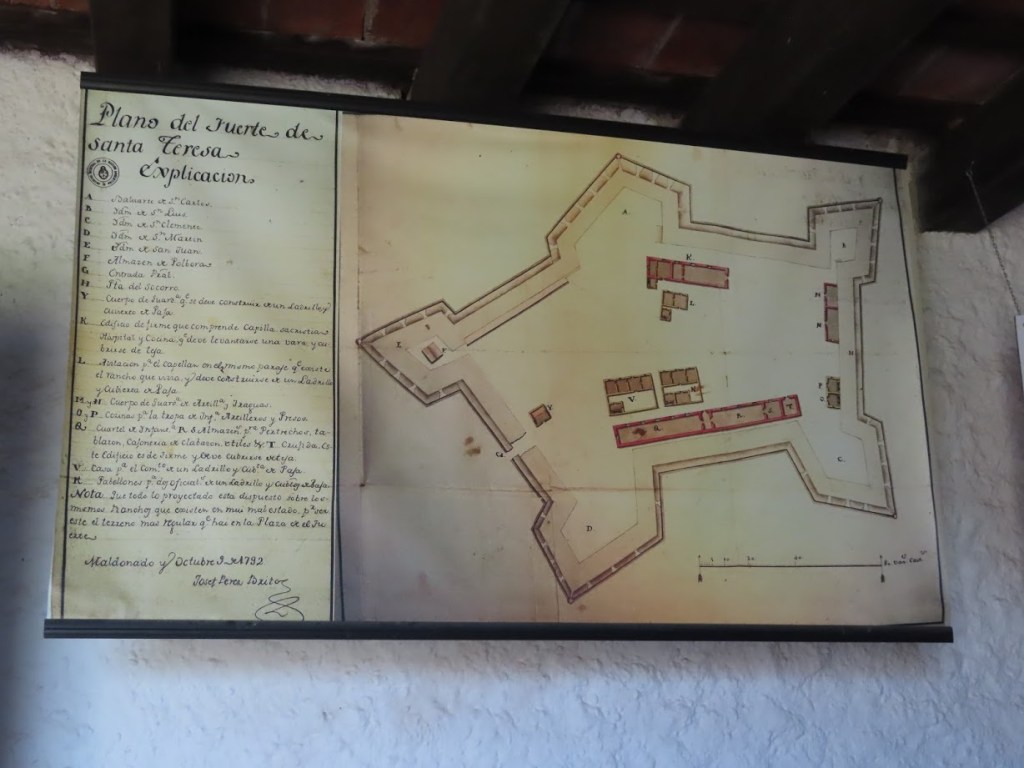
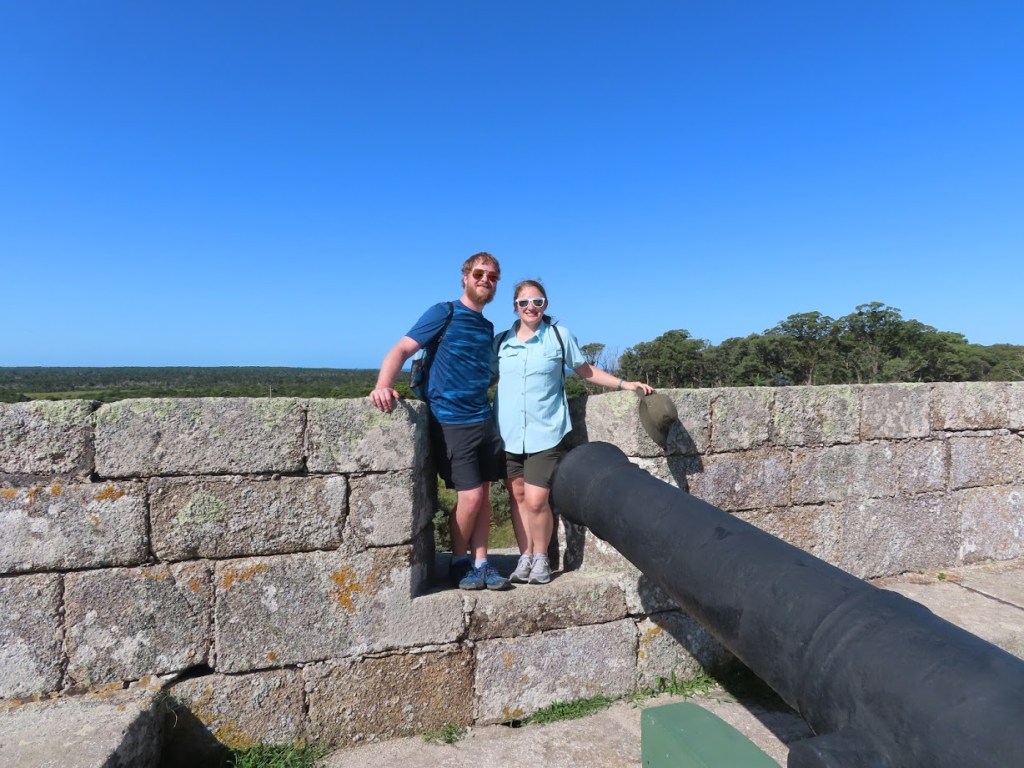
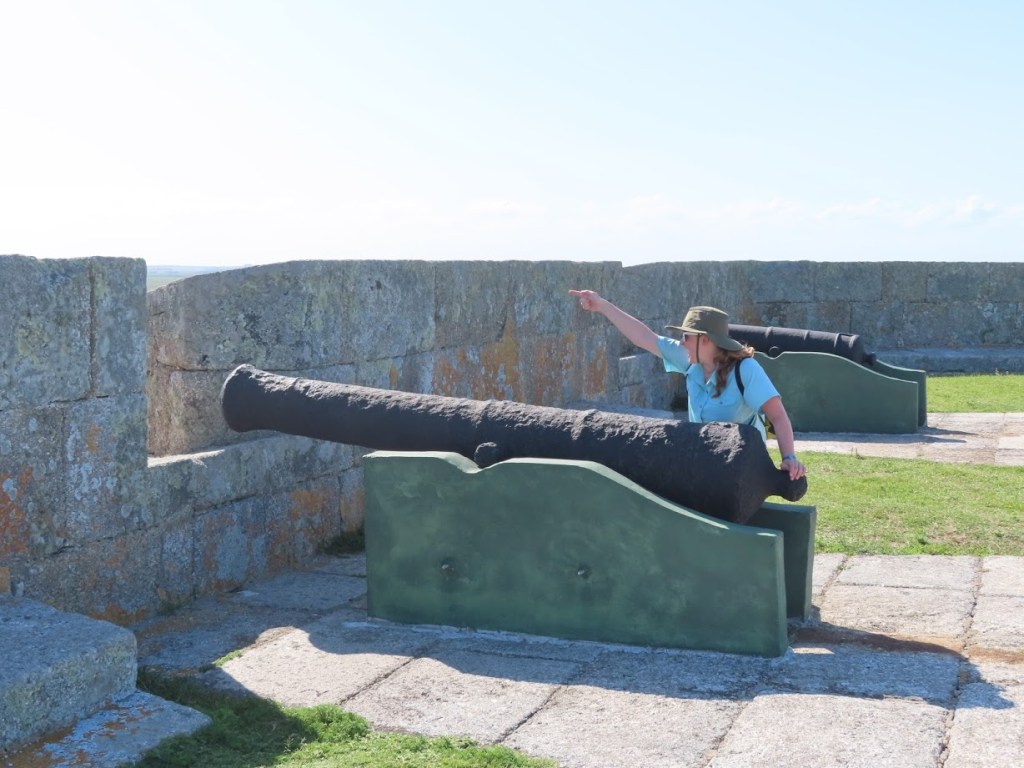
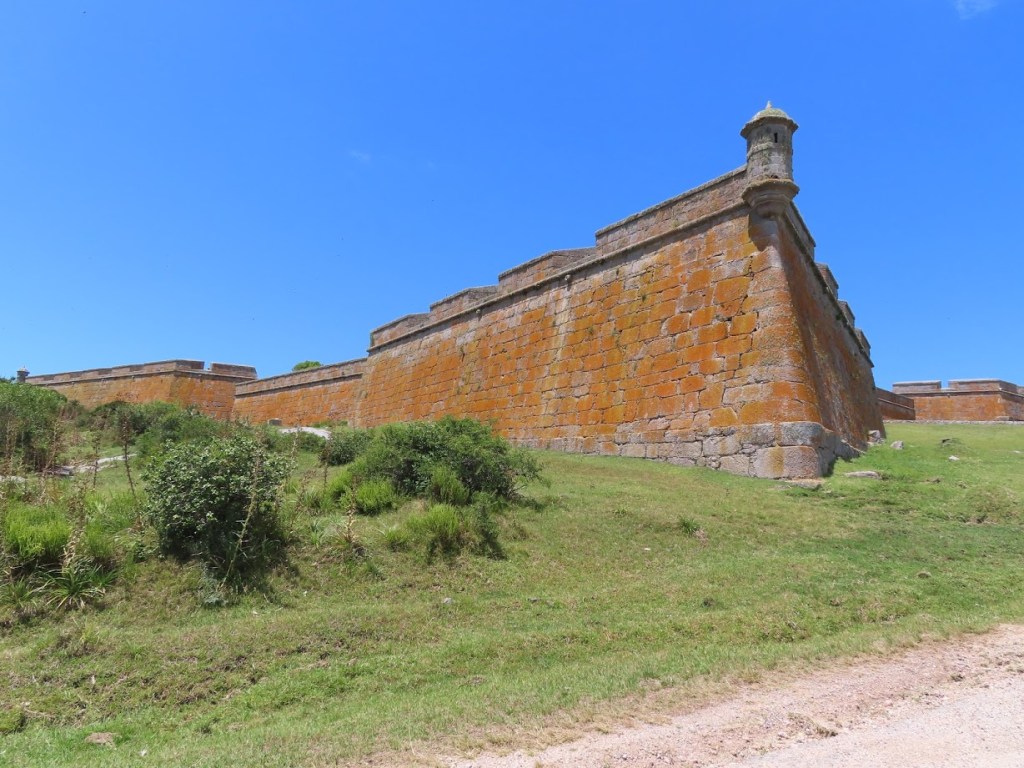
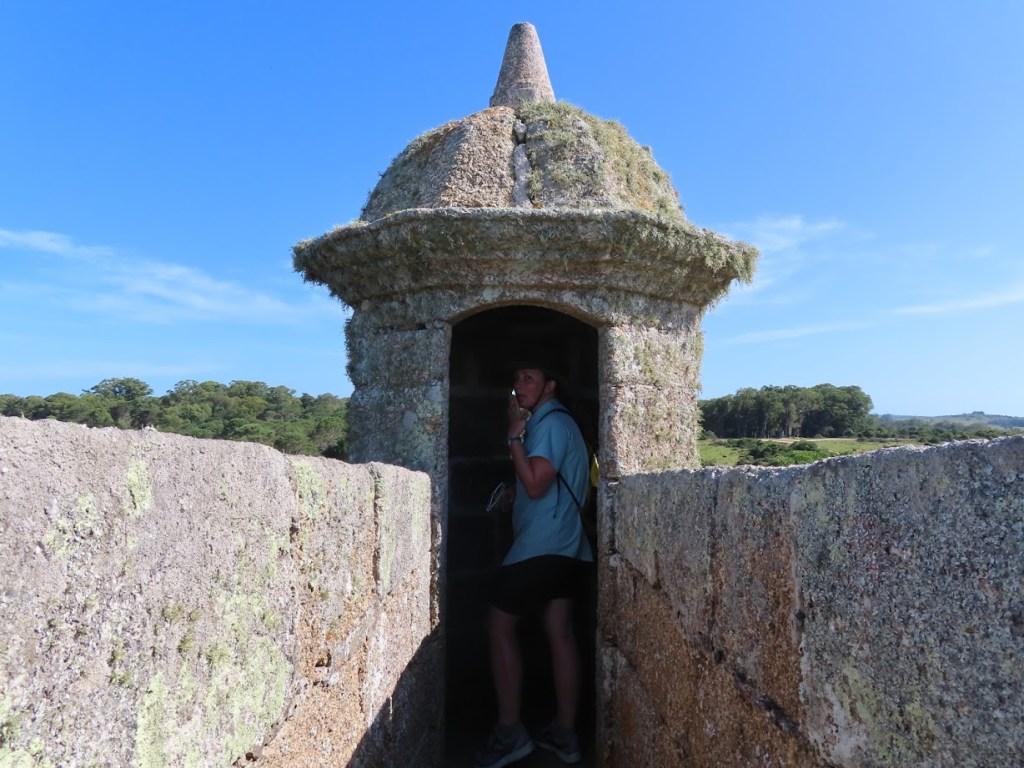
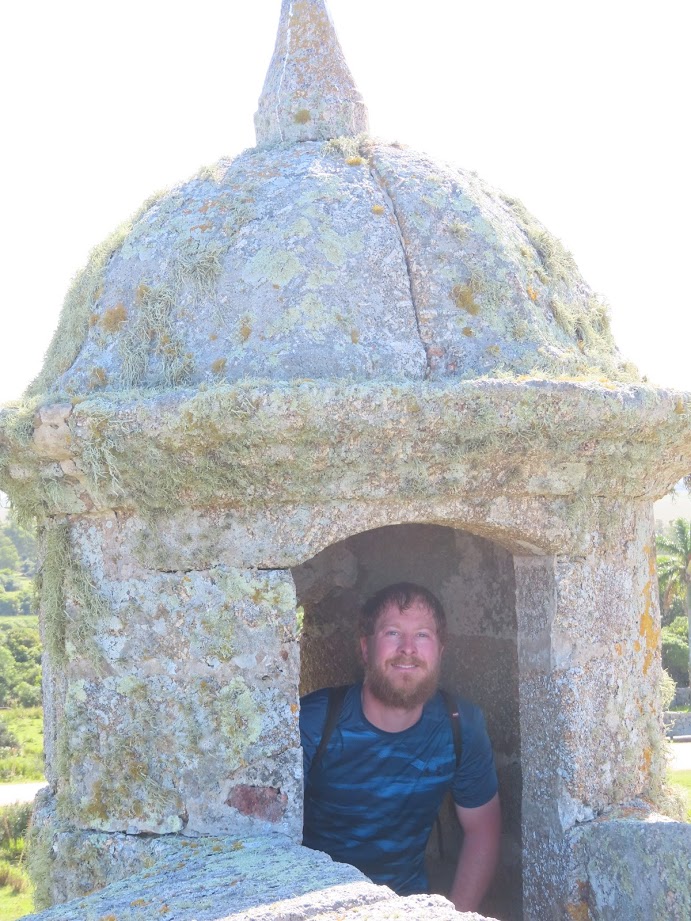
Our last few days we enjoyed the bohemian beach town of Punta del Diablo. This was the biggest town we visited since Colonia with a long winding main drag full of bars and restaurants called Fishermans hill. We explored the Santa Teresa National park where there was an incredible, intact Uruguayan fortress from the 1600s! Got some more beach time in and had a cool night of camping just up from the beach.

It’s strange, being in Uruguay and being surrounded by the buena vida has challenged me as it is hard to find justification in worrying or stressing about, well, ANYTHING. I mean, I wake up in the morning and think: What shall we do today? And it can be whatever we want it to be. Folks, it is a hard-reset to the status quo of always attempting to make the best of a work-life-home-social balance when half the time you feel like you’re treading water. And perhaps I internalized more of the day-to-day worry than is usual, but I know there are plenty of you out there that may feel similarly. Gradually, with each day, I am finding my outlook and mindset changing more and more. It’s baffling, and far simpler than I thought it was going to be. Feeling thankful.